
Non-FictionHealth & WellnessRNA Sequencing
Viome Test Interpretation eBook
Analyzes RNA-based gut health reports.
Analyzes RNA-based gut health reports.
Formats
Free sample
Chapter 1: Beyond the Blueprint--You have been lied to. Not maliciously, not by any single villain you can name, but by a system that has been using the wrong tools for decades. You have been told that your health is written in stone—encoded in your DNA like a fatalistic prophecy. You have been sold probiotic supplements in colorful bottles, each promising to "restore balance" to a gut no one has ever measured. You have tried elimination diets, keto, vegan, paleo, low-FODMAP, and the "eat-for-your-blood-type" plan that your well-meaning friend swore changed her life.
And still, you wake up bloated. Still, you drag yourself through afternoons with a fog so thick you forget why you walked into the kitchen. Still, you stare at your reflection and wonder why you look ten years older than everyone else your age.The problem is not you. The problem is not your willpower, your discipline, or your genetics. The problem is that almost everything you have been told about gut health is based on a fundamental misunderstanding of how your inner ecosystem actually works.
And that misunderstanding starts with a single, critical error: confusing the map for the territory, the blueprint for the building, the hardware for the software that is running right now.This book exists because that error is costing you your energy, your clarity, and your years.The $50 Billion Guess Let us start with a uncomfortable truth. The global gut health market is worth more than fifty billion dollars. Fifty billion dollars spent on probiotics, prebiotics, fiber supplements, digestive enzymes, gut-reset teas, colon cleanses, and an endless parade of products promising to "fix" your microbiome. And yet, irritable bowel syndrome affects an estimated ten to fifteen percent of the global population, with no cure in sight. Inflammatory bowel disease is rising faster in developing nations than almost any other chronic condition.
Autoimmune diseases, now the third most common category of illness in the industrialized world, are all rooted in gut dysfunction.We are spending more than ever and getting sicker faster.Why? Because the standard approach to gut health is a fifty-billion-dollar guess. Most people are throwing probiotics at a problem they have never diagnosed. They are cutting out entire food groups based on internet research rather than biological data. They are suffering through elimination diets that may be starving the very bacteria they need to thrive.This chapter will introduce you to a different way of thinking—one that replaces guessing with measuring, replaces static blueprints with real-time activity, and replaces the anxiety of "what should I eat?" with the confidence of knowing exactly what your body needs right now.The Library Versus the Book Club To understand why most gut health advice fails, you need to understand the difference between two entirely different types of biological information: DNA and RNA.Think of your DNA as a library.
A very large, very old library that contains every book your body could ever possibly read. Every gene you inherited from your parents is a book on a shelf. The library contains instructions for building every protein, every enzyme, every cellular structure you will ever need. It is magnificent. It is comprehensive.
It is also completely static. The books on the shelves do not change from day to day. They do not respond to what you ate for breakfast or how well you slept last night. They simply sit there, waiting.Now think of RNA as the librarians who are actively checking books out of that library. RNA molecules are transcribed from DNA when a particular gene is needed.
They carry the instructions from the library to the cellular factories where proteins are built. And here is the critical insight: at any given moment, only a small fraction of your DNA library is actually being read. The rest sits silent.This distinction changes everything.A DNA test—whether from 23and Me, Ancestry, or a clinical genetic panel—tells you which books are in your library. It can tell you that you have the genetic potential for celiac disease, or Alzheimer's, or lactose intolerance. But it cannot tell you whether those genes are currently active.
It cannot tell you if the librarian has checked out the book on inflammation or if it is gathering dust on the shelf.An RNA test tells you exactly what the librarians are doing right now. It tells you which books are open, which pages are being read, which instructions are being carried out in your body at this very moment.This is not a small difference. This is the difference between a map of a city and live traffic data. Between a photograph of a storm cloud and a radar reading showing exactly where the rain is falling right now.The Ghosts in Your Stool Now let us apply this distinction to the thing you actually care about: your gut microbiome.The human gut contains trillions of microorganisms—bacteria, fungi, viruses, and archaea. Together, they outnumber your human cells and contain at least one hundred times more genes than your own genome.
This ecosystem is so complex and so influential that many scientists now refer to it as a forgotten organ.If you have ever taken a standard gut microbiome test, you have probably received a report telling you which bacterial species are present in your stool. You might have been told that you have too much Firmicutes and not enough Bacteroidetes, or that your diversity score is low, or that you are missing certain "good" bacteria like Lactobacillus or Bifidobacterium.Here is what those tests did not tell you: most of those bacteria were already dead.Stool is not a live sample. By the time it leaves your body, the vast majority of bacteria in it have been exposed to oxygen, bile acids, and digestive enzymes that kill them. Standard DNA-based stool tests detect the genetic material of both living and dead bacteria. And because DNA can persist long after a bacterium has died, these tests often report the presence of species that are no longer active, no longer influencing your health, no longer relevant.The technical term for detecting something that is no longer alive is "relic DNA." The more colorful term, used by frustrated microbiome researchers, is "bacterial ghosts."You have been making health decisions based on ghosts.A DNA-based test might tell you that you have high levels of a particular beneficial bacterium.
You might start eating more prebiotic fiber to feed it, feeling virtuous and hopeful. But if that bacterium is dead—if its DNA is just lingering as a ghost while the living community has shifted elsewhere—then all that fiber is feeding something else entirely. Possibly something harmful.Viome, the testing platform this book is designed to help you interpret, does something different. It analyzes RNA, not DNA. And because RNA degrades within minutes to hours after a cell dies, RNA testing detects only living, metabolically active microbes.
You are not looking at ghosts. You are looking at the living community that is actively shaping your health, right now, in real time.This is the difference between a photograph of a crowded room and a live video feed showing who is actually…
This is the end of the free sample. Get the eBook to keep going. Buy now
About this book
Details
- Author
- Marcus Modesto
- Publisher
- SamEnrico
- Language
- English
- Genre
- Non-Fiction, Health & Wellness, RNA Sequencing
- Released
- 2026-06-07
- Pages (approx.)
- 150
- Available as
- eBook, Audiobook

Read better in the ZLOADR app
Your eBooks on your phone or tablet. Sign in with your SamEnrico account and start reading.
More by Marcus Modesto
 TM for Tinnitus ReliefMarcus Modesto$11.99
 Senior Sleep Meditation GuideMarcus Modesto$11.99
 Mindfulness Meditation for Parenting PatienceMarcus Modesto$11.99
 ADHD Focus Peg SystemMarcus Modesto$11.99
 Pandemic Sleep RecoveryMarcus Modesto$11.99
 Sleep Apnea WorkbookMarcus Modesto$11.99
 Philippines Remote Tax GuideMarcus Modesto$11.99
 Pomodoro For CodersMarcus Modesto$11.99
 The Firebird Rises: The 1980 Moscow Olympics' Forgotten TriumphMarcus Modesto$11.99
 The Siege of the Acropolis: A Last Stand for FreedomMarcus Modesto$11.99
 Neon Mirage: The AI That Sold the MoonMarcus Modesto$11.99
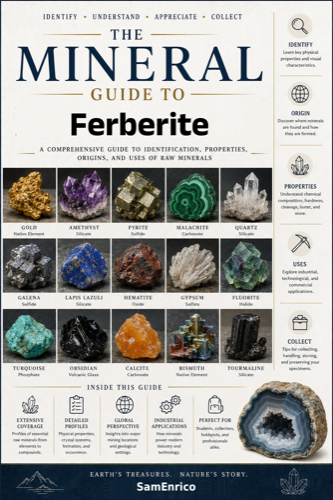 The Mineral Guide to FerberiteMarcus Modesto$11.99
You may also like
 Hong Kong Handover 1997Dunn Johnnie$11.99
 Zumba For Postnatal Recovery CourseNeal Christian$11.99
 Zumba for BeginnersLadner Nikia$11.99
 YouTube Comment Mining GuideHumes Pandora$12.99
 Worry Box MeditationCarlin Rudy$11.99
 Workplace Stress MeditationNguyen Lynn$11.99
 Workplace Stress and Sleep RepairHawley Ivory$11.99
 Workplace Perfectionism CureDelaney Jeffry$11.99
 Workplace Injustice Anger GuideWallen Isabelle$11.99
 Work Addiction and Burnout LinkGreenwood Ester$11.99
 Women in Yoga and WellnessBeattie Galina$11.99
 Women in Stand Up ComedyChun Evangeline$11.99