Vile Bodies eBook
Evelyn Waugh
A biting, cinematic satire of 1920s London, Vile Bodies follows the "Bright Young Things"—a generation of hedonistic aristocrats racing through a cycle of decadent parties, hollow gossip, and frantic romance.
The story centers on Adam Fenwick-Symes, a penniless writer struggling to fund his marriage to the detached Nina Blount amidst a series of absurd financial mishaps. While it begins as a farcical comedy of manne…
Formats
Free sample
It was clearly going to be a bad crossing.
With Asiatic resignation Father Rothschild S.J. put down his suitcase in the corner of the bar and went on deck. (It was a small suitcase of imitation crocodile hide. The initials stamped on it in Gothic characters were not Father Rothschild’s, for he had borrowed it that morning from the valet-de-chambre of his hotel. It contained some rudimentary underclothes, six important new books in six languages, a false beard and a school atlas and gazetteer heavily annotated.) Standing on the deck Father Rothschild leant his elbows on the rail, rested his chin in his hands and surveyed the procession of passengers coming up the gangway, each face eloquent of polite misgiving.
Very few of them were unknown to the Jesuit, for it was his happy knack to remember everything that could possibly be learned about everyone who could possibly be of any importance. His tongue protruded very slightly and, had they not all been so concerned with luggage and the weather, someone might have observed in him a peculiar resemblance to those plaster reproductions of the gargoyles of Notre Dame which may be seen in the shop windows of artists’ colourmen tinted the colour of “Old Ivory,” peering intently from among stencil outfits and plasticine and tubes of watercolour paint. High above his head swung Mrs. Melrose Ape’s travel-worn Packard car, bearing the dust of three continents, against the darkening sky, and up the companionway at the head of her angels strode Mrs. Melrose Ape, the woman evangelist.
“Faith.”
“Here, Mrs. Ape.”
“Charity.”
“Here, Mrs. Ape.”
“Fortitude.”
“Here, Mrs. Ape.”
“Chastity. … Where is Chastity?”
“Chastity didn’t feel well, Mrs. Ape. She went below.”
“That girl’s more trouble than she’s worth. Whenever there’s any packing to be done, Chastity doesn’t feel well. Are all the rest here—Humility, Prudence, Divine Discontent, Mercy, Justice and Creative Endeavour?”
“Creative Endeavour lost her wings, Mrs. Ape. She got talking to a gentleman in the train. … Oh, there she is.”
“Got ’em?” asked Mrs. Ape.
Too breathless to speak, Creative Endeavour nodded. (Each of the angels carried her wings in a little black box like a violin case.)
“Right,” said Mrs. Ape, “and just you hold on to ’em tight and not so much talking to gentlemen in trains. You’re angels, not a panto, see?”
The angels crowded together disconsolately. It was awful when Mrs. Ape was like this. My, how they would pinch Chastity and Creative Endeavour when they got them alone in their nightshirts. It was bad enough their going to be so sick without that they had Mrs. Ape pitching into them too.
Seeing their discomfort, Mrs. Ape softened and smiled. She was nothing if not “magnetic.”
“Well, girls,” she said, “I must be getting along. They say it’s going to be rough, but don’t you believe it. If you have peace in your hearts your stomach will look after itself, and remember if you do feel queer—sing. There’s nothing like it.”
“Goodbye, Mrs. Ape, and thank you,” said the angels; they bobbed prettily, turned about and trooped aft to the second-class part of the ship. Mrs. Ape watched them benignly, then, squaring her shoulders and looking (except that she had really no beard to speak of) every inch a sailor, strode resolutely forrard to the first-class bar.
Other prominent people were embarking, all very unhappy about the weather; to avert the terrors of seasickness they had indulged in every kind of civilized witchcraft, but they were lacking in faith.
Miss Runcible was there, and Miles Malpractice, and all the Younger Set. They had spent a jolly morning strapping each other’s tummies with sticking plaster (how Miss Runcible had wriggled).
The Right Honourable Walter Outrage, M.P., last week’s Prime Minister, was there. Before breakfast that morning (which had suffered in consequence) Mr. Outrage had taken twice the maximum dose of a patent preparation of chloral, and losing heart later had finished the bottle in the train. He moved in an uneasy trance, closely escorted by the most public-looking detective sergeants. These men had been with Mr. Outrage in Paris, and what they did not know about his goings on was not worth knowing, at least from a novelist’s point of view. (When they spoke about him to each other they called him “the Right Honourable Rape,” but that was more by way of being a pun about his name than a criticism of the conduct of his love affairs, in which, if the truth were known, he displayed a notable diffidence and the liability to panic.)
Lady Throbbing and Mrs. Blackwater, those twin sisters whose portrait by Millais auctioned recently at Christie’s made a record in rock-bottom prices, were sitting on one of the teak benches eating apples and drinking what Lady Throbbing, with late Victorian chic, called “a bottle of pop,” and Mrs. Blackwater, more exotically, called “champagne,” pronouncing it as though it were French.
“Surely, Kitty, that is Mr. Outrage, last week’s Prime Minister.”
“Nonsense, Fanny, where?”
“Just in front of the two men with bowler hats, next to the clergyman.”
“It is certainly like his photographs. How strange he looks.”
“Just like poor Throbbing … all that last year.”
“… And none of us even suspected … until they found the bottles under the board in his dressing-room … and we all used to think it was drink …”
“I don’t think one finds quite the same class as Prime Minister nowadays, do you think?”
“They say that only one person has any influence with Mr. Outrage …”
“At the Japanese Embassy …”
“Of course, dear, not so loud. But tell me, Fanny, seriously, do you think really and truly Mr. Outrage has it?”
“He has a very nice figure for a man of his age.”
“Yes, but his age, and the bull-like type is so often disappointing. Another glass? You will be grateful for it when the ship begins to move.”
“I quite thought we were moving.”
“How absurd you are, Fanny, and yet I can’t help laughing.”
So arm in arm and shaken by little giggles the two tipsy old ladies went down to their cabin.
Of the other passengers, some had filled their ears with cotton wool, others wore smoked glasses, while several ate dry captain’s biscuits from paper bags, as Red Indians are said to eat snake’s flesh to make them cunning. Mrs. Hoop repeated feverishly over and over again a formula she had learned from a yogi in New York City. A few “good sailors,” whose luggage bore the labels of many voyages, strode aggressively about smoking small, foul pipes and trying to get up a four of bridge.
Two minutes before the advertised time of departure, while the first admonitory whistling and shouting was going on, a young man came on board carrying his bag. There was nothing particularly remarkable about his appearance. He looked exactly as young men like him do look; he was carrying his own bag, which was disagreeably heavy, because he had no money left in francs and very little left in anything else.…
This is the end of the free sample. Get the eBook to keep going. Buy now
About this book
The story centers on Adam Fenwick-Symes, a penniless writer struggling to fund his marriage to the detached Nina Blount amidst a series of absurd financial mishaps. While it begins as a farcical comedy of manners, the novel's frenetic energy eventually collapses into a bleak, prophetic vision of global war, capturing the disillusionment and moral vacuum of the interwar years.
Details
- Author
- Rhoads Clarissa
- Publisher
- SamEnrico
- Language
- English
- Genre
- Classic
- Released
- 2026-02-24
- Pages (approx.)
- 228
- Available as
- eBook, Audiobook

Read better in the ZLOADR app
Your eBooks on your phone or tablet. Sign in with your SamEnrico account and start reading.
More by Rhoads Clarissa
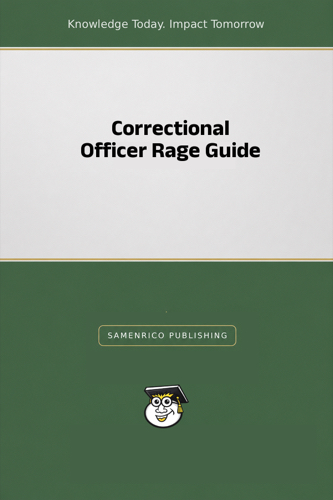 Correctional Officer Rage GuideRhoads Clarissa$11.99
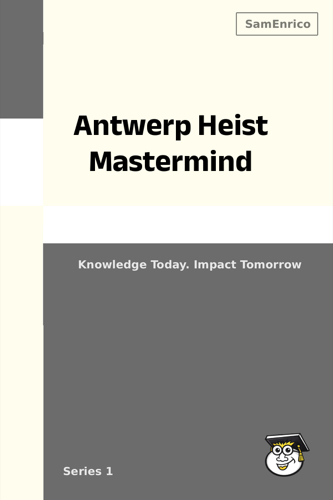 Antwerp Heist MastermindRhoads Clarissa$11.99
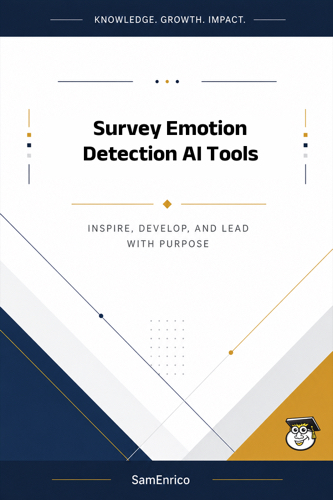 Survey Emotion Detection AI ToolsRhoads Clarissa$11.99
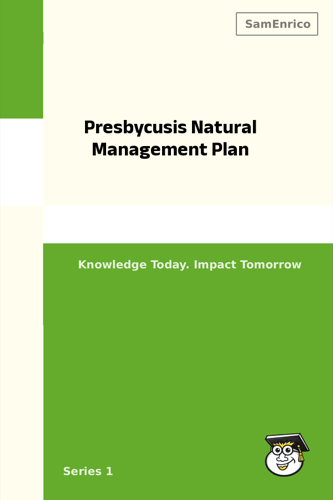 Presbycusis Natural Management PlanRhoads Clarissa$11.99
 Creative Culture BuildingRhoads Clarissa$11.99
 Hops & Revolutions: How a Beer War Brewed a NationRhoads Clarissa$11.99Hops & Revolutions: How a Beer War Brewed a NationRhoads Clarissa$11.99
 The Lost Fleet of Zheng He: China’s Forgotten Voyages to the Indian OceanRhoads Clarissa$11.99
 Understanding Carbon Baby SyndromeRhoads Clarissa$17.99
 Makeup ConsultantRhoads Clarissa$11.99
 Part Time Master Europe GuideRhoads Clarissa$12.99
 Graduate School Fair ComparisonsRhoads Clarissa$12.99