

Non-FictionStrategic AtlasBiotech
Vertex Pharmaceuticals eBook
Assess cystic fibrosis dominance, pipeline diversi
Assess cystic fibrosis dominance, pipeline diversification into pain, alpha-1 antitrypsin, and type 1 diabetes.
Formats
Free sample
Chapter 1: The Reckless Bet--The young chemist stood at the whiteboard in his cramped Cambridge office, erasing a bond line for the seventeenth time that morning. Outside, the autumn wind rattled the windows of the rented building near MIT, a structure so unremarkable that delivery drivers regularly walked past it. Inside, Joshua Boger was trying to do something that his mentors at Merck had told him was impossible: design a drug from scratch, atom by atom, without screening a million random compounds first.It was 1989, and the pharmaceutical industry ran on brute force. The standard method—high-throughput screening—involved robotic arms dumping thousands of chemical compounds into test tubes, hoping one would accidentally stick to a disease target. It was, Boger liked to say, like buying a billion lottery tickets and calling it science.
The approach had produced blockbusters, yes, but at staggering cost. For every drug that reached pharmacy shelves, thousands of candidates had failed. The industry's efficiency had been declining for decades, a trend so steady that economists had given it a name: Eroom's Law, the reverse of Moore's Law. While computing power doubled every two years, drug discovery became slower and more expensive with each passing year.Boger believed he knew why. The industry had abandoned first principles.
Chemists had stopped asking how molecules actually interacted with proteins, and had instead outsourced the problem to probabilistic brute force. He wanted to go back to basics: determine a protein's three-dimensional structure, then design a molecule that fit into it like a key into a lock. The idea wasn't new—Paul Ehrlich had dreamed of "magic bullets" in the 1890s. But no one had ever built a company around the concept. The technical hurdles were immense.
The computational power required was barely available outside military research. And the timelines were measured in years, not months.Boger was thirty-eight years old. He had a pregnant wife, a mortgage, and a reputation as one of the brightest medicinal chemists of his generation. Leaving Merck meant walking away from stock options, job security, and the implicit promise of a vice presidency. His mother, a New York public school teacher who had sacrificed to put him through college, called the idea "a form of madness." His father, a chemist himself, said nothing at all—which was worse.But Boger had seen something at Merck that haunted him.
The company had spent years developing a drug for a promising target, only to discover at the last moment that the compound they were optimizing was binding to the wrong protein entirely. The data had been there from the beginning, buried in noise, ignored because no one had asked the right structural question. The drug failed. Two hundred million dollars, gone. And no one at Merck seemed to think this was a systemic problem.That was the moment, Boger would later tell friends, when he decided to burn the ships.
He incorporated Vertex Pharmaceuticals in 1989, naming the company after the mathematical term for a point where lines converge—the intersection of chemistry, biology, and computation. He raised $1.5 million from a single venture capital firm, a sum so modest that it would barely cover rent for a decade. He hired a small team of renegades: chemists who had been told they were "too theoretical," biologists who believed in rational design, programmers who thought they could model molecular interactions on desktop computers.The industry laughed at them. A "virtual company" with no labs, no manufacturing, and no products, outsourcing everything but the core science? The term "virtual" was meant as an insult.
Rivals predicted bankruptcy within two years. Harvard's Stuart Schreiber, a brilliant chemist who was pursuing a similar rational design approach, dismissed Vertex as "a Power Point company."But Boger had a secret weapon: he wasn't trying to design a drug for any target. He was going after the HIV protease, an enzyme that the AIDS virus needed to replicate. The protease's structure was unknown, but Boger was betting that his computational models could predict it well enough to design a molecule that would fit. It was the equivalent of building a key for a lock you had never seen.The Science of Desperation To understand why Boger's bet seemed insane, you need to understand the biology of HIV.
The virus is a retrovirus, meaning it stores its genetic information as RNA and converts it into DNA inside human cells. That conversion requires an enzyme called reverse transcriptase—the target of early AIDS drugs like AZT. But HIV also produces another enzyme, the protease, which acts like a pair of molecular scissors, cutting long viral proteins into functional pieces. Without the protease, the virus cannot mature and becomes non-infectious.The HIV protease was an attractive target for rational design because it belonged to a well-understood family of enzymes called aspartyl proteases. Scientists knew roughly how these enzymes worked: they had a "active site" shaped like a groove, with two aspartic acid residues that cleaved protein bonds.
If you could design a molecule that fit into that groove and blocked it, you would stop the virus cold.There were two problems. First, no one had crystallized the HIV protease yet. Its three-dimensional structure remained a mystery. Boger and his team would have to model it computationally based on the known structures of related proteases—a technique called homology modeling, which was still in its infancy. Second, even if their model was accurate, they would need to synthesize a molecule that fit perfectly.
Standard drug design was iterative: make a compound, test it, tweak it, repeat. Vertex had no labs. They were going to design the drug on paper and then have it synthesized externally, trusting their models completely.The chemist leading the effort was a young scientist named Mark Murcko, who had followed Boger from Merck. Murcko was obsessive, the kind of researcher who could visualize molecular interactions in three dimensions without a computer. He and Boger spent weeks building a model of the HIV protease's active site, bonding angles, electrostatic surfaces, the precise volume of the binding pocket.
They used a program called SYBYL, which ran on a Silicon Graphics workstation that cost more than most cars. The machine's fan droned constantly, a sound that would become the background music of Vertex's early years.By 1991, they had a candidate: a molecule they called VX-478. It was a small, elegant compound, built to fit the protease's active site like a tailor-made suit. But no one at Vertex had ever tested it against the actual virus. They didn't have a biosafety lab.
They didn't have the equipment. They sent samples to a collaborator at the University of Alabama, who ran the assays in a secure facility.The results came back on a Friday afternoon. Boger was in his office, reading a stack of grant applications, when the fax machine buzzed. The paper emerged slowly, line by line. He read the numbers once.
Then again. Then he walked down the hallway to Murcko's office, knocked, and said: "It works."VX-478 inhibited the HIV protease at concentrations lower than any compound the collaborator had ever seen. It was not just active; it was spectacularly active. The computational model had been right.The Long Silence…
This is the end of the free sample. Get the eBook to keep going. Buy now
About this book
Details
- Author
- Yarbrough Dorthea
- Publisher
- SamEnrico
- Language
- English
- Genre
- Non-Fiction, Strategic Atlas, Biotech
- Released
- 2026-05-30
- Pages (approx.)
- 136
- Available as
- eBook, Audiobook

Read better in the ZLOADR app
Your eBooks on your phone or tablet. Sign in with your SamEnrico account and start reading.
More by Yarbrough Dorthea
 The Caregiver Gratitude PracticeYarbrough Dorthea$11.99
 Bedtime Self Talk RewiringYarbrough Dorthea$11.99
 Partner Communication TTC GuideYarbrough Dorthea$11.99
 Anger at Children's MistakesYarbrough Dorthea$11.99
 Nightmare Processing for Fire SurvivorsYarbrough Dorthea$11.99
 The Fall of Granada: The Last Moorish Stronghold (1492)Yarbrough Dorthea$11.99
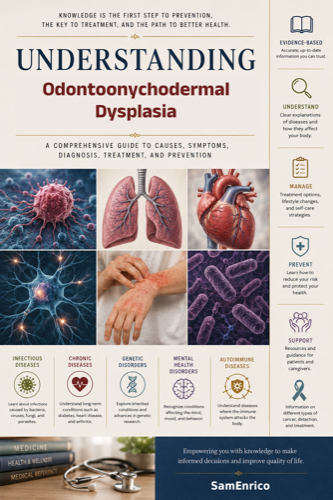 Understanding Odontoonychodermal DysplasiaYarbrough Dorthea$17.99
 How to Become a Laundry-bag-punch OperatorYarbrough Dorthea$11.99
 CoastguardYarbrough Dorthea$11.99
 Chinese University Housing Deposit GuideYarbrough Dorthea$12.99
You may also like
 Hong Kong Handover 1997Dunn Johnnie$11.99
 Zumba For Postnatal Recovery CourseNeal Christian$11.99
 Zumba for BeginnersLadner Nikia$11.99
 YouTube Comment Mining GuideHumes Pandora$12.99
 Worry Box MeditationCarlin Rudy$11.99
 Workplace Stress MeditationNguyen Lynn$11.99
 Workplace Stress and Sleep RepairHawley Ivory$11.99
 Workplace Perfectionism CureDelaney Jeffry$11.99
 Workplace Injustice Anger GuideWallen Isabelle$11.99
 Work Addiction and Burnout LinkGreenwood Ester$11.99
 Women in Yoga and WellnessBeattie Galina$11.99
 Women in Stand Up ComedyChun Evangeline$11.99