
Non-FictionProfessional's Cheat SheetCollaboration ToolsDigital Platforms
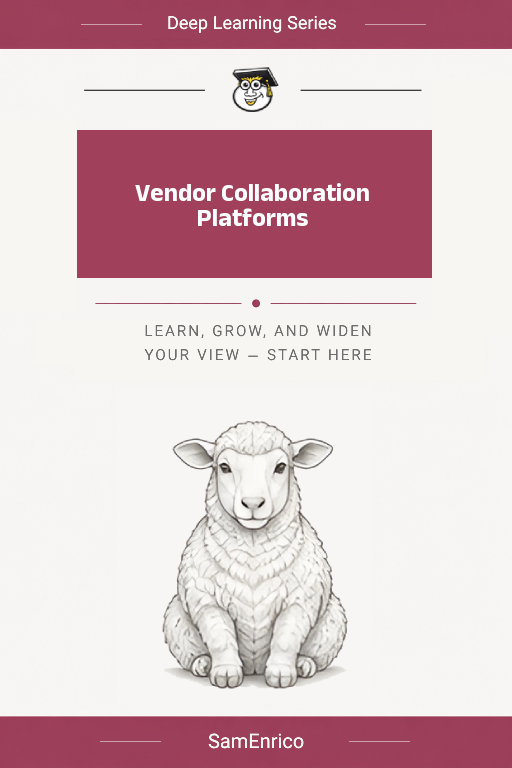
Vendor Collaboration Platforms eBook
Use digital platforms for emerging market vendor c
Use digital platforms for emerging market vendor collaboration including shared forecasting and order tracking.
Formats
Free sample
Chapter 1: The China+1 Imperative--–- You are about to discover something that will reshape how you think about your supply chain. Global sourcing and procurement spending now exceeds USD 8 trillion annually, and manufacturers across North America and Europe are engaged in the most significant restructuring of their supplier bases in a generation. They are reducing over-dependence on single-country sourcing. They are diversifying into emerging markets—from India to Vietnam, Mexico to Poland. This is the China+1 Imperative, and it represents the single greatest opportunity for procurement leaders in decades.But here is the uncomfortable truth that most supply chain professionals have not yet confronted: moving volume to emerging market vendors without also moving visibility is not diversification.
It is just exchanging one set of unknowns for another.The era of "send a purchase order by email and hope" is over. Buyers now demand real-time visibility into production status, quality data, and logistics tracking. Emerging market vendors who cannot provide this will be left behind—not because their products are worse, but because their collaboration is invisible. And procurement leaders who cannot enable this visibility will find themselves locked out of the most competitive supply chains of the future.This chapter is the foundation of everything that follows. You will learn why the China+1 Imperative is reshaping global sourcing, what it demands from your vendor relationships, and how to assess whether your current vendor ecosystem is ready for the digital collaboration revolution.
You will also be introduced to the three frameworks that will guide this entire book: the Trust Framework (capability, reliability, transparency), the Vendor Collaboration Maturity Model (Ad-Hoc → Reactive → Visible → Collaborative → Networked), and the Vendor Collaboration Manifesto that you will write in Chapter 12. By the time you finish this chapter, you will know exactly where your organization stands—and what it will take to lead.The Great Supply Chain Reset For decades, the default sourcing strategy for global manufacturers was simple: source from the lowest-cost region, optimize for unit price, and hold safety stock to buffer against variability. China was the undisputed winner of this strategy, building an unparalleled ecosystem of suppliers, logistics providers, and manufacturing capacity.That era is ending.The COVID-19 pandemic exposed the fragility of single-source dependency. Tariffs and trade tensions made geopolitical risk a board-level concern. Port closures, container shortages, and semiconductor crises revealed that just-in-time inventory without just-in-time visibility is just-in-case failure.
Global manufacturers are now actively reducing their exposure to any single country or region.The China+1 Imperative is the strategic response: maintain some sourcing from China while adding one or more additional countries to the supplier portfolio. For many manufacturers, the "+1" is an emerging market—India, Vietnam, Mexico, Poland, Thailand, Brazil, or Turkey. These countries offer competitive labor costs, improving infrastructure, and growing industrial bases.But here is the problem that most procurement leaders have not yet solved. Moving volume to a new country solves geographic concentration risk. It does not solve visibility risk.
In fact, it often makes visibility worse. Your established Chinese suppliers may have mature systems, long-standing relationships, and predictable processes. Your new emerging market vendors may have none of these. You have diversified your sourcing footprint, but you have not diversified your visibility. And without visibility, you have not diversified risk at all.The Trust Framework: What Buyers Actually Need To understand why visibility matters more than price, you need a new way of thinking about vendor trust.
Most procurement professionals reduce trust to a single dimension: "Can this vendor deliver?" But that question collapses three distinct types of trust, each of which requires different evidence and enables different levels of collaboration.Capability Trust: Can the vendor do the work?Capability trust answers the question of technical competence. Does the vendor have the right equipment, trained personnel, quality systems, and certifications? Capability trust is established through audits, site visits, sample inspections, and reference checks. It is the entry ticket. Without it, a vendor cannot be considered at all.Reliability Trust: Will the vendor do the work consistently?Reliability trust answers the question of operational consistency.
Does the vendor deliver on time? Do they meet specifications? Do they respond to issues promptly? Reliability trust is established through performance data: on-time delivery rates, quality yield percentages, and lead time adherence. It is earned over time, through repeated transactions.Transparency Trust: Will the vendor share data?Transparency trust answers the question of openness.
Does the vendor share production status without being chased? Do they report quality issues proactively? Do they provide forecast commits and inventory visibility? Transparency trust is established through shared data on a digital platform. It is the highest and most valuable form of trust because it enables proactive management rather than reactive firefighting.Here is the critical insight that most procurement leaders miss.
You cannot have reliability trust without transparency trust. If a vendor will not share data, you cannot measure their reliability. You are guessing. And guessing is not a strategy. Worse, in emerging markets, the trust deficit is largest precisely where transparency is most needed.
Cultural differences, language barriers, time zone gaps, and historical patterns of information hoarding all make transparency trust harder to build across borders.Digital vendor collaboration platforms are the primary mechanism for building transparency trust. They make vendor actions visible, auditable, and comparable. They replace the question "Did the vendor do what they promised?" with the answer visible on a shared dashboard. This is not about surveillance. It is about alignment.
When both buyer and vendor see the same data, they can solve problems together instead of pointing fingers.From Cost Arbitrage to Value Collaboration The traditional sourcing model was built on cost arbitrage: find the lowest unit price, negotiate hard, and switch vendors if someone cheaper appears. This model worked when labor cost was the dominant variable and supply chains were stable.That model is dead.The cheapest vendor no longer wins. Buyers have learned that low unit price often conceals high total cost: expedited freight when deliveries are late, safety stock when reliability is uncertain, write-offs when quality fails, procurement labor when vendors require constant chasing. A vendor with a 5% higher unit price but 99% on-time delivery and full visibility may be dramatically cheaper in total cost-to-serve.What do buyers actually seek in emerging market vendors today? Forecast visibility—the ability to share rolling demand signals so vendors can plan capacity.
Quality consistency—not just passing inspection but staying within specification limits. On-time delivery—not most of the time but virtually all of the time. And transparency—the willingness to share production status, quality data, and inventory levels without being asked.Cost is no longer a differentiator. Cost is a threshold. If your price is above market, you will not be considered.
But once you meet the cost threshold, the decision is made on visibility, reliability, and trust. The vendor who shares data wins. The vendor who hides data loses.For procurement leaders, this shift requires a new mindset. You are no longer sourcing a product at a price. You are sourcing a partnership with visibility.
Your vendor selection criteria must include digital capability as a non-negotiable requirement. And your vendor development efforts must focus on building transparency trust through platform onboarding…
This is the end of the free sample. Get the eBook to keep going. Buy now
About this book
Details
- Author
- Hartwell Loraine
- Publisher
- SamEnrico
- Language
- English
- Genre
- Non-Fiction, Professional's Cheat Sheet, Collaboration Tools, Digital Platforms
- Released
- 2026-06-01
- Pages (approx.)
- 130
- Available as
- eBook, Audiobook

Read better in the ZLOADR app
Your eBooks on your phone or tablet. Sign in with your SamEnrico account and start reading.
More by Hartwell Loraine
 Delegation for Fitness TrainersHartwell Loraine$11.99
 TM Weekend Retreat GuideHartwell Loraine$11.99
 Retirement Housing New Construction CourseHartwell Loraine$11.99
 Men's Holiday Heart Syndrome GuideHartwell Loraine$11.99
 Innocence Project Pennsylvania CasesHartwell Loraine$11.99
 When the Tigris Ran Red: The Lost Code of Naram-SinHartwell Loraine$11.99
 The Great Banana War: How United Fruit Company Ruled the TropicsHartwell Loraine$11.99
 Translator / InterpreterHartwell Loraine$11.99
 How to Become a Calcine Furnace LoaderHartwell Loraine$11.99
 Expense Tracking RetentionHartwell Loraine$12.99
 Understanding Chromosome 14q, Proximal DuplicationHartwell Loraine$17.99
You may also like
 Hong Kong Handover 1997Dunn Johnnie$11.99
 Zumba For Postnatal Recovery CourseNeal Christian$11.99
 Zumba for BeginnersLadner Nikia$11.99
 YouTube Comment Mining GuideHumes Pandora$12.99
 Worry Box MeditationCarlin Rudy$11.99
 Workplace Stress MeditationNguyen Lynn$11.99
 Workplace Stress and Sleep RepairHawley Ivory$11.99
 Workplace Perfectionism CureDelaney Jeffry$11.99
 Workplace Injustice Anger GuideWallen Isabelle$11.99
 Work Addiction and Burnout LinkGreenwood Ester$11.99
 Women in Yoga and WellnessBeattie Galina$11.99
 Women in Stand Up ComedyChun Evangeline$11.99