
Vending Machine Avoidance eBook
Plans snacks ahead to bypass machines.
by Harry Hertha
Plans snacks ahead to bypass machines.
Formats
Free sample
Chapter 1: The Hidden Autopsy--–- The first time I counted, I wished I hadn’t. It was a Tuesday afternoon in March, the kind of gray, forgettable day that seems designed for poor decisions. I was standing in front of a glowing vending machine in the third-floor breakroom of an office building I no longer remember, holding a candy bar I didn't want, about to spend $2.25 on 250 calories of high-fructose corn syrup and hydrogenated palm kernel oil. My hand was already reaching for the tap-to-pay reader before my brain had even registered what was happening. That was the moment I realized: I wasn't choosing to buy the candy bar.
The candy bar had already chosen me.This book is not about willpower. It is not about dieting, calorie counting, or learning to love kale smoothies. It is about something far more practical and, I would argue, far more effective: understanding the hidden architecture of your own environment and dismantling the traps that have been built around you. The vending machine is not a neutral object. It is a marvel of behavioral engineering, designed by people who understand your brain better than you do.
And until you see it for what it really is—a $7 billion temptation machine that profits from your momentary weakness—you will keep losing the same battle, day after day, quarter after quarter.Let me show you what I found when I finally decided to look closely.The Anatomy of a Trap Walk with me to any vending machine in any office building, airport, or hospital waiting room in America. What do you see first? Not the snacks. Not the prices. Look at the geometry.
The machine stands at approximately chest height for the average adult—not so low that you have to bend down, not so high that you have to reach up. It is positioned exactly at eye level, in the spot where your gaze naturally falls when you enter a room. This is not an accident. This is the result of decades of retail psychology research, refined by vending machine manufacturers who have learned that placement accounts for roughly 40 percent of purchasing variance. The products that make the most money—the high-margin candy bars, the sugary sodas, the chips with the longest shelf life—sit right where you cannot miss them.
The healthier options, if they exist at all, occupy the bottom rows, requiring you to crouch, to intentionally look down, to make a deliberate choice. That small friction is enough to drive most customers back to eye level.But the manipulation goes far deeper than physical placement. Consider the payment system. Twenty years ago, buying from a vending machine meant digging through your pockets for exact change. You felt the weight of the coins.
You heard them clink against the metal coin slot. You had a moment—a brief, precious moment—to ask yourself whether you really wanted to spend your money on a stale granola bar. That moment of friction was a gift. Modern vending machines have eliminated it entirely. Tap-to-pay, mobile wallets, and card readers have made the transaction weightless, invisible, almost unconscious.
You tap your phone, you hear a beep, and the snack drops. The pain of spending money—what behavioral economists call the "pain of paying"—has been engineered out of the experience. When you cannot feel the cost, you spend more. This is not a theory. It is a design feature.Then there is the spiral coil mechanism itself—the metal helix that rotates when you make a selection, pushing the product forward until it falls into the retrieval bin.
Watch someone use a vending machine sometime. Notice the way their eyes lock onto the coil as it turns. Notice the small shift in posture, the slight leaning forward, the barely perceptible tension in the shoulders. That is the dopamine loop in action. The anticipation of reward—the moment between the tap and the drop—is neurologically identical to the anticipation experienced by a gambler watching a slot machine spin.
The coil turns slowly, teasingly, building suspense. Then the product falls, and you feel a small rush of satisfaction. Then you eat the snack, and the sugar hits your brain, and you feel another rush. By the time you have finished the candy bar, your dopamine receptors have been stimulated three separate times: anticipation, acquisition, and consumption. That is not a snack.
That is a neurological trap.And the snacks themselves? They are not food. Not really. They are food-like products engineered for one purpose: to be hyper-palatable. Food scientists have spent decades perfecting what they call the "bliss point"—the precise combination of sugar, salt, and fat that maximizes craving without triggering satiety.
Real food makes you feel full. Vending machine snacks are designed to make you feel like eating another one. The shelf life is measured in months, sometimes years, because preservatives are cheap and spoilage is expensive. But those same preservatives blunt your body's natural hunger signals. You eat a candy bar, and your stomach receives calories, but your brain never receives the full signal to stop eating.
So you eat another one. Or you eat dinner an hour later as if the candy bar never happened. That is not convenience. That is exploitation.The Quarter Million Dollar Habit Let me show you the math. I want you to see the numbers because numbers do not lie, and the numbers in this case are staggering.A typical vending machine candy bar costs $2.00 to $2.50.
The same candy bar, purchased in a box of twenty-four at a wholesale club or grocery store, costs approximately $0.40. That is a markup of 400 to 500 percent. A 20-ounce bottle of soda costs $1.50 to $2.00 from a vending machine. The same soda, purchased in a twelve-pack on sale, costs about $0.30 per can. Tap water costs roughly $0.005 per gallon—less than a penny for a full day's hydration.
A bag of chips: $1.50 from the machine, $0.25 from a bulk box. A granola bar: $1.25 from the machine, $0.33 from a carton of twelve.Now multiply those numbers by frequency. Let us be conservative. Assume you buy just one item from the vending machine per workday. Not two.
Not three. One. Over a fifty-week work year, that is 250 purchases. At an average cost of $1.75 per purchase (splitting the difference between a candy bar and a bag of chips), you are spending $437.50 annually. The same snacks, purchased in bulk and brought from home, would cost roughly $85.
That is a difference of $352.50 per year. Over ten years, with even modest investment returns, that difference grows to more than $5,000. Over a thirty-year career, we are talking about $20,000 to $25,000—money that could have been a down payment on a house, a child's college tuition, a retirement cushion.But the financial cost is only the beginning. The real cost is measured in energy, focus, and long-term health.The Great Energy Heist Here is what the vending machine industry does not want you to know: the snacks they sell actively sabotage your productivity. That candy bar you bought to get through the afternoon slump?
It is the reason you have an afternoon slump in the first place.Let me explain the biology. When you eat a…
This is the end of the free sample. Get the eBook to keep going. Buy now
About this book
Details
- Author
- Harry Hertha
- Publisher
- SamEnrico
- Language
- English
- Genre
- Non-Fiction, Self-Help, Vending
- Released
- 2026-06-06
- Pages (approx.)
- 138
- Available as
- eBook, Audiobook

Read better in the ZLOADR app
Your eBooks on your phone or tablet. Sign in with your SamEnrico account and start reading.
More by Harry Hertha
 Twelve Step for Workaholics AnonymousHarry Hertha$11.99
 The Status Display CuesHarry Hertha$11.99
 Binge Eating Disorder Self Help GuideHarry Hertha$11.99
 Remote Team Meeting FacilitationHarry Hertha$11.99
 Gambling Addiction HouseholdHarry Hertha$11.99
 The Banker Overdose SurvivorHarry Hertha$11.99
 Growth Hormone Aging BiomarkersHarry Hertha$11.99
 Anticipatory Grief MeditationHarry Hertha$11.99
 The Great Toilet Paper Heist: When Panic Bought the WorldHarry Hertha$11.99
 Spice Routes Reborn: The Dutch Digital Cartographers of Southeast AsiaHarry Hertha$11.99
 Solaris Rising: The Sun’s Forgotten HeirloomHarry Hertha$11.99
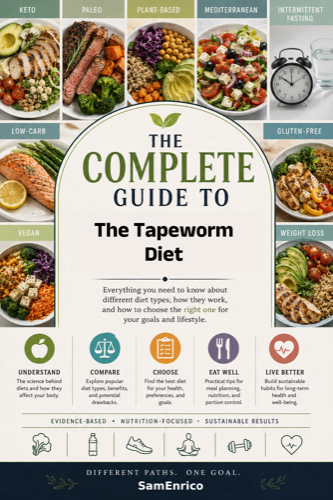 The Complete Guide to the Tapeworm DietHarry Hertha$11.99
You may also like
 Hong Kong Handover 1997Dunn Johnnie$11.99
 Zumba For Postnatal Recovery CourseNeal Christian$11.99
 Zumba for BeginnersLadner Nikia$11.99
 YouTube Comment Mining GuideHumes Pandora$12.99
 Worry Box MeditationCarlin Rudy$11.99
 Workplace Stress MeditationNguyen Lynn$11.99
 Workplace Stress and Sleep RepairHawley Ivory$11.99
 Workplace Perfectionism CureDelaney Jeffry$11.99
 Workplace Injustice Anger GuideWallen Isabelle$11.99
 Work Addiction and Burnout LinkGreenwood Ester$11.99
 Women in Yoga and WellnessBeattie Galina$11.99
 Women in Stand Up ComedyChun Evangeline$11.99