
Vagus Nerve Trigger Reset eBook
Uses polyvagal exercises to calm triggered states
Uses polyvagal exercises to calm triggered states quickly.
Formats
Free sample
Chapter 1: The Body's Betrayal--–- You are standing in the grocery store, halfway down the cereal aisle, when it happens. Your chest tightens. Your vision narrows. The fluorescent lights seem to buzz louder, and suddenly the boxes of shredded wheat feel like a wall closing in. You cannot catch your breath.
Your hands are cold and slick. You abandon your cart and walk out, heart pounding, ashamed, not understanding why your own body just attacked you over breakfast food.Or maybe it happens differently. You are sitting in a meeting, and someone asks you a perfectly normal question. Nothing difficult. Just, “What do you think?” But your throat locks.
Your face goes numb. Your voice disappears. You open your mouth, and nothing comes out. Later, in the car, the words come flooding back—perfect, articulate answers that your body refused to deliver when it mattered.Or perhaps it happens at home. Your partner says something mildly critical—nothing you haven't heard before—and you feel the world go gray and distant.
You are still there, technically. You nod, you say “okay,” but you have left the building. You are watching yourself from the ceiling. The rest of the evening passes in a fog, and you cannot remember what anyone said.These are not failures. They are not signs of weakness or instability or being “too sensitive.” They are the sound of an exquisitely designed survival system doing exactly what it evolved to do—responding to a perceived threat with the full force of a million years of evolution.
The problem is not that your alarm system is broken. The problem is that your alarm system has learned to go off when there is no fire. And until you understand how that alarm works, you will keep fighting your own body instead of befriending it.This chapter will give you a map. Not a dry textbook diagram of nerves and synapses, but a living, breathing map you can feel in your own body. By the time you finish reading, you will understand why your body reacts before your brain catches up.
You will learn to recognize the three distinct states your nervous system moves through like gears in a transmission. And most importantly, you will discover your own Trigger Signature—the unique physical fingerprint your body leaves behind every time it sounds the false alarm.The Geography of Survival Let us start with a question that sounds simple but is actually profound: why do you have a nervous system at all?The easy answer is “to think and feel and move.” But the deeper answer, the one that explains everything in this book, is that you have a nervous system to keep you alive. Every structure, every pathway, every chemical messenger in your nervous system exists because it helped your ancestors survive long enough to reproduce. Your nervous system is not designed for happiness. It is not designed for productivity, or peak performance, or even for peace.
It is designed for survival. And survival, in evolutionary terms, is a simple equation: avoid danger, approach safety, stay alive until tomorrow.This is why your body reacts the way it does when you feel triggered. You are not having a panic attack because you are broken. You are having a panic attack because your nervous system has detected what it believes to be a life-threatening danger, and it is throwing everything it has at the problem. The racing heart, the cold hands, the tunnel vision, the shallow breathing—these are not malfunctions.
These are coordinated survival responses that have kept your species alive for millions of years.The trouble is that your nervous system is not very good at distinguishing between different kinds of threats. A tiger in the tall grass and a critical email from your boss can trigger the same response. A childhood memory of being humiliated and a stranger’s neutral facial expression can register as the same level of danger. Your neuroception—the unconscious scanning system we introduced in the Introduction—does not know the difference between a broken bone and a broken heart. It only knows threat or safety.So before we go any further, let us make a deal.
You will stop calling yourself broken. You will stop asking “What is wrong with me?” and start asking “What is my nervous system trying to protect me from?” Because once you understand the protection, you can work with it instead of against it. And that is when the real change begins.The Three Gears of Your Nervous System Your autonomic nervous system does not operate like a simple on-off switch. It does not just toggle between “calm” and “panicked.” Instead, it functions like a three-gear transmission. Each gear evolved to solve a specific survival problem.
Each gear has its own set of physical sensations, emotional tones, and behavioral impulses. None of these gears is bad. All of them are necessary. The problem is getting stuck in one gear or shifting into high gear when you need to be in neutral.Gear One: Ventral Vagal (Safe and Connected)The first gear is called Ventral Vagal, named after the branch of your vagus nerve that runs along the front of your spine. This is your home base.
This is where your nervous system lives when it does not detect any threats and does not need to conserve energy for emergencies.When you are in ventral vagal, your body feels safe. Not necessarily happy—you can be sad or tired or frustrated and still be in ventral vagal—but fundamentally okay at the level of your nervous system. Your heart beats in a steady, responsive rhythm that changes appropriately when you stand up or lie down. Your breathing is easy and full, without effort or restriction. Your face is soft and expressive.
Your voice has natural warmth and variability; you sound like yourself. You can make eye contact without discomfort, and you can look away without fear. Your digestion works. Your immune system functions properly. You feel curious, connected, and present.Here is what ventral vagal feels like in real life: a slow Saturday morning with nothing urgent to do.
Sitting across from someone who loves you while you both drink coffee. The moment after a long run when your breath returns and your muscles soften. The way a child feels when they climb into a parent’s lap—safe, held, free to explore because the base is secure. You can be stressed about a deadline in ventral vagal. You can be grieving a loss.
But underneath those passing emotions, there is a foundation of okayness. Your system is not on alert.Gear Two: Sympathetic (Mobilized and Alert)The second gear is Sympathetic. This is your action system. When your neuroception detects a threat, your sympathetic nervous system floods your body with adrenaline and cortisol. Your heart races.
Your blood pressure rises. Blood vessels constrict in your hands and feet to send more blood to your large muscles. Your pupils dilate to take in more visual information. Your breathing becomes shallow and fast. Your digestion slows or stops.
You are ready to fight or to flee.In a real emergency, this gear saves your life. If a car is…
This is the end of the free sample. Get the eBook to keep going. Buy now
About this book
Details
- Author
- Barrows Brittney
- Publisher
- SamEnrico
- Language
- English
- Genre
- Non-Fiction, Self-Help
- Released
- 2026-06-06
- Pages (approx.)
- 140
- Available as
- eBook, Audiobook

Read better in the ZLOADR app
Your eBooks on your phone or tablet. Sign in with your SamEnrico account and start reading.
More by Barrows Brittney
 CRSD in NeurodivergentsBarrows Brittney$11.99
 Alcohol Detox Insomnia GuideBarrows Brittney$11.99
 Self Esteem Sexless MarriageBarrows Brittney$11.99
 Personal Brand for Real EstateBarrows Brittney$11.99
 Short Term Memory ImprovementBarrows Brittney$11.99
 Insurance Broker vs AgentBarrows Brittney$11.99
 Active Listening EQBarrows Brittney$11.99
 The Witch Hunts of Post-War Congo: Survival and Justice in the Shadow of ColonialismBarrows Brittney$11.99
 The Voice of the Nile: Senenmut and the Birth of Egyptian LiteratureBarrows Brittney$11.99
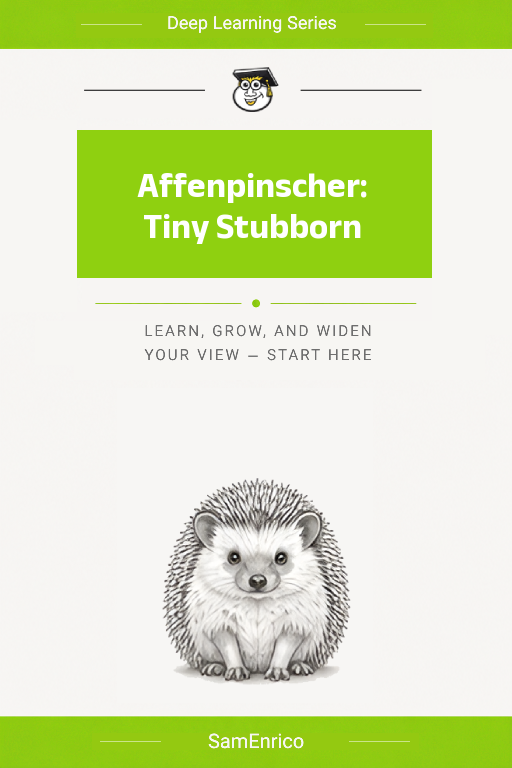 Affenpinscher: Tiny StubbornBarrows Brittney$11.99
 A Collector's Handbook to the Aston Martin UlsterBarrows Brittney$11.99
 Cost Absorption Strategy ManualBarrows Brittney$12.99
You may also like
 Hong Kong Handover 1997Dunn Johnnie$11.99
 Zumba For Postnatal Recovery CourseNeal Christian$11.99
 Zumba for BeginnersLadner Nikia$11.99
 YouTube Comment Mining GuideHumes Pandora$12.99
 Worry Box MeditationCarlin Rudy$11.99
 Workplace Stress MeditationNguyen Lynn$11.99
 Workplace Stress and Sleep RepairHawley Ivory$11.99
 Workplace Perfectionism CureDelaney Jeffry$11.99
 Workplace Injustice Anger GuideWallen Isabelle$11.99
 Work Addiction and Burnout LinkGreenwood Ester$11.99
 Women in Yoga and WellnessBeattie Galina$11.99
 Women in Stand Up ComedyChun Evangeline$11.99