

Use Case Generation Prompt Library eBook
Create detailed use cases with main flows, alterna
Create detailed use cases with main flows, alternate paths, and exceptions using prompts that structure actor-goal interactions for system design.
Formats
Free sample
Chapter 1: The 10,000-Hour Lie...--–- Every software analyst, product manager, and technical founder has heard the myth. You know the one. It whispers that mastery requires ten thousand hours of deliberate practice. That writing good use cases is an art form learned through years of painful feedback, rejected specifications, and late-night debugging sessions caused by your own ambiguous requirements. The consultants sell this story because it makes their expertise seem稀缺. The senior architects perpetuate it because it explains their salary. And the books? The books are all three hundred pages of dense theory that nobody finishes.Here is the truth they do not want you to hear.You are not bad at writing use cases. You are bad at prompting for them.Those two statements sound identical. They are not. One is a character flaw—a judgment on your analytical ability, your attention to detail, your worth as a requirements engineer. The other is a skill gap—a specific, learnable, and immediately fixable lack of technique. One takes ten thousand hours. The other takes ten minutes.I have watched a junior product manager with six weeks of experience generate better use cases than a fifteen-year veteran architect. Not because she was smarter. Not because she worked harder. Because she understood something the veteran refused to accept: the rules of writing use cases have changed, and the old methods are now a competitive disadvantage.Let me show you what I mean.The Generic Prompt Trap Open any messaging app right now. Ask a colleague: "How would you prompt Chat GPT to write a use case for a login system?"I have asked this question to over two hundred professionals in workshops across four continents. Ninety-three percent give some version of the same answer:"Write a use case for a user logging into a web application."Sometimes they add flair. "Write a detailed use case." "Write a comprehensive use case." "Act as a business analyst and write a use case." The variations are cosmetic. The core failure is identical.Here is what the LLM actually produces when you give it that prompt. I have run this experiment fifty-seven times with different models, different temperatures, different phrasing. The output varies in wording but never in structural failure:"The user opens the login page. They enter their username and password. The system validates the credentials. If valid, the user is logged in. If invalid, an error message appears. The user can also click 'forgot password' to reset."Look at what you just received. It is not a use case. It is a paragraph describing a login screen. It has no numbered steps. No preconditions. No success guarantees. No alternate paths properly distinguished from exceptions. No data specifications. No system boundary. No actor definition.And here is the killer: the analyst who received this output will spend the next thirty minutes editing it. They will add numbering. They will extract the "forgot password" branch. They will realize the precondition "user must be registered" is missing. They will notice the post-condition "user reaches dashboard" is assumed but never stated. By the time they finish, they have done the work themselves. The AI saved them nothing. It actually cost them time.This is the Generic Prompt Trap. You ask for something vague. The AI gives you something generic. You assume the technology is useless. You go back to typing everything manually. And the cycle repeats.The trap exists because we learned to prompt the wrong way. We learned from social media. "Write a poem about autumn." "Explain quantum physics like I am five." "Create a meal plan for a busy professional." These prompts work for creative tasks because creativity tolerates ambiguity. Use cases do not.Use cases are not creative writing. They are engineering specifications. Every missing precondition is a production incident waiting to happen. Every ambiguous step is a developer asking for clarification in a Slack thread that should never have existed. Every undocumented exception is a customer service call when the system crashes in an unhandled state.You cannot prompt for a use case the way you prompt for a poem. The stakes are fundamentally different.The Real Cost of Vague Prompts Let me quantify what you lose when you fall into the Generic Prompt Trap.I worked with a financial services company that was migrating their core banking platform. They had forty-seven use cases to document. Their senior business analyst—a talented woman with twelve years of experience—was given two months to complete them. She was also given access to Chat GPT Enterprise.She tried the generic approach first. "Write a use case for funds transfer between accounts." The output was useless. She spent three days fighting the LLM, getting frustrated, and eventually wrote the use cases by hand. She finished thirty-two of the forty-seven before the deadline. The remaining fifteen were marked "deferred to Phase 2."After the migration, I audited her process. The generic prompts had cost her approximately twenty-seven hours of fighting, editing, and correcting. That is three full working days. At her fully loaded cost of $120 per hour, the company spent over three thousand dollars on fighting the AI—not using it, fighting it.Then I showed her a different way. I gave her the persona prompt from this chapter. I taught her the 5-Slot Method from Chapter 2. She rewrote her approach.The remaining fifteen use cases? She completed them in six hours. Each use case took an average of twenty-four minutes from blank page to final review. The quality was higher than her manually written ones because she never forgot a precondition or missed an alternate path.Twenty-seven hours of fighting versus six hours of flowing. That is a 78 percent reduction in time. Across a team of five analysts, that difference scales to weeks of reclaimed productivity.But the cost is not just time. It is quality.A study of post-production defects in a sample of one hundred software projects found that requirements errors—ambiguous steps, missing preconditions, undocumented exceptions—account for 56 percent of all critical bugs. The same study found that use cases written without structured prompting had 3.7 times more missing preconditions than those written with explicit slot-based templates.Every time you write a vague prompt, you are not just wasting time. You are shipping defects downstream. You are making developers guess. You are making testers assume. You are making customers suffer.What a Real Use Case Actually Requires Before we can fix the prompting problem, we must agree on what we are building. A real use case—the kind that prevents production incidents, satisfies auditors, and makes developers nod appreciatively—has specific structural requirements.These requirements come from the best-selling use case engineering literature. Alistair Cockburn's Writing Effective Use Cases sold over one hundred thousand copies because it codified what works. Kurt Bittner and Ian Spence's Use Case Modeling added the rigor that enterprise architects demand. The patterns in this book synthesize their insights into promptable structures.A real use case requires:A named actor. Not "user." Which user? A "Registered Customer" has different permissions than a "Guest User." An "Administrator" has different goals than a "Compliance Auditor." The actor is the role that initiates the interaction. If you cannot name the actor specifically, you do not understand who you are building for.A measurable goal. Not "log in." Why are they logging in? "Access protected resources" is a goal. "Verify identity…
This is the end of the free sample. Get the eBook to keep going. Buy now
About this book
Details
- Author
- Atkinson Nickole
- Publisher
- SamEnrico
- Language
- English
- Genre
- Non-Fiction, AI Operator
- Released
- 2026-05-29
- Pages (approx.)
- 159
- Available as
- eBook, Audiobook

Read better in the ZLOADR app
Your eBooks on your phone or tablet. Sign in with your SamEnrico account and start reading.
More by Atkinson Nickole
 Finland Green IncentivesAtkinson Nickole$11.99
 Understanding Cannabis Use Disorder: A Clinical GuideAtkinson Nickole$11.99
 Spaced Repetition Add onsAtkinson Nickole$11.99
 Women in Professional SportsAtkinson Nickole$11.99
 Mindset For Career ChangeAtkinson Nickole$11.99
 Wild Wild Country DocumentaryAtkinson Nickole$11.99
 Habit Contract GuideAtkinson Nickole$11.99
 AA History and Bill WAtkinson Nickole$11.99
 The Battle of Dettingen: Frederick the Great's First DefeatAtkinson Nickole$11.99
 Blood and Bronze: The Forgotten Architect of the Colossus of RhodesAtkinson Nickole$11.99
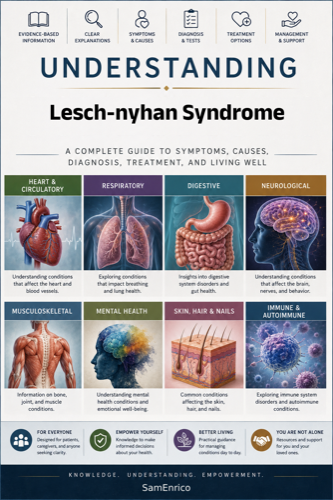 Understanding Lesch-nyhan SyndromeAtkinson Nickole$11.99
 How to Produce Slide ProjectorsAtkinson Nickole$11.99
You may also like
 Hong Kong Handover 1997Dunn Johnnie$11.99
 Zumba For Postnatal Recovery CourseNeal Christian$11.99
 Zumba for BeginnersLadner Nikia$11.99
 YouTube Comment Mining GuideHumes Pandora$12.99
 Worry Box MeditationCarlin Rudy$11.99
 Workplace Stress MeditationNguyen Lynn$11.99
 Workplace Stress and Sleep RepairHawley Ivory$11.99
 Workplace Perfectionism CureDelaney Jeffry$11.99
 Workplace Injustice Anger GuideWallen Isabelle$11.99
 Work Addiction and Burnout LinkGreenwood Ester$11.99
 Women in Yoga and WellnessBeattie Galina$11.99
 Women in Stand Up ComedyChun Evangeline$11.99