
Non-FictionFirst 30 DaysLean Planning
Unfair Advantage Definition Guide
Identify your sustainable competitive advantage. S
Identify your sustainable competitive advantage. Secrets, network effects, and proprietary tech for one-page plan.
Formats
About this book
Free sample
Chapter 1: The Fairness Trap--Most entrepreneurs are taught to compete harder, work longer, and play by the rules from the moment they write their first business plan. They are told that success belongs to the most deserving, that effort correlates directly with outcome, and that the market is a meritocracy where the best product inevitably wins. This is not merely oversimplified. It is dangerously false.The belief that business is fair is the single most expensive myth an entrepreneur can carry into the arena. It leads to predictable behaviors: benchmarking competitors, copying features, lowering prices, extending hours, and grinding harder while wondering why the gap between effort and results never closes.
The founders who internalize this myth become trapped in what economists call perfect competition, a theoretical construct where no participant has enough power to set prices, profits are squeezed to zero, and differentiation evaporates into commoditization. In practice, perfect competition is a race to the bottom, and the only guaranteed outcome is exhaustion.This book exists because there is another path. It is not the path of working harder within the existing rules. It is the path of changing the rules entirely. It is the path of building what Peter Thiel famously called a monopoly, not in the illegal sense of coercion, but in the strategic sense of creating a business so uniquely valuable that competition becomes irrelevant.
The companies that achieve this do not win fair fights. They avoid fights altogether by constructing what we will call throughout this book an unfair advantage.Before we go any further, we need a definition that will govern every chapter, every framework, and every exercise in the pages ahead. Inconsistent definitions ruined previous attempts at this topic. We will not make that mistake.An unfair advantage is any asset from the MILES framework, which we will fully introduce in Chapter 4, converted into a defensible mechanism that makes copying expensive, slow, or impossible for a relevant time horizon longer than your competitors' patience or capital.Let us break that definition into its components because precision here saves years of confusion later. First, the asset comes…
This is the end of the free sample. Get the eBook to keep going. Buy now
Contents
- Chapter 1
- Chapter 2
- Chapter 3
- Chapter 4
- Chapter 5
- Chapter 6
- Chapter 7
- Chapter 8
- Chapter 9
- Chapter 10
- Chapter 11
- Chapter 12
Details
- Author
- Cranford Kala
- Publisher
- SamEnrico
- Language
- English
- Genre
- Non-Fiction, First 30 Days, Lean Planning
- Released
- 2026-05-29
- Pages (approx.)
- 152
- Available as
- eBook, Audiobook

Read better in the ZLOADR app
Your eBooks on your phone or tablet. Sign in with your SamEnrico account and start reading.
More by Cranford Kala
 Spiro E Mobility ExitCranford Kala$11.99
 Car Music For Anger ReductionCranford Kala$11.99
 TM Doubt Resolution GuideCranford Kala$11.99
 Smoking Cessation for Back HealthCranford Kala$11.99
 Facility Management TechCranford Kala$11.99
 The Forgotten Bomb: The Untold Story of the Tsar BombaCranford Kala$11.99
 Apple: The Steve Jobs EraCranford Kala$11.99
 Ride Hailing Market MapCranford Kala$12.99
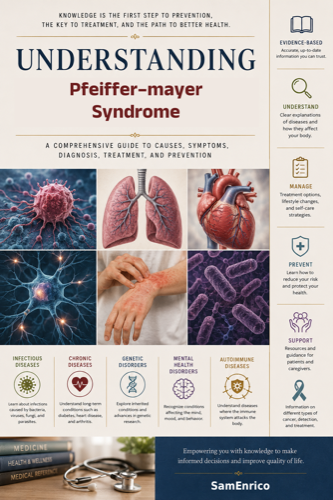 Understanding Pfeiffer–mayer SyndromeCranford Kala$17.99
 How to Start a Cable Accessory Business (Beginners Guide)Cranford Kala$11.99
You may also like
 Hong Kong Handover 1997Dunn Johnnie$11.99
 Zumba For Postnatal Recovery CourseNeal Christian$11.99
 Zumba for BeginnersLadner Nikia$11.99
 YouTube Comment Mining GuideHumes Pandora$12.99
 Worry Box MeditationCarlin Rudy$11.99
 Workplace Stress MeditationNguyen Lynn$11.99
 Workplace Stress and Sleep RepairHawley Ivory$11.99
 Workplace Perfectionism CureDelaney Jeffry$11.99
 Workplace Injustice Anger GuideWallen Isabelle$11.99
 Work Addiction and Burnout LinkGreenwood Ester$11.99
 Women in Yoga and WellnessBeattie Galina$11.99
 Women in Stand Up ComedyChun Evangeline$11.99