

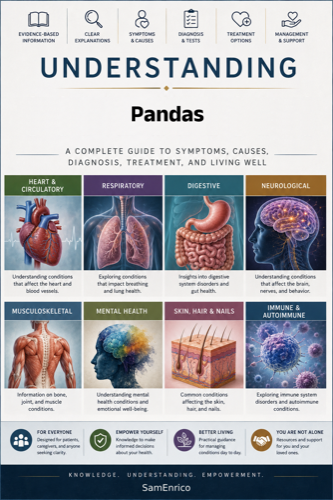
Non-FictionInformativeEducational
Understanding Pandas eBook
This condition publication, published by SamEnrico
This condition publication, published by SamEnrico, covers Understanding Pandas
Formats
Free sample
Chapter 1: Beyond the Grid...--The spreadsheet is a lie. Not a malicious lie, but a seductive one. It tells you that data lives in little boxes, that each cell is an island, that the way to work with information is to point, click, and type. This lie works beautifully—until it doesn’t. Until your file has too many rows. Until your boss asks for a report that requires combining twelve different sheets. Until you realize that the manual process you’ve been repeating every Friday for six months could have been automated, and the time you lost haunts you like a ghost.This book is the antidote to that lie.Welcome to Understanding Pandas. Not Memorizing Pandas. Not Copy-Pasting Pandas. Understanding. By the time you finish this chapter, you will have a working Python environment, a clear mental model of why Pandas exists, and—most critically—a shift in how you think about data that will make every subsequent chapter feel like common sense rather than a struggle.Why This Chapter Is Different Most technical books begin with a polite nod to “why this tool matters” before diving into installation commands that feel like ancient incantations. This chapter inverts that pattern. We start with the problem—the deep, frustrating, universal problem of working with data at scale—because until you feel that pain in your bones, the solution will never stick.Then we build your environment. Then we write your first code. Then we introduce the Pandas Zen, a philosophy that will guide every decision you make as you write data pipelines. And we do all of this while telling the truth: learning Pandas is not easy, but it is simple. The difference between easy and simple is the difference between a paved road that goes in circles and a dirt path that climbs a mountain. This chapter is your first step onto that path.The Three Data Sins Before you can appreciate what Pandas gives you, you must understand what it takes away. Let me describe three scenarios. If even one of them makes you wince with recognition, you are in the right place.The Sin of Manual Repetition Maria works in marketing analytics. Every Monday morning, she downloads a CSV of the previous week’s sales, opens it in Excel, filters out internal test accounts, removes rows where the discount exceeded 50 percent (a promotion that ended, but the system still logs the old discounts), creates a pivot table by product category, copies the results to a new sheet, creates a chart, pastes that chart into a Power Point slide, and emails it to her manager. This takes forty-five minutes.The following Monday, she does it again. And again. And again. She has been doing this for two years. That is seventy-eight hours per year. Two full work weeks. Of clicking the same buttons. In the same order. On data that changes, but the process never does.Maria has committed the Sin of Manual Repetition: doing by hand what a computer could do automatically.The Sin of Brittle Workflows James is a financial analyst. He inherited an Excel workbook from a predecessor who left no documentation. The workbook has nineteen sheets, thirty-seven named ranges, and twelve pivot tables that reference each other in ways that seem deliberately obscure. When James updates the raw data, the workbook works—usually. But every few months, something breaks. A formula returns #REF!. A pivot table loses its source. A hidden sheet that no one knew existed suddenly becomes relevant.James spends hours debugging a system he did not build, cannot fully understand, and is afraid to replace. He has committed the Sin of Brittle Workflows: building on foundations so fragile that change becomes terrifying.The Sin of Size Denial Priya is a data scientist at a mid-sized startup. Her company collects user behavior events—clicks, page views, purchases—and stores them in a database. For her analysis, she needs to examine six months of data. She exports it to CSV. The file is 2.3 gigabytes. Excel refuses to open it. Google Sheets crashes. Her laptop, which has 16 gigabytes of RAM, can barely load the file into memory.Priya tries to sample the data, but her manager needs full accuracy. She tries to use R, but the learning curve for large data is steep. She ends up writing a Python script using only the standard library—hundreds of lines of code to parse CSV files line by line, aggregate counts, and produce results. It works, but it took three days to write and debug.Priya has committed the Sin of Size Denial: pretending that yesterday’s tools can handle tomorrow’s data.The Common Thread Maria, James, and Priya are not lazy. They are not bad at their jobs. They are working with tools that were designed for a different era. Spreadsheets were invented for accountants in the 1980s. They are brilliant for what they do: small-to-medium datasets, ad-hoc analysis, quick visual feedback. But they were never designed for the scale, complexity, or reproducibility demands of modern data work.Pandas was designed for this era. Let me show you why.What Pandas Actually Is The official documentation will tell you that Pandas is “a fast, powerful, flexible, and easy-to-use open-source data analysis and manipulation tool built on top of the Python programming language.” This is accurate and useless. It tells you what Pandas is made of, not what it does for you.Here is what Pandas actually does: Pandas gives you spreadsheet superpowers inside a programming language.Think about what that means. You retain everything good about spreadsheets—tabular data, column and row labels, formulas that apply to ranges, filtering, sorting, aggregation. But you escape everything limiting about spreadsheets—the row limits, the manual repetition, the brittle formulas, the lack of version control, the inability to handle files larger than memory.When you work in Pandas, you are not “coding” in the way that word intimidates beginners. You are writing instructions. Each line of Pandas code is a sentence that describes a transformation:python Copy Downloaddf_clean = df[df['status'] != 'cancelled']“From my dataframe, keep only the rows where the status column is not ‘cancelled’.”python Copy Downloadmonthly_sales = df.groupby(df['date'].dt.month)['amount'].sum()“Group the data by month of the date column, then sum the amount column within each group.”python Copy Downloadtop_customers = df.groupby('customer_id')['purchase'].sum().nlargest(10)“Group by customer, sum their purchases, and give me the ten largest.”These sentences are not magic. They follow consistent rules. And once you learn those rules, you can express data transformations that would require dozens of spreadsheet steps in a single, readable line.The Data Structure That Changes Everything At the heart of Pandas are two data structures: the Series and the Data Frame. You will spend all of Chapter 2 mastering them. For now, understand this:A Series is a single column. It has a name, a data type, and a sequence of values.A Data Frame is a collection of Series that share an index. It is a table.That’s it. Every complex operation you will ever do in Pandas—filtering, grouping, merging, pivoting, resampling—is just a variation on moving data between Series and Data Frames, or transforming the values inside them.The beauty of this simplicity is that you do not need to memorize a thousand functions. You need to understand a handful of patterns. Once you see the patterns, the functions become predictable.A Brief History (Why You Should Care)Pandas was created in 2008…
This is the end of the free sample. Get the eBook to keep going. Buy now
About this book
Details
- Author
- Weatherly Elease
- Publisher
- SamEnrico
- Language
- English
- Genre
- Non-Fiction, Informative, Educational
- Released
- 2026-06-02
- Pages (approx.)
- 157
- Available as
- eBook, Audiobook

Read better in the ZLOADR app
Your eBooks on your phone or tablet. Sign in with your SamEnrico account and start reading.
More by Weatherly Elease
 Gacy Psychology EvaluationsWeatherly Elease$11.99
 Pet Product Spending DivideWeatherly Elease$11.99
 Exercise Boost Senior MemoryWeatherly Elease$11.99
 Dubai Student InterviewsWeatherly Elease$11.99
 Partner Bipolar GuideWeatherly Elease$11.99
 Angolan Civil War EscapeWeatherly Elease$11.99
 Pediatric IBS GuideWeatherly Elease$11.99
 Circadian Rhythm Children GuideWeatherly Elease$11.99
 The Bridge That Split a City: The 1967 Silver Bridge DisasterWeatherly Elease$11.99
 The Divine Harmonies: Monteverdi and the Birth of OperaWeatherly Elease$11.99
 How to Produce General AdhesiveWeatherly Elease$11.99
 Government Proposal Writing WorkbookWeatherly Elease$12.99
You may also like
 Hong Kong Handover 1997Dunn Johnnie$11.99
 Zumba For Postnatal Recovery CourseNeal Christian$11.99
 Zumba for BeginnersLadner Nikia$11.99
 YouTube Comment Mining GuideHumes Pandora$12.99
 Worry Box MeditationCarlin Rudy$11.99
 Workplace Stress MeditationNguyen Lynn$11.99
 Workplace Stress and Sleep RepairHawley Ivory$11.99
 Workplace Perfectionism CureDelaney Jeffry$11.99
 Workplace Injustice Anger GuideWallen Isabelle$11.99
 Work Addiction and Burnout LinkGreenwood Ester$11.99
 Women in Yoga and WellnessBeattie Galina$11.99
 Women in Stand Up ComedyChun Evangeline$11.99