
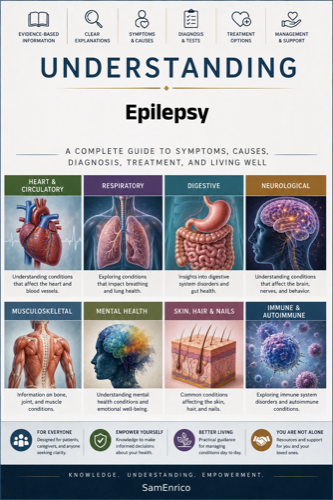
Understanding Epilepsy Audiobook
This condition publication, published by SamEnrico
This condition publication, published by SamEnrico, covers Understanding Epilepsy
Formats
Free sample
Chapter 1: The Electrical Storm...-- Every person who has ever experienced a seizure or watched a loved one go through one has asked the same question in the dark hours after the event: What just happened inside the brain? The answer, though complex, begins with a fundamental truth that most people never learn: a seizure is not a disease in itself but a symptom—a final common pathway of cerebral chaos that can be triggered by dozens of different underlying causes. Understanding epilepsy requires stripping away the myths, the fear, and the oversimplifications that have surrounded this condition for centuries, replacing them with a clear, evidence-based picture of the brain's electrical systems and what happens when they go wrong. This chapter lays the foundation for everything that follows, from the molecular dance of ions across neural membranes to the structural lesions visible on modern neuroimaging, and it introduces a definition that will echo through every subsequent chapter: the distinction between an isolated seizure and the chronic condition we call epilepsy, and within that, the critical threshold that separates treatable epilepsy from the drug-resistant form that requires aggressive intervention.The Fundamental Question: Seizure Versus Epilepsy Before diving into cellular mechanisms, the clinician must understand a distinction that shapes every diagnostic and therapeutic decision. A seizure is a transient occurrence of signs and symptoms due to abnormal excessive or synchronous neuronal activity in the brain.
An epilepsy diagnosis requires any of the following: at least two unprovoked seizures occurring more than 24 hours apart; one unprovoked seizure with a high probability of recurrence (typically defined as a 60% or greater risk over the next ten years, as seen after a structural brain lesion or certain EEG findings); or a diagnosis of an epilepsy syndrome. This distinction is not academic pedantry—it determines who receives long-term anti-seizure medication and who may be observed after a first, isolated event.The concept of provoked versus unprovoked seizures adds another critical layer. A provoked seizure has an identifiable acute cause: high fever in a child (febrile seizure), severe hypoglycemia, electrolyte disturbance, alcohol withdrawal, head trauma within the past week, or an acute stroke or infection of the central nervous system. These seizures do not confer a diagnosis of epilepsy; correct the underlying disturbance, and the seizures typically cease. Unprovoked seizures occur in the absence of such acute triggers, implying an enduring predisposition to seizure activity—the essence of epilepsy.Now…
This is the end of the free sample. Get the Audiobook to keep going. Buy now
About this book
Details
- Author
- Saylor Alejandrina
- Publisher
- SamEnrico
- Language
- English
- Genre
- Non-Fiction, Informative, Educational
- Released
- 2026-05-09
- Pages (approx.)
- 159
- Available as
- eBook, Audiobook

Listen in the VoxFlicks app
Audiobooks and audio dramas wherever you go. Sign in with your SamEnrico account and press play.
More by Saylor Alejandrina
 Barbara Mandrell Steel GuitarSaylor Alejandrina$11.99
 Billie Holiday Strange FruitSaylor Alejandrina$11.99
 The Performance Pressure PairSaylor Alejandrina$11.99
 Second Generation Financial PressureSaylor Alejandrina$11.99
 Anger and Alcohol in CouplesSaylor Alejandrina$11.99
 Smoking Cessation for PilotsSaylor Alejandrina$11.99
 Keto Meal Prep WorkbookSaylor Alejandrina$11.99
 George W Bush GuideSaylor Alejandrina$11.99
 The Storm and the Cannon: The Battle of Pulo Aura (1782)Saylor Alejandrina$11.99
 The Tactician: Pep Guardiola and the Beautiful Game's RevolutionSaylor Alejandrina$11.99
 How to Produce French HornsSaylor Alejandrina$11.99
 WIPO Refusal and Response GuideSaylor Alejandrina$12.99