
Non-FictionInformativeEducational
Understanding Cowpox eBook
This disease publication, published by SamEnrico,
by Mott Janita
This disease publication, published by SamEnrico, covers Understanding Cowpox
Formats
Free sample
Chapter 1: The Gentle Monster...--What if the most important virus in medical history is one you have never heard of? What if a disease so mild that it barely registers in modern medical textbooks once saved humanity from its greatest killer—and may hold the keys to preventing the next pandemic? This is the paradox at the heart of cowpox, a virus that has been called many things over the centuries: the milkmaid’s blessing, the gardener’s nuisance, the cat’s curse, and, most famously, the origin of the very first vaccine. But beneath these folksy names lies a biological entity of extraordinary sophistication, a master of immune evasion, and a living fossil that connects us directly to the darkest days of smallpox and the brightest triumph of modern medicine.The word “cowpox” conjures images of eighteenth-century English dairies, of ruddy-cheeked milkmaids with pustules on their hands, of Edward Jenner scraping material from a cow’s lesion into the arm of a young boy. That story—the story of vaccination’s birth—is true and transformative.
But it is also incomplete. The virus that Jenner used, the virus that still circulates today in the woodlands of Europe and Western Asia, is far more interesting than its historical cameo suggests. It is a virus that has evolved over millennia to perform a delicate balancing act: it must replicate effectively enough to spread from host to host, yet it must not kill so efficiently that it burns through its own supply of susceptible animals. It must evade the immune systems of multiple species—rodents, cats, cows, humans—without provoking such a violent response that it destroys its own ecological niche. And it must accomplish all of this while carrying a genome so large and complex that it blurs the line between virus and bacterium.This chapter lays the virological foundation for everything that follows.
Without understanding what cowpox is at the molecular and cellular level, the rest of the book—the history, the clinical manifestations, the diagnostic challenges, the public health implications—rests on shaky ground. We will explore the virus’s place in the family tree of poxviruses, its physical structure, its genetic secrets, and its peculiar relationship with the animals that carry it. By the end of this chapter, you will understand why cowpox is not a “cow” disease at all, why its name is a historical accident, and why this gentle monster deserves far more attention than it receives.The Poxvirus Family: A Rogues’ Gallery To understand cowpox, one must first understand its relatives. The Poxviridae family is one of the most successful and ancient families of viruses known to science. Unlike influenza viruses, which shift and drift their way through human populations each year, or coronaviruses, which have jumped from animals to humans multiple times in the past two decades, poxviruses are slow, steady, and remarkably stable.
They are the heavy tanks of the viral world: large, heavily armored, and equipped with their own arsenals.The Poxviridae family is divided into two subfamilies: the Chordopoxvirinae, which infect vertebrates (including humans), and the Entomopoxvirinae, which infect insects. Cowpox belongs to the vertebrate-infecting branch, specifically to the genus Orthopoxvirus. This genus is a rogues’ gallery of some of the most significant pathogens in human history. The most infamous member is variola virus, the agent of smallpox. Variola major, the more lethal form of smallpox, killed approximately 30% of its victims and left survivors permanently scarred, sometimes blinded.
Over the course of human history, smallpox is estimated to have killed between 300 and 500 million people—more than all wars and other infectious diseases combined, save perhaps malaria and tuberculosis.Close on variola’s heels is monkeypox virus, now increasingly referred to as Mpox virus to reduce stigma and confusion. Mpox gained global attention during the 2022 outbreak, which spread to over 100 non-endemic countries and demonstrated that orthopoxviruses remain a credible public health threat even in the twenty-first century. Before 2022, Mpox was largely confined to Central and West Africa, where it caused sporadic outbreaks linked to contact with infected rodents and other wildlife. The 2022 outbreak revealed how quickly an orthopoxvirus could spread through networks of human contact, particularly among communities with low prior immunity due to the cessation of routine smallpox vaccination.Then there is vaccinia virus, the most mysterious member of the genus. Vaccinia is the virus that has been used as the smallpox vaccine for over two centuries, yet no one knows where it came from.
It has no known natural reservoir. It does not circulate in any wild animal population. It exists exclusively in laboratories and vaccine production facilities, a virus that humanity created, or at least selected and propagated, without ever fully understanding its origins. As we will explore in Chapter 4, the leading hypothesis is that vaccinia is a descendent of an extinct form of horsepox, possibly contaminated with cowpox during the early decades of vaccine production and then evolved under artificial selection into the virus we use today.And finally, there is cowpox virus—the subject of this book. Among its orthopoxvirus cousins, cowpox occupies a curious middle ground.
It is more pathogenic than vaccinia, which is generally mild in immunocompetent humans, but far less deadly than variola. It can infect a wider range of animal species than almost any other orthopoxvirus, a trait that has profound implications for its ecology and epidemiology. And it carries a genome that includes several genes not found in other orthopoxviruses, including genes that encode proteins specifically designed to sabotage the host immune system.The Architecture of a Monster: Viral Structure If you could place a single cowpox virion—a complete, infectious viral particle—under an electron microscope, what would you see? The answer is both surprising and revealing. Unlike the spherical, spiky coronaviruses that dominated news cycles during the COVID-19 pandemic, or the complex, multi-layered influenza viruses that shift and drift each flu season, poxviruses have a distinctive shape that has been described as brick-like or ovoid.
They are enormous by viral standards. Most viruses, including HIV, influenza, and coronaviruses, range from 80 to 120 nanometers in diameter. A cowpox virion is approximately 200 to 350 nanometers wide—roughly the size of a small bacterium. This size difference is not trivial. It means that cowpox can be visualized using light microscopy, albeit with difficulty, whereas most viruses require the far greater magnification of an electron microscope.The structure of the cowpox virion is a marvel of biological engineering.
The outermost layer is a lipid envelope, a fatty membrane studded with viral proteins that mediate attachment to host cells. Inside this envelope lies the core, which contains the viral genome and a suite of enzymes necessary for the early stages of replication. What makes poxviruses unique among DNA viruses is that they replicate entirely in the cytoplasm of the host cell. Most DNA viruses, including herpesviruses and adenoviruses, must enter the host cell nucleus to access the cellular machinery that copies DNA. Poxviruses carry their own RNA polymerase, their own transcription factors, and their own enzymes for capping and polyadenylating messenger RNA.
They are, in effect, self-contained replication factories that need nothing from the host cell’s nucleus except raw materials and energy.This cytoplasmic replication strategy has profound…
This is the end of the free sample. Get the eBook to keep going. Buy now
About this book
Details
- Author
- Mott Janita
- Publisher
- SamEnrico
- Language
- English
- Genre
- Non-Fiction, Informative, Educational
- Released
- 2026-06-02
- Pages (approx.)
- 146
- Available as
- eBook, Audiobook

Read better in the ZLOADR app
Your eBooks on your phone or tablet. Sign in with your SamEnrico account and start reading.
More by Mott Janita
 EQ for AnxietyMott Janita$11.99
 Async Board Communication BriefMott Janita$11.99
 TM Initiation Puja GuideMott Janita$11.99
 Naloxone in Schools GuideMott Janita$11.99Naloxone in Schools GuideMott Janita$11.99
 Cognitive Restructuring for Self DoubtMott Janita$11.99
 The Second Son: How Elon Musk’s Brother Became the Dark Horse of TechMott Janita$11.99
 The Blackout of 1977: When New York City Faced the DarkMott Janita$11.99
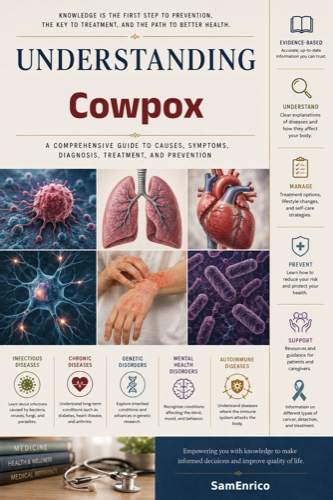 Understanding CowpoxMott Janita$17.99
 Personal Guarantee COVID ChangesMott Janita$12.99
 Viral Product Research FreeMott Janita$12.99
 Director of Project ManagementMott Janita$11.99
You may also like
 Hong Kong Handover 1997Dunn Johnnie$11.99
 Zumba For Postnatal Recovery CourseNeal Christian$11.99
 Zumba for BeginnersLadner Nikia$11.99
 YouTube Comment Mining GuideHumes Pandora$12.99
 Worry Box MeditationCarlin Rudy$11.99
 Workplace Stress MeditationNguyen Lynn$11.99
 Workplace Stress and Sleep RepairHawley Ivory$11.99
 Workplace Perfectionism CureDelaney Jeffry$11.99
 Workplace Injustice Anger GuideWallen Isabelle$11.99
 Work Addiction and Burnout LinkGreenwood Ester$11.99
 Women in Yoga and WellnessBeattie Galina$11.99
 Women in Stand Up ComedyChun Evangeline$11.99