

Non-FictionInformativeEducational
Understanding Cerebral Hypoxia
This disease publication, published by SamEnrico,
This disease publication, published by SamEnrico, covers Understanding Cerebral Hypoxia
Formats
About this book
Free sample
Chapter 1: The Oxygen Thieves...--– When my father collapsed in the kitchen, the clock on the microwave read 6:47 PM. I remember this not because I looked at the clock but because the microwave was the only light in the room when he fell. The dinner he was cooking—chicken, I think, though the memory of the food has faded—burned on the stove while I knelt beside him, pressing my phone to my ear, repeating our address to a dispatcher who spoke in a voice so calm it felt obscene. I did not yet know the word "hypoxia." I did not know that while I screamed his name, his brain was already dying. I only knew that his lips were turning a color I had never seen on a living person.The Silent Catastrophe Cerebral hypoxia is not a disease in the way that cancer or diabetes are diseases.
It has no genetic marker you can test for, no screening schedule, no early warning system that beeps before the event. It is a condition of absence—the absence of oxygen to the brain—and in that way, it is both simple and devastatingly complex. Simple because the mechanism is straightforward: no oxygen, no life. Complex because the brain, that three-pound universe of electrochemical poetry, does not die all at once. It dies in stages, in patterns, in a hierarchy of vulnerability that determines everything about who a person becomes if they survive.The term "cerebral hypoxia" comes from two Greek roots: kephalē (head) and hypo (under, below normal) combined with oxys (sharp, acute, or in medical terms, oxygen).
It means, literally, a condition of below-normal oxygen in the head. But this clinical definition fails to capture what it actually feels like to witness, or to survive. A better translation might be: the slow suffocation of the self.This book will take you through every stage of that suffocation and, more importantly, through the astonishing, heart-breaking, and often miraculous process of coming back. But before we can talk about recovery, we must first understand what is lost. And before we can understand…
This is the end of the free sample. Get the eBook to keep going. Buy now
Contents
- Chapter 1
- Chapter 2
- Chapter 3
- Chapter 4
- Chapter 5
- Chapter 6
- Chapter 7
- Chapter 8
- Chapter 9
- Chapter 10
- Chapter 11
- Chapter 12
Details
- Author
- Tanner Mirella
- Publisher
- SamEnrico
- Language
- English
- Genre
- Non-Fiction, Informative, Educational
- Released
- 2026-05-07
- Pages (approx.)
- 156
- Available as
- eBook, Audiobook

Read better in the ZLOADR app
Your eBooks on your phone or tablet. Sign in with your SamEnrico account and start reading.
More by Tanner Mirella
 Interpersonal Emotion ManagementTanner Mirella$11.99
 Loneliness After Moving HouseTanner Mirella$11.99
 Solar Temple Second Generation Survivors CourseTanner Mirella$11.99
 Mindfulness for Veterans PTSDTanner Mirella$11.99
 Free Creator Batch Recording StackTanner Mirella$11.99
 The Great Train Heist: How a Gang Outsmarted the Law in Broad DaylightTanner Mirella$11.99
 Frozen Echoes: The Lost Flight of KLM 867Tanner Mirella$11.99
 Packing For Dubai GuideTanner Mirella$12.99
 ESG Performance Human Rights GuideTanner Mirella$12.99
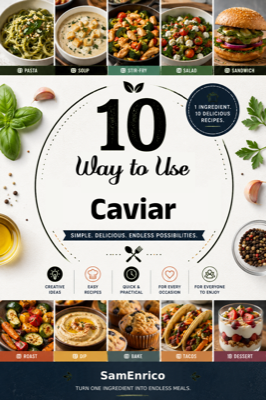 10 Ways to Use Caviar (Recipe Book)Tanner Mirella$11.99
 Cb RadioTanner Mirella$11.99
You may also like
 Hong Kong Handover 1997Dunn Johnnie$11.99
 Zumba For Postnatal Recovery CourseNeal Christian$11.99
 Zumba for BeginnersLadner Nikia$11.99
 YouTube Comment Mining GuideHumes Pandora$12.99
 Worry Box MeditationCarlin Rudy$11.99
 Workplace Stress MeditationNguyen Lynn$11.99
 Workplace Stress and Sleep RepairHawley Ivory$11.99
 Workplace Perfectionism CureDelaney Jeffry$11.99
 Workplace Injustice Anger GuideWallen Isabelle$11.99
 Work Addiction and Burnout LinkGreenwood Ester$11.99
 Women in Yoga and WellnessBeattie Galina$11.99
 Women in Stand Up ComedyChun Evangeline$11.99