
Non-FictionHistoryEconomic History
Triangular Trade Economics eBook
Explains the financial system linking British text
by Coble Booker
Explains the financial system linking British textiles, African slaves, and American sugar.
Formats
Free sample
Chapter 1: The Liquidity Engine--–- In the early summer of 1769, a three-masted ship named the Duke of York sat anchored off the coast of West Africa, her holds nearly empty of the cotton cloth and brass utensils she had carried from Liverpool, but her captain, Thomas Hodgson, faced a problem that had nothing to do with weather or seamanship. He had traded away almost every yard of Manchester cotton, every musket, every copper bar, and every string of glass beads. In exchange, he had acquired 312 captive men, women, and children, chained in the dark spaces between decks. But Hodgson was not yet ready to sail. He was waiting for a piece of paper.That paper was a bill of exchange drawn on a London banking house, and without it, the voyage could not continue.
Hodgson had spent his entire cargo budget. He needed credit to buy water, yams, and firewood for the Middle Passage. He needed to pay the African coastal brokers their customary "dash" – a 10% duty on all goods traded. And he needed to satisfy the Liverpool merchants who had financed the voyage that their money was not lost. The bill of exchange, once it arrived from the mainland, would be his proof of solvency.
It would also be the key to unlocking the next stage of a financial system so sophisticated, so brutally efficient, and so morally catastrophic that it would reshape the world.This book argues that the transatlantic triangular trade was not merely an exchange of goods – textiles for captives, captives for sugar, sugar for credit – but a fully integrated financial architecture. The triangular trade was the liquidity engine of the eighteenth-century world. It solved a problem that had plagued commerce since the dawn of long-distance trade: how to move value across oceans without moving gold. The answer, refined over two centuries of slave trading, was a system of bills of exchange, insurance contracts, and credit networks that turned human beings into a currency more reliable than any metal. Before we can understand the plantation, the voyage, or the industrial revolution that followed, we must first understand the paper that made it all possible.The Paradox of Movable Property European banks in the seventeenth and eighteenth centuries faced a puzzling contradiction.
They eagerly financed long-distance ocean voyages – to Africa, to the Caribbean, to the East Indies – but they refused to lend money for agricultural improvements or local manufacturing. A farmer who wanted to drain a marsh or a weaver who wanted to build a new loom could not get a loan from the great banking houses of Amsterdam, London, or Paris. Yet a Liverpool merchant who had never seen a slave ship could borrow thousands of pounds with nothing more than a cargo manifest and a promise.The reason was simple, brutal, and foundational to the triangular trade. A ship's cargo was movable property. If a borrower defaulted, the bank could seize the cargo and sell it in any port, anywhere in the Atlantic world.
The cargo could be repossessed, transported, and liquidated without the intervention of local courts, hostile nobles, or protective legislatures. Farmland and workshops, by contrast, were fixed assets. They were tied to specific locations, subject to local jurisdictions, and vulnerable to seizure by rival landlords or lawsuits from disgruntled tenants. A bank that lent money against a farm might spend years in litigation trying to foreclose. A bank that lent money against a cargo of cloth and muskets could send a single agent to sell the goods within weeks.This preference for movable collateral shaped every aspect of the triangular trade.
It meant that the most bankable assets in the Atlantic world were not land, not buildings, not even gold mines – but goods in transit. And the most valuable goods in transit, by the middle of the eighteenth century, were enslaved human beings. Not because they were more valuable than sugar or gold, but because they were self-transporting. A slave ship carried its most valuable cargo inside its own hull, alive, breathing, and capable of being moved from one market to another without the need for specialized handling. A hogshead of sugar could rot.
A bar of gold could be stolen. But a captive, once purchased, could walk onto the auction block under their own power.The financial implications were staggering. Banks that would never lend to a farmer competed fiercely to finance slave voyages. The annual interest rate on a slave voyage loan was typically 8-10% – high by modern standards, but low compared to the risks of Atlantic commerce. The cargo itself served as collateral, and the bank's agents monitored the voyage at every stage.
If a captain traded poorly on the African coast, the bank could refuse to discount his bills. If a ship arrived in the Caribbean with too many dead captives, the bank could demand immediate repayment. The system was not trusting; it was actuarial. And it worked.The Bill of Exchange: Paper That Crossed Oceans The instrument that made this system possible was the bill of exchange – a piece of paper that was, in effect, a transferable IOU. A bill of exchange was a written order from one merchant to another, instructing payment of a specific sum at a future date, typically 90 to 180 days.
The bill could be sold, discounted, traded, or used as collateral. It was the closest thing the eighteenth-century Atlantic had to paper currency.To understand how a bill of exchange worked, follow the path of a single transaction. In Liverpool, a merchant named William Davenport prepares a slave voyage. He needs £4,000 to buy cloth, muskets, and gunpowder. He goes to a bank – say, Baring Brothers of London – and draws a bill of exchange for £4,000, payable in 180 days.
The bank discounts the bill, meaning it gives Davenport £3,800 in cash (keeping £200 as interest and risk premium). Davenport uses the cash to buy his cargo. The ship sails to Africa, trades the cargo for captives, crosses the Atlantic, and sells the survivors in Jamaica. The Jamaican planter who buys the captives does not pay in gold or sugar. He pays with his own bill of exchange, drawn on a London merchant who owes him money for sugar shipped the previous year.
Davenport's captain takes that bill back to Liverpool, where Davenport presents it to Baring Brothers for payment. Baring Brothers redeems the bill for £4,000 – exactly the amount originally promised. Davenport has turned £3,800 into £4,000 (plus the profit from the voyage, which is handled separately). The bank has made £200 for doing almost nothing.The magic of this system was that it required almost no physical gold or silver. The bills of exchange circulated through the Atlantic economy like messages in a bottle, each one representing a debt that would eventually be settled by a future transaction.
As long as the chain of debts remained unbroken – as long as the Jamaican planter's sugar ship did not sink, as long as the London merchant did not go bankrupt – the system worked. And because the system worked, it could be scaled. By 1770, Baring Brothers alone was discounting over £500,000 annually in triangular trade bills. Other banks – Barclays, Lloyds, Hopes of Amsterdam, and dozens of smaller houses –…
This is the end of the free sample. Get the eBook to keep going. Buy now
About this book
Details
- Author
- Coble Booker
- Publisher
- SamEnrico
- Language
- English
- Genre
- Non-Fiction, History, Economic History
- Released
- 2026-06-11
- Pages (approx.)
- 142
- Available as
- eBook, Audiobook

Read better in the ZLOADR app
Your eBooks on your phone or tablet. Sign in with your SamEnrico account and start reading.
More by Coble Booker
 Pocket Step Reminder CardsCoble Booker$11.99
 Traditional Metta PhrasesCoble Booker$11.99
 The Omaha Retail PlaybookCoble Booker$11.99
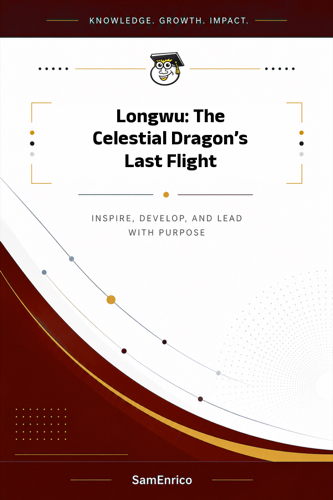 Longwu: The Celestial Dragon’s Last FlightCoble Booker$11.99
 Clerk Hmr and Alc PTCoble Booker$11.99
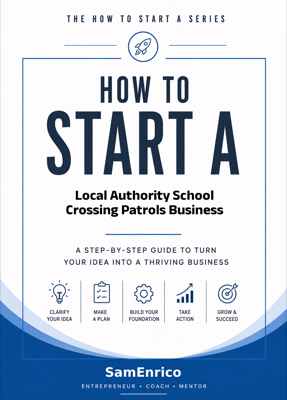 How to Start a Local Authority School Crossing Patrols Business (Beginners Guide)Coble Booker$11.99
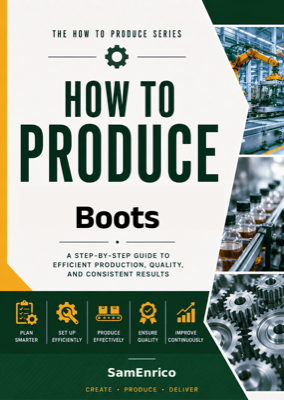 How to Produce BootsCoble Booker$11.99
 Cross Border Supply ChainCoble Booker$12.99
You may also like
 Hong Kong Handover 1997Dunn Johnnie$11.99
 Zumba For Postnatal Recovery CourseNeal Christian$11.99
 Zumba for BeginnersLadner Nikia$11.99
 YouTube Comment Mining GuideHumes Pandora$12.99
 Worry Box MeditationCarlin Rudy$11.99
 Workplace Stress MeditationNguyen Lynn$11.99
 Workplace Stress and Sleep RepairHawley Ivory$11.99
 Workplace Perfectionism CureDelaney Jeffry$11.99
 Workplace Injustice Anger GuideWallen Isabelle$11.99
 Work Addiction and Burnout LinkGreenwood Ester$11.99
 Women in Yoga and WellnessBeattie Galina$11.99
 Women in Stand Up ComedyChun Evangeline$11.99