
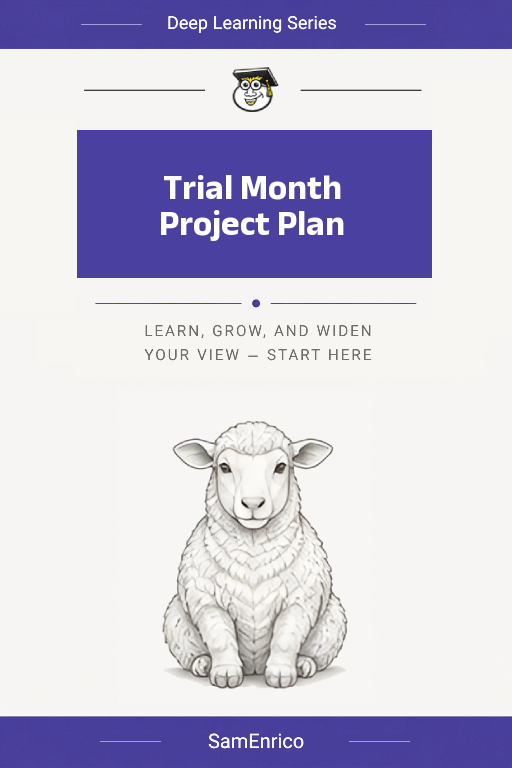
Non-FictionFirst 30 DaysTrial PeriodCompatibility Test
Trial Month Project Plan eBook
Work together on a 30-day mini-project before form
Work together on a 30-day mini-project before forming a legal entity to test compatibility.
Formats
Free sample
Chapter 1: The $50,000 Handshake--–- Sarah and Mark had been friends for seven years. They had survived college exams together, celebrated each other's weddings, and nursed each other through the inevitable hangovers of their twenties. When Mark pitched Sarah on a food delivery startup for busy parents, she didn't hesitate. "We're practically siblings," she told her husband that night. "If I can't trust Mark, who can I trust?"Thirty days later, they incorporated as 50/50 partners.
No written agreement. No discussion of what happened if one person stopped working. No conversation about who made the final call when they disagreed. Just a handshake, a high-five, and a $700 filing fee with the state.Eighteen months after that handshake, the company had raised 1.2million,growntofourteenemployees,andwasgeneratingrealrevenue.Itwasalso,byeverymeaningfulmeasure,adisaster.Sarahwasworkingseventyhoursaweek.Markhadquietlycheckedoutaftermonthsix,showingupforboardcallsbutcontributingalmostnothingoperationally.When Sarahfinallyconfrontedhim,Markremindedherthattheywere50/50partners.Hehadjustasmuchrighttothecompanyasshedid.Thefightthatfollowedconsumed1.2 million, grown to fourteen employees, and was generating real revenue. It was also, by every meaningful measure, a disaster.
Sarah was working seventy hours a week. Mark had quietly checked out after month six, showing up for board calls but contributing almost nothing operationally. When Sarah finally confronted him, Mark reminded her that they were 50/50 partners. He had just as much right to the company as she did. The fight that followed consumed 1.2million,growntofourteenemployees,andwasgeneratingrealrevenue.Itwasalso,byeverymeaningfulmeasure,adisaster.Sarahwasworkingseventyhoursaweek.Markhadquietlycheckedoutaftermonthsix,showingupforboardcallsbutcontributingalmostnothingoperationally.When Sarahfinallyconfrontedhim,Markremindedherthattheywere50/50partners.Hehadjustasmuchrighttothecompanyasshedid.Thefightthatfollowedconsumed47,000 in legal fees, destroyed their friendship, and ended with Sarah buying Mark out for an amount she refuses to disclose but admits "set me back two years."When I interviewed Sarah for this book, she said something I have never forgotten: "I spent more time researching which stroller to buy for my first child than I spent researching the person I trusted with my career."She is not alone.The Epidemic No One Talks About Let me start with a statistic that should terrify every entrepreneur reading this book.
According to research analyzed in Noam Wasserman's The Founder's Dilemmas—a decade-long study of over ten thousand founders—approximately 65 percent of startup failures are directly attributable to co-founder conflict. Not market competition. Not lack of funding. Not a bad product. People problems.
Specifically, the two or three people at the very top of the org chart who cannot figure out how to work together.Let that number sink in for a moment. Sixty-five percent.A separate analysis by Allinson and Penny, published in the Journal of Small Business and Enterprise Development, puts the number even higher. Their research on "human factors in start-up success" found that up to 80 percent of venture failures can be traced back to interpersonal dynamics among founding teams. Eighty percent.Here is what these numbers mean in plain English: you are more likely to fail because you chose the wrong co-founder than because a competitor crushed you. You are more likely to fail because you never had the hard conversation about equity than because you ran out of money.
You are more likely to fail because you incorporated with someone you barely know than because your product missed the market.And yet, how much time do aspiring founders spend on co-founder selection? How many hours of research, reflection, and structured testing do they invest before signing that state filing?Almost none.The typical founder spends more time choosing a logo, a font, or a coffee shop for their first meeting than they spend stress-testing the person who will have the legal right to half of their company. They treat co-founder selection as an act of romance rather than an act of due diligence. They fall in love with the idea, the energy, the shared enthusiasm—and they mistake that excitement for evidence of compatibility.This chapter exists to break that pattern. It will show you why the "Wedding Before the Date" fallacy is the single most expensive mistake most founders never see coming.
It will introduce you to the research on why friends and strangers both fail at alarming rates, though for different reasons. And it will reframe the solution—the Trial Month Project Plan—not as a sign of pessimism or distrust, but as a scientific experiment designed to gather the only data that matters: behavioral evidence of how someone works when they are bored, tired, stressed, and accountable to someone else.The Wedding Before the Date Fallacy Imagine, for a moment, that you met someone at a party. You talked for two hours. You felt a spark. You exchanged numbers.
The next day, you went for coffee. The conversation flowed easily. You discovered you both love hiking, both hate people who don't use turn signals, and both think The Office is the greatest show ever made.Now imagine that, after that second meeting, you proposed marriage.Absurd, right? Laughable. No reasonable person would commit to a lifetime partnership after two casual encounters.
You would date. You would meet each other's friends. You would travel together. You would have a fight about something stupid—maybe whose family to visit for Thanksgiving—and see how it resolved. You would, in other words, gather data over time before making a legally binding commitment.And yet, this exact absurdity plays out every single day in the world of startups.Two people meet at a hackathon.
They spend a weekend building a prototype. They feel the rush of creation, the dopamine hit of seeing their idea come to life. By Monday morning, they are discussing equity splits and LLC filings. They have spent less than forty-eight hours together—often less than forty hours total—and they are ready to sign documents that will entangle their financial futures, their reputations, and sometimes their friendships for years to come.This is the "Wedding Before the Date" fallacy. It is the mistaken belief that shared enthusiasm is a reliable predictor of long-term compatibility.
It is the cognitive bias that mistakes the thrill of a new idea for evidence of a functional partnership.Wasserman's research documents this fallacy with painful precision. In his study of over ten thousand founders, he found that nearly two-thirds of startups fail because of co-founder problems. And here is the kicker: the problems almost never emerge in the first few months. They emerge after the honeymoon period ends—usually six to eighteen months in—when the real work of building a company begins. That is when the missed deadlines become impossible to ignore.
That is when the different definitions of "hard work" become visible. That is when one person realizes they are carrying the other.But by then, the legal entity exists. The equity has been split. The sunk costs—financial and emotional—are too high to walk away cleanly. So the founders stay.
They fight. They resent. And eventually, they break up in a way that costs tens of thousands of dollars in legal fees and destroys whatever relationship they once had.The Trial Month Project Plan exists to move that break-up—if it is going to happen—from month eighteen to day eighteen. From a 47,000legalbattletoa47,000 legal battle to a 47,000legalbattletoa0 conversation. From a destroyed friendship to a professional parting that might even lead to future referrals.The Two Types of High-Risk Founders One of Wasserman's most useful contributions is his distinction between two high-risk founder profiles: "Friends and…
This is the end of the free sample. Get the eBook to keep going. Buy now
About this book
Details
- Author
- Archie Lianne
- Publisher
- SamEnrico
- Language
- English
- Genre
- Non-Fiction, First 30 Days, Trial Period, Compatibility Test
- Released
- 2026-05-29
- Pages (approx.)
- 144
- Available as
- eBook, Audiobook

Read better in the ZLOADR app
Your eBooks on your phone or tablet. Sign in with your SamEnrico account and start reading.
More by Archie Lianne
 Tanganyika IndependenceArchie Lianne$11.99
 Focus Endurance TrainingArchie Lianne$11.99
 CoQ10 Heart Energy GuideArchie Lianne$11.99
 Persuasive Consulting ProposalArchie Lianne$11.99
 Self-Esteem After Weight ChangeArchie Lianne$11.99
 Dementia Caregiving MemoirArchie Lianne$11.99
 Stem Cell Transplant SurvivorArchie Lianne$11.99
 The Stress and PCOS LinkArchie Lianne$11.99
 Medical Bedside NonverbalsArchie Lianne$11.99
 The Purple Conspiracy: The Secret War for Justinian's ThroneArchie Lianne$11.99
 Silent No More: The Unheard Voices of the 1919 Seattle General StrikeArchie Lianne$11.99
 Seeds of the First Dawn: The Lost Crops of the Indus ValleyArchie Lianne$11.99
You may also like
 Hong Kong Handover 1997Dunn Johnnie$11.99
 Zumba For Postnatal Recovery CourseNeal Christian$11.99
 Zumba for BeginnersLadner Nikia$11.99
 YouTube Comment Mining GuideHumes Pandora$12.99
 Worry Box MeditationCarlin Rudy$11.99
 Workplace Stress MeditationNguyen Lynn$11.99
 Workplace Stress and Sleep RepairHawley Ivory$11.99
 Workplace Perfectionism CureDelaney Jeffry$11.99
 Workplace Injustice Anger GuideWallen Isabelle$11.99
 Work Addiction and Burnout LinkGreenwood Ester$11.99
 Women in Yoga and WellnessBeattie Galina$11.99
 Women in Stand Up ComedyChun Evangeline$11.99