
Non-FictionBusiness BriefAlternative Structures
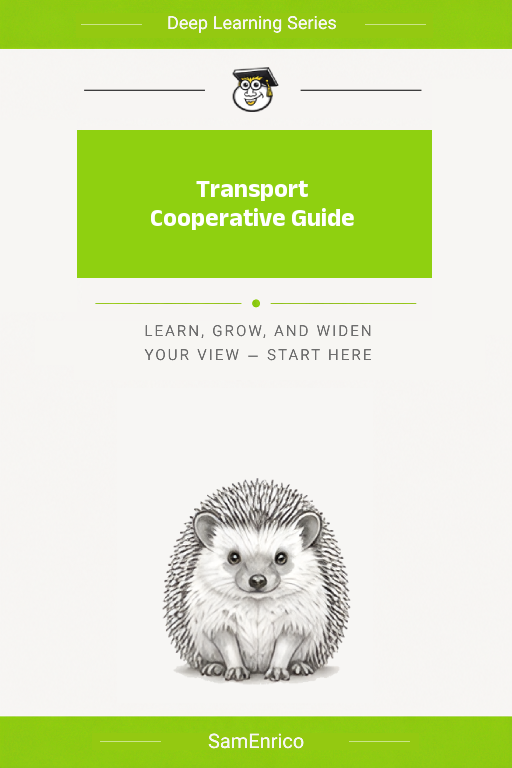
Transport Cooperative Guide
Form transport cooperatives for public transport a
Form transport cooperatives for public transport and logistics. Matatu and boda boda cooperatives.
Formats
About this book
Free sample
Chapter 1: The Nyamaza Trap...--–- The morning air over Nairobi’s Ngong Road stage tastes like diesel fumes and desperation. It is 5:47 AM. James Otieno, a 34-year-old matatu conductor with a faded Manchester United jersey and calloused hands, has already been on his feet for two hours. He washed the vehicle, argued with the driver about who would buy the first tank of fuel, paid a “parking fee” to a man who owns no parking lot, and promised a police officer at the next roundabout a “small token” to avoid a fake inspection ticket. By the time the first passenger climbs aboard, James is already in debt for the day.
He will work fourteen hours. He will handle twenty thousand shillings in cash. He will fight with three other matatus for every passenger at every corner. And at the end of the day, after paying the owner, the driver, the touts, the police, and the mechanic, James will walk home with exactly 487 shillings—about four dollars. Not enough for his daughter’s asthma medicine.
Not enough to fix the hole in his only pair of shoes. Just enough to wake up tomorrow and do it all again.–- Across town, in a rented garage in Kawangware, a different story unfolds. Fifty-two boda boda riders sit in a circle under a single fluorescent bulb. They are not competitors. They are members of a registered transport cooperative.
Each rider contributed three thousand shillings to start a common fund. Together, they buy fuel at wholesale prices. Together, they negotiated an insurance premium that costs each rider one third of what individuals pay. Together, they own a battery charging station and a small spare parts inventory. The oldest rider among them, a grandmother named Mama Sarah who started riding bodas after her husband died, earned more last month than she did in any two years of solo operation.
She did not fight anyone. She did not pay a single bribe. She simply stopped being alone.–– These two scenes represent the central divide of informal transport in East Africa and across the Global South.…
This is the end of the free sample. Get the eBook to keep going. Buy now
Contents
- Chapter 1
- Chapter 2
- Chapter 3
- Chapter 4
- Chapter 5
- Chapter 6
- Chapter 7
- Chapter 8
- Chapter 9
- Chapter 10
- Chapter 11
- Chapter 12
Details
- Author
- Gilman Lavada
- Publisher
- SamEnrico
- Language
- English
- Genre
- Non-Fiction, Business Brief, Alternative Structures
- Released
- 2026-05-30
- Pages (approx.)
- 154
- Available as
- eBook, Audiobook

Read better in the ZLOADR app
Your eBooks on your phone or tablet. Sign in with your SamEnrico account and start reading.
More by Gilman Lavada
 Internal Comms SWOT TemplateGilman Lavada$11.99
 Forgiving Yourself For Gaining WeightGilman Lavada$11.99
 Work Addiction in ConsultingGilman Lavada$11.99
 Anger for New ManagersGilman Lavada$11.99
 The Renewable Energy Capital StrategyGilman Lavada$11.99
 The Frozen Leviathan: Peter the Great's Naval Gambit at Hangö Head (1714)Gilman Lavada$11.99
 Post Meeting Nervous System ResetGilman Lavada$12.99
 Understanding Spondylo Camptodactyly SyndromeGilman Lavada$17.99
 Alloclasite MiningGilman Lavada$11.99
 How to Start a Churns Made of Wood Business (Beginners Guide)Gilman Lavada$11.99
You may also like
 Hong Kong Handover 1997Dunn Johnnie$11.99
 Zumba For Postnatal Recovery CourseNeal Christian$11.99
 Zumba for BeginnersLadner Nikia$11.99
 YouTube Comment Mining GuideHumes Pandora$12.99
 Worry Box MeditationCarlin Rudy$11.99
 Workplace Stress MeditationNguyen Lynn$11.99
 Workplace Stress and Sleep RepairHawley Ivory$11.99
 Workplace Perfectionism CureDelaney Jeffry$11.99
 Workplace Injustice Anger GuideWallen Isabelle$11.99
 Work Addiction and Burnout LinkGreenwood Ester$11.99
 Women in Yoga and WellnessBeattie Galina$11.99
 Women in Stand Up ComedyChun Evangeline$11.99