
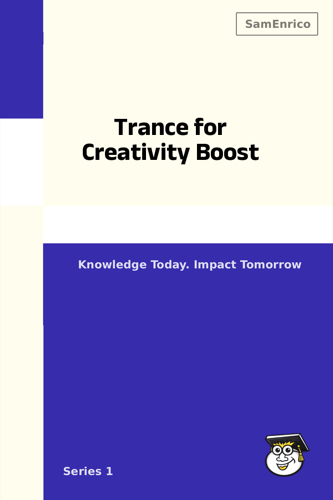
Trance for Creativity Boost eBook
Uses self hypnosis to access creative flow and pro
by Engel Colene
Uses self hypnosis to access creative flow and problem solving.
Formats
Free sample
Chapter 1: The Suffering Lie--–- It begins, as it always does, with a confession. I spent seven years believing that my creative work required me to be miserable. I drank too much coffee, slept too little, and cultivated a low-grade anxiety that I mistook for artistic intensity. Before every writing session, I would pace the room, reread my worst reviews, and summon a feeling of desperate inadequacy. Then, and only then, would I write.
And sometimes, the writing was good. Good enough to convince me that the ritual was necessary. Good enough to trap me inside a lie that has crippled more artists than alcohol, poverty, or rejection ever have.The lie is simple, seductive, and almost entirely wrong. It whispers that creativity and suffering are lovers. That the most profound art emerges from the deepest pain.
That you cannot be truly original unless you have wrestled with anxiety, substance abuse, emotional turmoil, or at the very least, a punishing inner critic who never lets you rest. This is the myth of the tortured artist, and it has survived for centuries because it contains a single grain of truth: suffering does sometimes accompany creative work. But the myth makes a fatal error. It confuses correlation with causation. Just because many artists have suffered does not mean suffering causes art.
And as you are about to discover, the opposite is closer to the truth.This chapter dismantles the suffering lie. You will learn, through neuroscience, why stress actually impairs the very brain networks responsible for imagination and original thought. You will discover that safety, relaxation, and psychological distance are not the enemies of creativity but its essential prerequisites. And you will complete your first self-hypnosis induction, a five-minute practice called The Relaxation Response, which will teach you how to separate your observing Self from your anxious Ego. By the end of this chapter, you will have taken the first step toward a radical redefinition of creativity: not as a mystical gift bestowed only on the wounded, but as a neurological state you can learn to enter at will.The Romantic Poison The myth of the tortured artist is not ancient.
It is a relatively recent invention, born in the Romantic era of the late eighteenth and early nineteenth centuries. Before that, artists were seen as skilled craftspeople, not tormented geniuses. But Romanticism elevated suffering into a credential. Lord Byron cultivated an image of scandalous melancholy. Edgar Allan Poe wrote of madness and loss.
Vincent van Gogh cut off his ear. And somewhere along the way, the culture decided that these were not just biographical details but essential ingredients of greatness.By the twentieth century, the myth had hardened into dogma. Jackson Pollock drank himself to death. Sylvia Plath took her own life after writing some of the most searing poetry of the century. Kurt Cobain became a reluctant icon of the "live fast, die young" archetype.
And millions of creative people, reading their biographies, drew a terrible conclusion: if I want to create something real, I must be willing to suffer.The problem is not that these artists suffered. The problem is that we have selectively remembered their suffering while ignoring the countless artists who created magnificent work from a foundation of stability, routine, and psychological safety. Johann Sebastian Bach had twenty children and a steady church job. He wrote his greatest works not in a frenzy of despair but as part of a disciplined daily schedule. Toni Morrison wrote her novels while raising two children alone and working as a book editor—not in agony, but in the early morning hours before her family woke, in a state of focused calm.
She called it "the pause" and described it as the most productive time of her day.The suffering lie persists because it is dramatic. It makes for good biographies and tragic films. But it is also dangerous. It convinces creative people that they should not seek help for anxiety or depression because their pain is fuel. It persuades writers to stay up until 3 AM drinking whiskey because Hemingway did it.
It tells painters that if they are not miserable, they must not be serious. All of this is false. And neuroscience now has the tools to prove it.The Cortisol Connection To understand why suffering does not help creativity, you need to meet a molecule called cortisol. Cortisol is a steroid hormone produced by your adrenal glands in response to stress. In small, short-term doses, it is useful.
It sharpens your focus, mobilizes energy, and helps you survive threats. If a tiger is chasing you, cortisol is your friend.But chronic stress—the kind that artists often cultivate as "inspiration"—keeps cortisol levels elevated for weeks, months, or years. And this is where the damage begins. Prolonged high cortisol does not sharpen your mind. It shrinks it.
Specifically, it damages the Default Mode Network, or DMN.The DMN is a collection of interconnected brain regions—the medial prefrontal cortex, the posterior cingulate cortex, the inferior parietal lobule—that become active when you are not focused on an external task. Neuroscientists sometimes call it the "imagination network" because it is responsible for mind-wandering, daydreaming, future planning, and creative recombination of memories and ideas. When you have an "Aha!" moment in the shower, that is your DMN at work. When you suddenly see a solution to a problem that has been bothering you for days, that is your DMN. When you combine two unrelated concepts into something new, that is also your DMN.Here is the problem.
Chronic cortisol exposure literally reduces the volume of gray matter in DMN regions. It weakens the connections between them. It makes the network less efficient at switching between focused attention (the Task Positive Network) and creative mind-wandering (the DMN). In other words, high stress does not fuel creativity. It starves the very brain system creativity depends on.This is not speculation.
The evidence is robust. A 2012 study at the University of California, San Francisco, found that chronic stress impaired cognitive flexibility—the ability to generate novel solutions—in otherwise healthy adults. A 2018 meta-analysis of forty-one studies concluded that stress consistently reduces creative performance across multiple domains, from divergent thinking to problem-solving to artistic production. The relationship is linear: the higher the chronic stress, the lower the creative output.But here is the hopeful news. The DMN is not permanently damaged.
It is remarkably plastic, meaning it can recover when cortisol levels drop. And the most effective tool for lowering cortisol quickly and reliably is not a drug or a supplement. It is self-hypnosis.Why Self-Hypnosis Works Self-hypnosis has a PR problem. For most people, the word "hypnosis" conjures images of stage shows, pocket watches, and volunteers clucking like chickens. That is not this book.
Clinical hypnosis—and its self-administered cousin, self-hypnosis—is a rigorously studied, evidence-based intervention for a range of conditions, including chronic pain, anxiety, irritable bowel syndrome, and yes, stress reduction.Here is what self-hypnosis actually is: a state of focused attention and heightened suggestibility, usually accompanied by deep physical relaxation and a shift in brainwave activity from beta (active, analytical) to alpha and theta (relaxed, creative). You enter similar states naturally every day—when you…
This is the end of the free sample. Get the eBook to keep going. Buy now
About this book
Details
- Author
- Engel Colene
- Publisher
- SamEnrico
- Language
- English
- Genre
- Non-Fiction, Self-Help, Creativity
- Released
- 2026-06-12
- Pages (approx.)
- 139
- Available as
- eBook, Audiobook

Read better in the ZLOADR app
Your eBooks on your phone or tablet. Sign in with your SamEnrico account and start reading.
More by Engel Colene
 The Bell Tower EchoEngel Colene$11.99
 Postpartum Strength ReturnEngel Colene$11.99
 Is Everyone Hanging OutEngel Colene$11.99
 Notice Period AnalysisEngel Colene$11.99
 The Mortuary Worker Stress GuideEngel Colene$11.99
 Pre Talk Script TemplatesEngel Colene$11.99
 Pelvic Floor Exercise BallsEngel Colene$11.99
 Time Blocking For DeclutteringEngel Colene$11.99
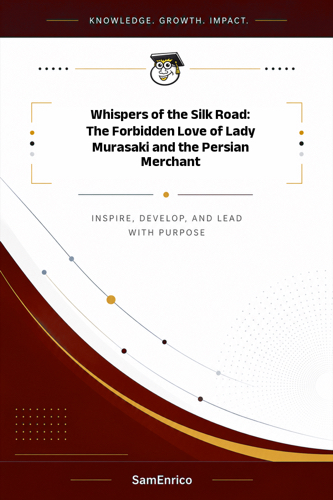 Whispers of the Silk Road: The Forbidden Love of Lady Murasaki and the Persian MerchantEngel Colene$11.99
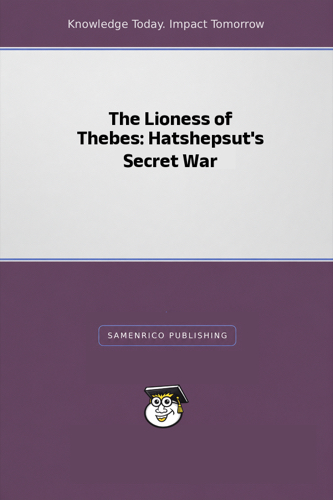 The Lioness of Thebes: Hatshepsut's Secret WarEngel Colene$11.99
 The Architect of Dreams: Brunelleschi and the Dome of FlorenceEngel Colene$11.99
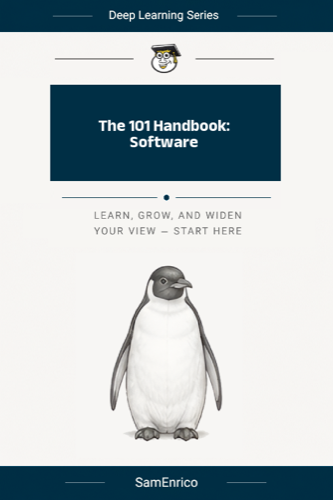 The 101 Handbook: SoftwareEngel Colene$11.99
You may also like
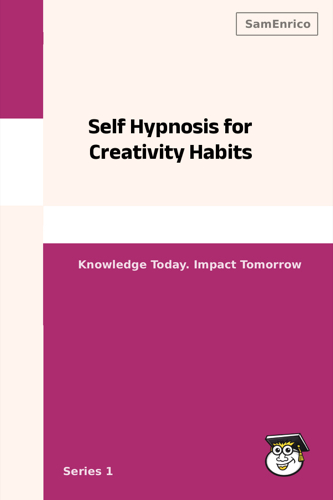 Self Hypnosis for Creativity HabitsGerman Bernetta$11.99
 Mindfulness Meditation for Creativity BlockPage Duane$11.99
 Joyful Creativity Through GratitudeJacob Antoine$11.99
 Ideation Techniques For SolutionsKim Vincent$11.99
 Fear Of Failure In CreativityCrean Fairy$11.99
 EQ For Creative Professionals GuideGilley Elanor$11.99
 Creative Legacy GuideHooker Georgiana$11.99
 Alcoholism Recovery for Creative Souls WorkbookCompton Leota$11.99
 Creativity Trance MethodLy Morgan$11.99
 Creative Morning Routine GuideBetancourt Jacquelynn$11.99
 Walking Meditation For Creative BlockStevens Irvin$11.99
 TM and CreativityCarson Saul$11.99