
Non-FictionBusiness BriefAlternative
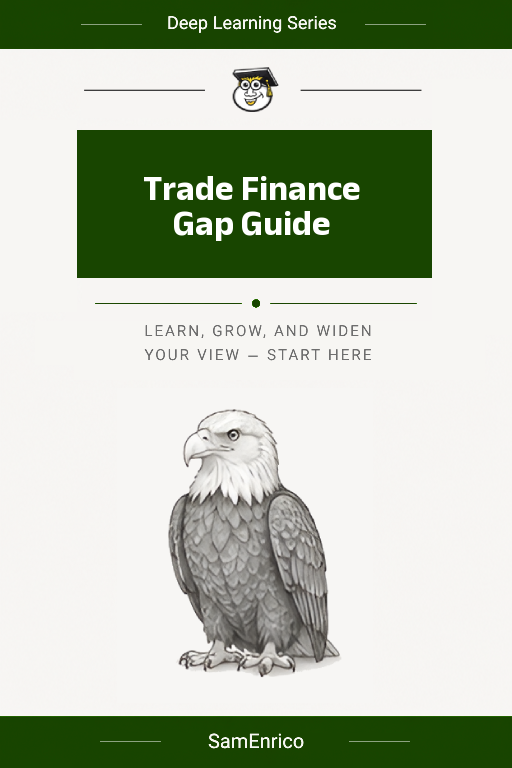
Trade Finance Gap Guide
Close trade finance gap using alternative lenders
Close trade finance gap using alternative lenders when banks reject African exporter applications.
Formats
About this book
Free sample
Chapter 1: The $120 Billion Blind Spot...--The rejection letter arrived on a Tuesday. Not by courier, not by phone call from a relationship manager who had promised to "fight for you." It came as a brief, automated email from the trade finance department of a regional bank in Nairobi. "After careful consideration of your application," the email read, "we regret to inform you that your request for a $750,000 pre-export finance facility has been declined."For Grace Mwangi, the owner of a medium-sized coffee processing cooperative in central Kenya, this was not her first rejection. It was her seventh in eighteen months. Her cooperative had a signed contract to supply 120 metric tons of specialty coffee to a German roaster—a household name in European organic food circles.
The buyer had a credit rating of AA-. The coffee was already harvested, graded, and stored in a bonded warehouse in Mombasa. The transaction carried a gross margin of 34 percent. By any commercial measure, it was a solid deal.The bank did not dispute any of this. In fact, the credit officer admitted on a follow-up call that "the transaction looks good on paper." The problem, he explained, was that the bank's internal risk model required a borrower credit rating of at least BB- for any facility above $500,000.
Grace's cooperative had never been rated by Moody's or S&P. The bank could not process the application. It was not personal. It was structural.Grace Mwangi is not a real person. But her situation is real, and it is repeated tens of thousands of times across the African continent every single year.
According to data from the African Development Bank and the International Chamber of Commerce, African small and medium-sized enterprises (SMEs) face rejection rates exceeding 40 percent for trade finance applications, compared to just 7 percent globally. The gap between approved and requested trade finance in Africa is estimated at over $120 billion annually. That is not a shortfall. That is a hemorrhage of economic potential.This chapter is about that gap. It is about why it exists, who it hurts, and—most importantly—why the conventional explanation…
This is the end of the free sample. Get the eBook to keep going. Buy now
Contents
- Chapter 1
- Chapter 2
- Chapter 3
- Chapter 4
- Chapter 5
- Chapter 6
- Chapter 7
- Chapter 8
- Chapter 9
- Chapter 10
- Chapter 11
- Chapter 12
Details
- Author
- Solis Allegra
- Publisher
- SamEnrico
- Language
- English
- Genre
- Non-Fiction, Business Brief, Alternative
- Released
- 2026-05-29
- Pages (approx.)
- 139
- Available as
- eBook, Audiobook

Read better in the ZLOADR app
Your eBooks on your phone or tablet. Sign in with your SamEnrico account and start reading.
More by Solis Allegra
 Pet Loss Grief GuideSolis Allegra$11.99
 Mindful Walking for PregnancySolis Allegra$11.99
 Pre Sleep Memory CueSolis Allegra$11.99
 Study Environment Optimization GuideSolis Allegra$11.99Study Environment Optimization GuideSolis Allegra$11.99
 Compulsive Spending Recovery CoachSolis Allegra$11.99
 The Pomodoro Study MethodSolis Allegra$11.99
 Difficult Customer TalksSolis Allegra$11.99
 SMART Goals for VolunteeringSolis Allegra$11.99
 The Silk Road Kingpin: The Untold Story of Paul Le RouxSolis Allegra$11.99
 The Iron Will of the Arctic: Nansen’s Impossible JourneySolis Allegra$11.99
 Service Providers Guide to Special EventsSolis Allegra$11.99
You may also like
 Hong Kong Handover 1997Dunn Johnnie$11.99
 Zumba For Postnatal Recovery CourseNeal Christian$11.99
 Zumba for BeginnersLadner Nikia$11.99
 YouTube Comment Mining GuideHumes Pandora$12.99
 Worry Box MeditationCarlin Rudy$11.99
 Workplace Stress MeditationNguyen Lynn$11.99
 Workplace Stress and Sleep RepairHawley Ivory$11.99
 Workplace Perfectionism CureDelaney Jeffry$11.99
 Workplace Injustice Anger GuideWallen Isabelle$11.99
 Work Addiction and Burnout LinkGreenwood Ester$11.99
 Women in Yoga and WellnessBeattie Galina$11.99
 Women in Stand Up ComedyChun Evangeline$11.99