
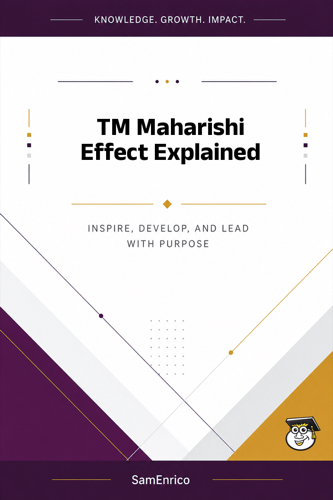
Non-FictionSelf-HelpCollective
TM Maharishi Effect Explained
Describes group meditation coherence research.
Describes group meditation coherence research.
Formats
About this book
Free sample
Chapter 1: The Algebra of War--For as long as human beings have kept records, we have tried to solve the same equation.On one side of the ledger: violence. On the other: every tool we could invent to stop it. Walls. Weapons. Laws.
Prisons. Treaties. Sanctions. Alliances. Peacekeepers.
Drones. Embassies. Intelligence agencies. The entire apparatus of civilization, built generation after generation, each layer added in response to the last atrocity.And yet, the equation remains unsolved.The twentieth century was the most violent in human history. An estimated 200 million people died from wars, genocides, and state-sponsored terror.
The twenty-first century has not improved the arithmetic. Since 2000, global battle-related deaths have increased by over 60 percent. Terrorism fatalities have increased nearly tenfold. Civil wars that were supposed to have ended—in Syria, in Yemen, in Ukraine, in Ethiopia—resume, mutate, or never truly stop. They just change zip codes.This is not a moral failing.
It is a mathematical one. We have been solving the wrong equation.The Standard Model of Peacekeeping Consider how the world currently responds to violence. A conflict erupts. News cameras arrive. Politicians issue statements of "grave concern." Sanctions are drafted.
Diplomats are dispatched. If the conflict escalates, military intervention becomes possible—airstrikes, special forces, peacekeeping troops in blue helmets. After the fighting stops, reconstruction begins. Prisons are built. Police forces are retrained.
Community policing initiatives are funded.Each of these interventions operates on what we might call the behavioral level. They assume that violence is caused by bad actors making bad choices, and that peace can be achieved by changing those choices—through deterrence (punishment), persuasion (diplomacy), or removal (imprisonment or death).This assumption is not wrong. It is incomplete.Consider a city with a high murder rate. The standard approach is to hire more police, impose stricter sentences, and run community outreach programs. These interventions produce measurable effects—typically a 5 to 15 percent reduction in violent crime.
That is not nothing. But it is not peace. It is management. The underlying violence remains, suppressed but not resolved, waiting for the moment when policing budgets are cut or political…
This is the end of the free sample. Get the eBook to keep going. Buy now
Contents
- Chapter 1
- Chapter 2
- Chapter 3
- Chapter 4
- Chapter 5
- Chapter 6
- Chapter 7
- Chapter 8
- Chapter 9
- Chapter 10
- Chapter 11
- Chapter 12
Details
- Author
- Womack Bernardine
- Publisher
- SamEnrico
- Language
- English
- Genre
- Non-Fiction, Self-Help, Collective
- Released
- 2026-06-10
- Pages (approx.)
- 141
- Available as
- eBook, Audiobook

Read better in the ZLOADR app
Your eBooks on your phone or tablet. Sign in with your SamEnrico account and start reading.
More by Womack Bernardine
 IBS Salad Intolerance GuideWomack Bernardine$11.99
 Cross Culture Digital CommsWomack Bernardine$11.99
 The First Black GovernorWomack Bernardine$11.99
 Data Leak Executive Summary ScriptWomack Bernardine$11.99
 The Lost City of Atlantis: The 2021 Greek Discovery That Shook the WorldWomack Bernardine$11.99
 The Last Telegram: The Untold Story of the Titanic’s Final MessagesWomack Bernardine$11.99
 How to Become a Chair Inspector And LevelerWomack Bernardine$11.99
 Understanding Cleft Palate Cardiac Defect EctrodactylyWomack Bernardine$17.99
 Assembly Line BalancingWomack Bernardine$12.99
 Chipper Cash YC PlaybookWomack Bernardine$12.99
 Slate Turkey BreedingWomack Bernardine$11.99
You may also like
 Hong Kong Handover 1997Dunn Johnnie$11.99
 Zumba For Postnatal Recovery CourseNeal Christian$11.99
 Zumba for BeginnersLadner Nikia$11.99
 YouTube Comment Mining GuideHumes Pandora$12.99
 Worry Box MeditationCarlin Rudy$11.99
 Workplace Stress MeditationNguyen Lynn$11.99
 Workplace Stress and Sleep RepairHawley Ivory$11.99
 Workplace Perfectionism CureDelaney Jeffry$11.99
 Workplace Injustice Anger GuideWallen Isabelle$11.99
 Work Addiction and Burnout LinkGreenwood Ester$11.99
 Women in Yoga and WellnessBeattie Galina$11.99
 Women in Stand Up ComedyChun Evangeline$11.99