
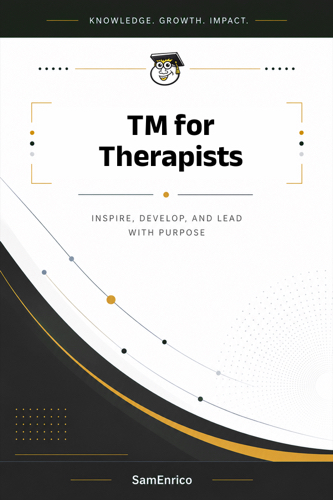
TM for Therapists
Protects from vicarious trauma.
Protects from vicarious trauma.
Formats
About this book
Free sample
Chapter 1: The Empathy Paradox--–- Maria had been a trauma therapist for fifteen years. She had trained in evidence-based modalities, maintained rigorous boundaries, attended biweekly supervision, and practiced yoga every Sunday. She was the clinician other therapists referred their most difficult cases to, the one who never seemed rattled, the one who could sit with a client’s darkest memories and emerge composed, compassionate, and professionally intact. Or so everyone believed.What no one knew was that Maria had stopped sleeping through the night three years ago. She had begun having intrusive images of her clients’ abuse scenes, not during sessions but in the quiet moments between—while chopping vegetables, while driving her daughter to school, while lying in bed next to her husband.
She had started drinking two glasses of wine every evening, just to turn off the loop. She had become cynical about her work, secretly believing that most of her clients would never get better, that the system was broken, that she was just a paid witness to an endless parade of suffering. She had not reported these changes to her supervisor because she could not name them. She just felt tired. Not physically tired, but existentially exhausted, as though the very fabric of her hope had worn thin.Maria’s story is not unusual.
It is, in fact, so common among trauma therapists that it has its own name: vicarious trauma. And the most dangerous myth in the mental health profession is that clinicians like Maria should have seen it coming, that they should have practiced better self-care, that they should have set firmer boundaries. The truth is far more unsettling. Maria did everything right by the standards of her profession. And she was drowning anyway.This chapter introduces the central problem that the rest of this book exists to solve.
Empathy is the therapist’s greatest asset—the very engine of healing. But empathy is also a contagion. The same neural systems that allow you to understand your client’s suffering also allow that suffering to enter your own body, your own mind, your own spirit. Vicarious trauma…
This is the end of the free sample. Get the eBook to keep going. Buy now
Contents
- Chapter 1
- Chapter 2
- Chapter 3
- Chapter 4
- Chapter 5
- Chapter 6
- Chapter 7
- Chapter 8
- Chapter 9
- Chapter 10
- Chapter 11
- Chapter 12
Details
- Author
- Snowden Jenifer
- Publisher
- SamEnrico
- Language
- English
- Genre
- Non-Fiction, Self-Help
- Released
- 2026-06-09
- Pages (approx.)
- 151
- Available as
- eBook, Audiobook

Read better in the ZLOADR app
Your eBooks on your phone or tablet. Sign in with your SamEnrico account and start reading.
More by Snowden Jenifer
 HGH And Cortisol BalanceSnowden Jenifer$11.99
 Diamond Dealer Bankruptcy AftermathSnowden Jenifer$11.99
 Exercise During Work Hours GuideSnowden Jenifer$11.99
 Smokeless Tobacco Cessation PlanSnowden Jenifer$11.99
 HGH Hair Growth ConnectionSnowden Jenifer$11.99
 Interview Answer SystemSnowden Jenifer$11.99
 Idea Speed Dating For TeamsSnowden Jenifer$11.99
 Swedish Green Tax HandbookSnowden Jenifer$11.99Swedish Green Tax HandbookSnowden Jenifer$11.99
 The Vanishing of Flight 447: A Cry in the DarkSnowden Jenifer$11.99
 The Last Whisper of the Crystal CavesSnowden Jenifer$11.99
 The Healing Hands of the Nile: The Forgotten Physicians of Ancient EgyptSnowden Jenifer$11.99
You may also like
 Workplace Stress MeditationNguyen Lynn$11.99
 Volcano Monitoring ScientistCox Alexis$11.99
 The Tech Professional NetAguiar Nevada$11.99
 The Morning Metta RitualCanales Anya$11.99
 The Chunking Memory TechniqueClanton Hyacinth$11.99
 The Beginner Mistake FixAmmons Cassondra$11.99
 Surrendering to What IsGrimm Reatha$11.99
 Self Hypnosis for Fear of FireBillups Eli$11.99
 Road Rage for Professional DriversBrackett Janise$11.99
 Psychiatric Ward Nurse StressDunning Wyatt$11.99
 Observation vs Evaluation NVCTimmons Alda$11.99
 Networking for Nonprofit ProfessionalsPoole Jesse$11.99