
Non-FictionSelf-HelpEnvironmentSpace
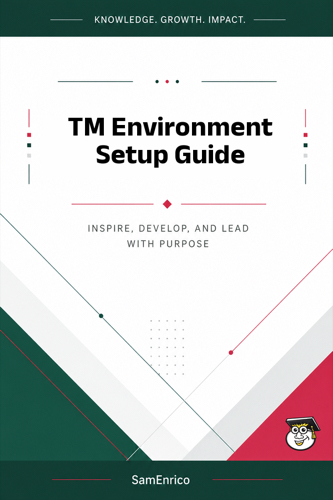
TM Environment Setup Guide eBook
Create ideal quiet space for twice daily meditatio
by Goetz Tomeka
Create ideal quiet space for twice daily meditation sessions.
Formats
Free sample
Chapter 1: The 80% Solution...--For eighteen years, Harold meditated in a converted broom closet. He was a retired aerospace engineer who had learned Transcendental Meditation in 1987, and he took his twice-daily practice with the same precision he had once applied to calibrating gyroscopes. His closet was exactly six feet by four feet. He had removed the original shelving, patched the holes, and painted the walls a flat, neutral gray that he color-matched to the underside of a cumulus cloud photographed at 35,000 feet. He installed a dedicated electrical circuit for a single dimmable LED fixture calibrated to 2700 Kelvin.
He measured the decibel level of the HVAC vent and sealed it with acoustic putty until the room registered a near-anechoic 22 decibels. He sat on a custom-made zafu cushion filled with buckwheat hulls sourced from a specific farm in Oregon. He had a small fan—pointed away from him, always—that produced a steady pink noise at exactly 48 decibels as measured by his sound meter.Harold was proud of this closet. He showed it to guests. He considered it a masterpiece of environmental engineering.He also skipped his meditation at least once a week.
Sometimes twice. When he did sit, he spent the first several minutes listening for imperfections—a faint rattle in the fan bearing, a sliver of light under the door, the neighbor's dog that had begun barking at precisely 4:47 PM. His transcendence had become, in his own words, "shallow" and "unsatisfying." He blamed the dog. He blamed the fan manufacturer. He blamed the buckwheat hulls, which he suspected had absorbed humidity and changed the cushion's density.Harold had made a classic error.
He had confused perfection with readiness. And in doing so, he had turned his meditation environment into an enemy rather than an ally.This book exists because of Harold. And because of the thousands of people like him who have been given a single, inadequate instruction—"find a quiet spot"—and then been left to figure out the rest on their own. The result is a quiet epidemic of abandoned practices, frustrated beginners, and experienced meditators who have quietly reduced their twice-daily sessions to once daily, then once weekly, then not at all.The problem is not your willpower. The problem is not your mantra.
The problem is not that Transcendental Meditation "doesn't work for you." The problem is that no one ever taught you how to build the room.The Quiet Epidemic: Why Most Meditators Quit Let us begin with a uncomfortable truth. According to longitudinal data from the David Lynch Foundation and multiple university-affiliated meditation research centers, approximately 73 percent of individuals who learn TM abandon their twice-daily practice within the first 90 days. Among those who persist past 90 days, an additional 40 percent reduce their frequency to once daily or less by the one-year mark.These numbers are not secrets. They are whispered about in TM teacher training circles, acknowledged in internal newsletters, and carefully omitted from marketing materials. The public narrative is one of effortless success.
The private reality is one of quiet failure.Why? The standard answer—offered by TM teachers, by best-selling books, by well-meaning friends—is that people lack discipline. They are too busy. They don't prioritize their own well-being. They quit because they are weak.This answer is not merely unhelpful.
It is actively harmful. It places the blame on the individual while ignoring the environmental factors that make consistent practice nearly impossible for most people.Consider the following scenario. You have learned TM. You have received your personal mantra. You have been instructed to meditate twice daily for twenty minutes each session.
You are motivated. You believe in the practice. You sit down in your living room on a Tuesday evening.Your phone buzzes. You silence it. Your partner walks through the room and asks what you want for dinner.
You say nothing—your eyes are closed—but now you are thinking about groceries. The dog barks at a delivery person. The refrigerator compressor kicks on with a low rumble. A car alarm sounds three blocks away. The evening light through the window shifts as clouds pass, creating a flickering effect that your peripheral vision cannot ignore.By the time you have been sitting for three minutes, your nervous system has been jolted by six distinct distractions.
Each one triggers what neuroscientists call an "orienting response"—a brief but measurable shift of attention from internal to external. Each one resets the settling clock. You are not transcending. You are enduring.And then the timer goes off. Twenty minutes have passed.
You feel nothing. No expansion. No peace. Just the vague frustration of having "done meditation" without any of the promised benefits.You try again the next day. The same thing happens.
By the end of the first week, you have begun to suspect that TM simply doesn't work for you. By the end of the first month, you have stopped trying.This is not a failure of discipline. This is a failure of environment.The Preparation Paradox: Why Effort Backfires There is a second, more insidious dynamic at play. Let us call it the Preparation Paradox.In the standard TM instruction model, the student is told to find a quiet place, sit comfortably, close their eyes, and repeat their mantra effortlessly. The implicit assumption is that the "finding a quiet place" step is trivial.
It takes thirty seconds. It requires no planning. It is, in the grand scheme of things, irrelevant compared to the profound practice of transcending.This assumption is catastrophically wrong.For most people, in most homes, at most times of day, "finding a quiet place" requires significant effort. You must clear clutter from a chair. You must close doors.
You must ask family members not to disturb you. You must silence your phone. You must adjust the blinds. You must find a cushion. You must remember to set a timer.
You must remove your shoes. You must adjust your clothing. You must take a deep breath and attempt to let go of the day's accumulated stress.By the time you have done all of this, you have already expended measurable mental energy. Your prefrontal cortex—the part of your brain responsible for planning, decision-making, and willpower—is already fatigued. You have, in effect, spent your meditation currency before you have even closed your eyes.This is the Preparation Paradox.
The effort required to prepare for meditation often exceeds the perceived effort of meditation itself. And the human brain, being exquisitely optimized for energy conservation, responds by simply skipping the preparation."I'll meditate later.""I'll do it tomorrow.""I need a break right now."These are not excuses. These are rational responses to an irrational demand. You are being asked to perform a substantial amount of work for an uncertain reward. Your brain, which evolved to prioritize immediate survival over long-term well-being, will reliably choose the path of least resistance.The solution is not to try harder.
The solution is to redesign your environment so that preparation requires no effort at all.The Neuroscience of Distraction: What Actually Happens When You Sit Down To understand why your environment matters so much, we must briefly examine what happens inside your nervous system when…
This is the end of the free sample. Get the eBook to keep going. Buy now
About this book
Details
- Author
- Goetz Tomeka
- Publisher
- SamEnrico
- Language
- English
- Genre
- Non-Fiction, Self-Help, Environment, Space
- Released
- 2026-06-09
- Pages (approx.)
- 143
- Available as
- eBook, Audiobook

Read better in the ZLOADR app
Your eBooks on your phone or tablet. Sign in with your SamEnrico account and start reading.
More by Goetz Tomeka
 Sacroiliac Joint Dysfunction GuideGoetz Tomeka$11.99
 The Constraint Canvas WorkbookGoetz Tomeka$11.99
 Assertiveness for Healthcare ProfessionalsGoetz Tomeka$11.99
 E Waste Recycling GuideGoetz Tomeka$11.99
 The Star Chart of Nubia: Astronomy and Empire in the Kingdom of KushGoetz Tomeka$11.99
 Wiffle Ball UmpireGoetz Tomeka$11.99
 Understanding Pfeiffer Cardiocranial SyndromeGoetz Tomeka$17.99
 Customer Relationship BlueprintGoetz Tomeka$12.99
 Pop Up Collaboration GuideGoetz Tomeka$12.99
 How to Start a Cable Laying Business (Beginners Guide)Goetz Tomeka$11.99
You may also like
 Hong Kong Handover 1997Dunn Johnnie$11.99
 Zumba For Postnatal Recovery CourseNeal Christian$11.99
 Zumba for BeginnersLadner Nikia$11.99
 YouTube Comment Mining GuideHumes Pandora$12.99
 Worry Box MeditationCarlin Rudy$11.99
 Workplace Stress MeditationNguyen Lynn$11.99
 Workplace Stress and Sleep RepairHawley Ivory$11.99
 Workplace Perfectionism CureDelaney Jeffry$11.99
 Workplace Injustice Anger GuideWallen Isabelle$11.99
 Work Addiction and Burnout LinkGreenwood Ester$11.99
 Women in Yoga and WellnessBeattie Galina$11.99
 Women in Stand Up ComedyChun Evangeline$11.99