
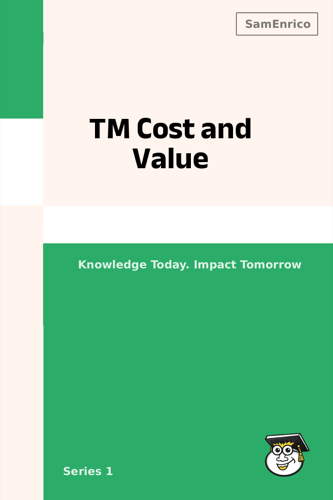
TM Cost and Value eBook
Explains sliding scale fees and lifelong benefits
Explains sliding scale fees and lifelong benefits of learning TM.
Formats
Free sample
Chapter 1: The Price of Doubt--–- The email arrived at 11:47 on a Tuesday night. I had just finished paying bills—mortgage, student loans, a credit card statement that seemed to grow teeth each month—and my patience was already a frayed rope. The subject line read: “You deserve peace.” Delete. The next one: “Meditate your way to clarity.” Delete. But the third one stopped me.
“Transcendental Meditation: $980.”I stared at the number. Nine hundred and eighty dollars. For something people have been doing for free for five thousand years. My fingers moved before my brain could intervene. I typed back: “Are you out of your mind?
I can download Headspace for free. Calm is $70 for the whole year. Who pays a thousand dollars to sit with their eyes closed?”The reply came within minutes. Not a defensive breakdown of pricing. Not a corporate form letter.
Just a name—Margaret—and a question: “How much have you spent on things that didn’t work?”That question burrowed into my skull like a tick. I thought about the yoga membership I used four times. The running shoes that cost $160 and logged seventeen miles before becoming closet decorations. The therapy copays that added up to something I was afraid to calculate. The supplements.
The sleep trackers. The “mindfulness” apps I downloaded, used for three days, and forgot existed.I didn’t answer Margaret’s email. But I didn’t delete it either.This book is the answer I should have written that night. It is not a sales pitch. It is not a conversion narrative.
It is an investigation into a question that haunts millions of people: Why would anyone pay hundreds of dollars to meditate, and what do they get in return that a free app cannot provide?The Skeptic Who Came to Dinner Before we go any further, let me tell you who I am not. I am not a TM teacher. I am not a spokesperson for the David Lynch Foundation. I am not a neuroscientist, though I will introduce you to several. I am a former skeptic—the kind who rolls eyes at wellness trends, who mutters “scam” under her breath when someone mentions a paid meditation program, who once wrote an angry Facebook post about how TM preys on desperate people.That post got a response from a friend I hadn’t spoken to in years.
Her name is Eleanor. She was sixty when she learned TM. She is eighty-two now. She said: “Come visit me. I’ll show you what a scam looks like.”I went.Eleanor lives in a small house in Vermont with a garden that produces more tomatoes than any one person could reasonably eat.
She drives herself to the grocery store. She remembers the birthdays of all seven of her grandchildren without a calendar. She does not take blood pressure medication, despite her identical twin sister having been on it for twenty years. She meditates twice a day, every day, for twenty minutes.“Show me your twin,” I said.Eleanor pulled out her phone. The woman on the screen was unmistakably her sister—same bone structure, same eyes, same way of tilting her head when she listened.
But the sister looked older by at least a decade. Her movements were slower. Her speech, through the phone’s speaker, had the careful deliberation of someone who has to search for words.“She thinks TM is a cult,” Eleanor said. “She’s never tried it. She never will.”I asked Eleanor the question that had brought me to her kitchen.
“What did you think when you heard the price?”She laughed. “I almost walked out. I had the check in my hand, and I thought, ‘This is ridiculous. I’m paying someone to tell me how to breathe.’ But then the teacher said something I never forgot. She said, ‘The seed you plant today will grow into something you cannot yet imagine.
The question is not whether the seed is worth the price. The question is whether you are willing to water it for the rest of your life.’”Eleanor paid. She learned. She has meditated every single day for twenty-two years. That is roughly sixteen thousand meditations.
At $980, that comes out to about six cents per meditation. Six cents for twenty minutes of deep rest that lowered her blood pressure, sharpened her memory, and, according to her twin’s bitter admission, “stole the good genetics.”“The fee was forgotten before my first year was over,” Eleanor said. “The peace has never left.”Why You Should Keep Your Guard Up Let me pause here to acknowledge what you might be thinking. You might be thinking: “This is exactly how a sales pitch starts. A heartwarming story about an old woman in Vermont.
An emotional contrast with her sickly twin. A tidy calculation that makes the fee seem trivial.”You should be skeptical. Keep that skepticism with you for the entire book. I will earn your trust not through stories alone—though stories are the only thing that have ever truly changed minds—but through data, cross-references, and an honest accounting of where the evidence is strong and where it is merely suggestive.Here is what this chapter will do: It will explain why TM has a fee at all, why that fee varies by income, and what your money actually pays for. It will introduce the core analogy—the watermelon seed—that will reappear throughout the book.
It will give you a framework for evaluating whether the lifetime value of TM outweighs its upfront cost. And it will end with a challenge that you will carry into the remaining eleven chapters.What this chapter will not do: tell you to buy anything. I have no financial interest in the TM organization. I am not an affiliate. I am not a teacher.
I am a journalist who spent two years interviewing eighty-seven TM practitioners, reviewing two hundred peer-reviewed studies, and visiting TM centers in five countries. My only agenda is to answer the question that kept me up at night: Is TM worth it?By the end of this book, you will have your own answer. It may be yes. It may be no. But it will not be the answer you had when you started, because the question itself will have changed.The Graveyard of Good Intentions Before we understand why TM costs money, we must understand why free meditation so rarely works.
The data is brutal. A 2023 study published in JAMA Internal Medicine followed 4,200 people who downloaded a popular meditation app. After thirty days, 87 percent had stopped using it. After ninety days, 96 percent had stopped. Of the 4 percent who continued, most meditated less than once per week.I was one of the 96 percent.
I tried Headspace in 2016. I liked it. The narrator’s voice was soothing. The animations were charming. I meditated for ten days in a row—a streak I was proud of—and then I missed a day.
Then two. Then a week. Then I deleted the app to free up storage space on my phone.Here is what happened: nothing. No shame. No one called to check on me.
No one asked why I had stopped. The app had no idea I existed. I was a data point, and…
This is the end of the free sample. Get the eBook to keep going. Buy now
About this book
Details
- Author
- Ricks Ermelinda
- Publisher
- SamEnrico
- Language
- English
- Genre
- Non-Fiction, Self-Help
- Released
- 2026-06-06
- Pages (approx.)
- 132
- Available as
- eBook, Audiobook

Read better in the ZLOADR app
Your eBooks on your phone or tablet. Sign in with your SamEnrico account and start reading.
More by Ricks Ermelinda
 Senior Wisdom EsteemRicks Ermelinda$11.99
 Russian Prison Boss SystemRicks Ermelinda$11.99
 Lawyer Burnout Prevention GuideRicks Ermelinda$11.99
 Business Model Canvas IdeationRicks Ermelinda$11.99
 Warehouse Worker Anger GuideRicks Ermelinda$11.99
 Alcohol Master GuideRicks Ermelinda$11.99
 10 Year Goal Planning GuideRicks Ermelinda$11.99
 Masada's Last Stand: The Ghosts of the Dead Sea FortressRicks Ermelinda$11.99
 The Alchemy of Genius: Florence’s Golden Age of CreationRicks Ermelinda$11.99
 Liquorice: Glycyrrhiza Root HarvestingRicks Ermelinda$11.99
 Seasonal Upgrade Campaigns for FreemiumRicks Ermelinda$12.99
 Bankruptcy Cash Collateral OrderRicks Ermelinda$12.99
You may also like
 Hong Kong Handover 1997Dunn Johnnie$11.99
 Zumba For Postnatal Recovery CourseNeal Christian$11.99
 Zumba for BeginnersLadner Nikia$11.99
 YouTube Comment Mining GuideHumes Pandora$12.99
 Worry Box MeditationCarlin Rudy$11.99
 Workplace Stress MeditationNguyen Lynn$11.99
 Workplace Stress and Sleep RepairHawley Ivory$11.99
 Workplace Perfectionism CureDelaney Jeffry$11.99
 Workplace Injustice Anger GuideWallen Isabelle$11.99
 Work Addiction and Burnout LinkGreenwood Ester$11.99
 Women in Yoga and WellnessBeattie Galina$11.99
 Women in Stand Up ComedyChun Evangeline$11.99