
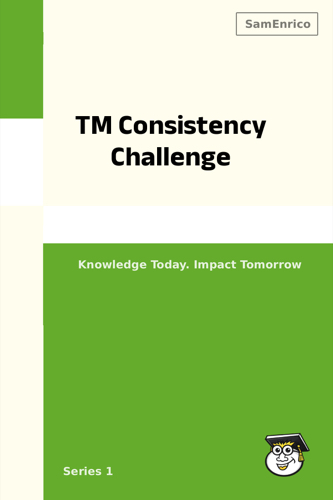
TM Consistency Challenge eBook
Build the habit of twice-daily practice for 30 day
Build the habit of twice-daily practice for 30 days.
Formats
Free sample
Chapter 1: The 90% Lie...--– You have been told, directly or indirectly, that learning Transcendental Meditation is the hard part. That once you have your mantra and your four days of instruction, the rest takes care of itself. That the benefits—the reduced stress, the clearer thinking, the emotional stability—will simply unfold like a flower in springtime.This is a lie. Not a malicious one. But a lie nonetheless.The truth is far less romantic and far more useful: learning TM is easy.
Anyone with a working nervous system can learn the mechanics in a few hours. The real challenge—the one that separates people who meditate for thirty years from people who meditate for thirty days—is not learning. It is showing up. Twice a day. When you are tired.
When you are busy. When you are skeptical. When you feel nothing. When you feel too much. When the dog needs a walk, the email needs a reply, and your child needs a ride.The data is brutal.
More than 90% of people who learn Transcendental Meditation stop practicing consistently within the first 90 days. Let that number land. Ninety percent. For every ten people who receive their mantra, only one will still be sitting twice a day three months later. This is not because TM "doesn't work." The research on TM is among the most robust in contemplative science: four hundred published studies, showing reduced cortisol, improved heart rate variability, lower blood pressure, faster reaction times, and measurable changes in brain coherence.
The technique works. What fails is the human being's ability to stick with it.And here is the most important sentence in this entire book: The failure is not yours. The failure is the lack of a system.You have never been given a structured, day-by-day, scientifically grounded protocol for building the habit of twice-daily meditation. The TM course teaches you how to meditate. It does not teach you how to never miss a session.
The books about TM explain the benefits and the philosophy. They do not give you a Resistance Rating Log, a Buddy System, a Make-Up Rule, or a 5-Minute Emergence protocol. They assume that once you see the value, you will simply do it. But human beings do not work that way. If they did, every gym would be full in February, every diet would succeed, and every New Year's resolution would survive until March.This chapter—the first of twelve in your 30-day journey—exists to accomplish three things.
First, to show you why the first 30 days determine whether you will be meditating in 30 years. Second, to give you the neurophysiological framework for how habits are actually built (spoiler: it is not about willpower). And third, to extract from you a Commitment Contract that you will sign, display, and honor for the next month.Before we go any further, let me tell you a story. It is my story.The Author's Confession I learned Transcendental Meditation ten years ago. I paid the fee, attended the four sessions, received my mantra, and sat twice a day for two glorious weeks.
I felt calmer. I slept better. I stopped yelling at my children. Then life happened. A work deadline.
A stomach flu. A vacation where I forgot my meditation cushion. The first missed session became two, became a week, became a year. I told myself I would restart tomorrow. Tomorrow became next month.
Next month became never.Two years later, I paid again. Retook the course. Received the same mantra. And quit again—this time in nineteen days.I am not unusual. I am the rule.
The only difference between me and the 90% is that I eventually became obsessed with the question: why do people quit? Is it laziness? Lack of discipline? A character flaw? I spent five years reading every study on habit formation, interviewing long-term meditators, and testing protocols on myself.
I discovered that the people who meditate for decades are not more virtuous than the people who quit. They simply have a system. They have a designated chair. They have a Make-Up Rule for missed sessions. They have an accountability partner.
They have learned, often through years of trial and error, that consistency is a design problem, not a moral one.This book is that system. I have compressed everything I learned into 30 days. You do not need to be a monk. You do not need to wake at 4 AM. You do not need to give up coffee, alcohol, or a sense of humor.
You need to follow 12 chapters of instructions, complete two simple logs per day (takes less than 90 seconds total), and show up. That is it.The 90-Day Graveyard: Why Most People Quit Let us examine the 90% dropout rate more closely, because understanding why people quit is the first step toward ensuring you do not.The data comes from multiple sources: internal tracking from TM centers, surveys of certified meditators, and longitudinal studies published in the Journal of Alternative and Complementary Medicine. Across all sources, the pattern is identical. Within the first 30 days of learning TM, adherence is high—around 85% of people are still sitting twice daily. Then something happens.
Between day 30 and day 60, adherence drops to 55%. Between day 60 and day 90, it plummets to under 10%. By day 90, the vast majority have abandoned the practice entirely.What causes the collapse? Researchers have identified three primary factors, none of which have anything to do with whether TM "works" for the individual.Factor One: The Expectation Trap Most people learn TM because they want to feel better. Less stressed.
More calm. More focused. This seems reasonable. It is also the fastest path to quitting. When you meditate with the goal of feeling calm, you are doing two things simultaneously: meditating and evaluating.
Your mind splits. Half of your attention goes to the mantra. The other half watches for results. "Am I calm yet? Is this working?
Shouldn't I feel something by now?" This internal monitoring creates effort, frustration, and the sense that you are failing. The expectation trap is so powerful that studies show people who meditate with goals actually experience higher stress after sitting than before. Not because meditation is bad for them, but because they feel like failures when the immediate calm does not arrive.The solution, which we will explore in depth in Chapter 3, is to release all expectations. TM is not a performance. There is no "good" meditation and "bad" meditation.
There is only meditation. Some sits will feel blissful. Others will feel boring, frustrating, or entirely uneventful. All of them are doing the same underlying physiological work.Factor Two: The Unschedule Life The second reason people quit is the simplest: they never put meditation into their calendar. They intend to meditate.
They know they should meditate. But intention without a specific time and place is worthless. This is not a moral failing; it is how the human brain works. The basal ganglia—the part of your brain responsible for automatic behaviors—cannot act on intentions. It can only act on triggers.
When you say "I will meditate tomorrow morning," your basal ganglia does nothing. When you say "When I finish my coffee, I will walk to my chair…
This is the end of the free sample. Get the eBook to keep going. Buy now
About this book
Details
- Author
- Worthington Yee
- Publisher
- SamEnrico
- Language
- English
- Genre
- Non-Fiction, Self-Help, Habits
- Released
- 2026-06-05
- Pages (approx.)
- 140
- Available as
- eBook, Audiobook

Read better in the ZLOADR app
Your eBooks on your phone or tablet. Sign in with your SamEnrico account and start reading.
More by Worthington Yee
 LTC Insurance For Farmers GuideWorthington Yee$11.99
 The Catholic Index CensorsWorthington Yee$11.99
 Gacy's Relationship with His FatherWorthington Yee$11.99
 Cocaine and Pregnancy GuideWorthington Yee$11.99
 Pattern Recognition in NatureWorthington Yee$11.99
 ADHD Workplace Focus GuideWorthington Yee$11.99
 THC and Memory SleepWorthington Yee$11.99
 Sexual Addiction Faith RecoveryWorthington Yee$11.99
 The Unseen Playbook: How Vince Lombardi's Leadership Transformed a Team and a NationWorthington Yee$11.99
 The Hollow Hill: Where the Tuatha Dé Danann SleptWorthington Yee$11.99
 Napoleon's March: The Maestro of War and MusicWorthington Yee$11.99
 The Dancer's Guide to GuapachaWorthington Yee$11.99
You may also like
 Hong Kong Handover 1997Dunn Johnnie$11.99
 Zumba For Postnatal Recovery CourseNeal Christian$11.99
 Zumba for BeginnersLadner Nikia$11.99
 YouTube Comment Mining GuideHumes Pandora$12.99
 Worry Box MeditationCarlin Rudy$11.99
 Workplace Stress MeditationNguyen Lynn$11.99
 Workplace Stress and Sleep RepairHawley Ivory$11.99
 Workplace Perfectionism CureDelaney Jeffry$11.99
 Workplace Injustice Anger GuideWallen Isabelle$11.99
 Work Addiction and Burnout LinkGreenwood Ester$11.99
 Women in Yoga and WellnessBeattie Galina$11.99
 Women in Stand Up ComedyChun Evangeline$11.99