
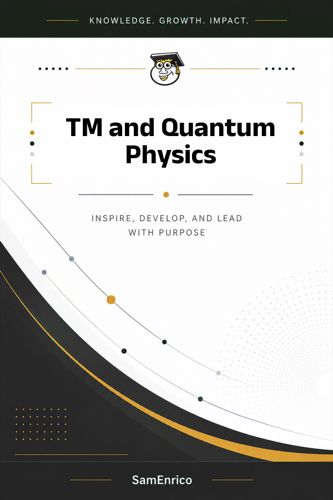
TM and Quantum Physics
Speculative connections between transcendence and
Speculative connections between transcendence and quantum field theory.
Formats
About this book
Free sample
Chapter 1: The Clockwork Lie--–- The story begins with a funeral. Not for a person, but for a worldview—the comforting, mechanical universe that has dominated Western science for three hundred years. For centuries, we were told that reality is a giant clockwork mechanism: billions of separate billiard balls bouncing against one another in absolute space and absolute time, governed by deterministic laws so precise that if you knew the position and momentum of every particle in existence, you could predict the entire future with perfect accuracy. This was the Newtonian dream. It gave us bridges that don't collapse, rockets that reach the moon, and smartphones that fit in our pockets.
But it also gave us a profound and crippling lie: the lie that consciousness is irrelevant, that the mind is just a ghost in the machine, and that the universe would continue ticking along exactly the same whether we were here to witness it or not.That lie is dying. And this book is about what comes next.The Mechanistic Prison To understand why the clockwork universe is a prison, we first have to understand how we got locked inside it. Isaac Newton's Philosophiæ Naturalis Principia Mathematica (1687) was arguably the most influential scientific work ever written. Newton described a universe where every object exerts a force on every other object, where motion follows mathematical laws that work the same yesterday, today, and tomorrow. This was a radical departure from the medieval worldview, which saw the cosmos as alive, purposeful, and imbued with meaning.
Newton drained the meaning out and replaced it with mathematics. For the first time, the universe became a machine.The success of Newtonian physics was so overwhelming that it became the default metaphysics of the Western world. If the universe is a machine, then living things are complicated machines. The brain is a biological machine. The mind is what the brain does—an epiphenomenon, a side effect, a ghost that flickers and dies when the machine breaks.
This view reached its most extreme expression in the early twentieth century with logical positivism, which declared that any statement…
This is the end of the free sample. Get the eBook to keep going. Buy now
Contents
- Chapter 1
- Chapter 2
- Chapter 3
- Chapter 4
- Chapter 5
- Chapter 6
- Chapter 7
- Chapter 8
- Chapter 9
- Chapter 10
- Chapter 11
- Chapter 12
Details
- Author
- Crespo Cristal
- Publisher
- SamEnrico
- Language
- English
- Genre
- Non-Fiction, Self-Help, Quantum, Physics
- Released
- 2026-06-09
- Pages (approx.)
- 141
- Available as
- eBook, Audiobook

Read better in the ZLOADR app
Your eBooks on your phone or tablet. Sign in with your SamEnrico account and start reading.
More by Crespo Cristal
 The One Tool ArtistCrespo Cristal$11.99
 Max Okada ExitCrespo Cristal$11.99
 Patient Anger for HealthcareCrespo Cristal$11.99
 The Postpartum Nutrition HandbookCrespo Cristal$11.99
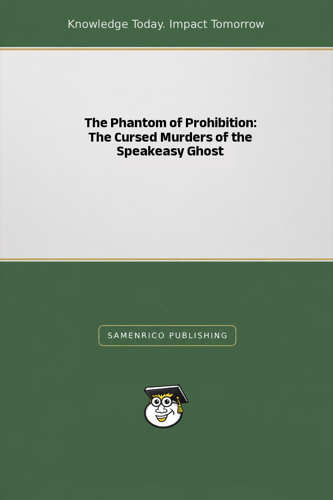 The Phantom of Prohibition: The Cursed Murders of the Speakeasy GhostCrespo Cristal$11.99
 Understanding PharmacophobiaCrespo Cristal$17.99
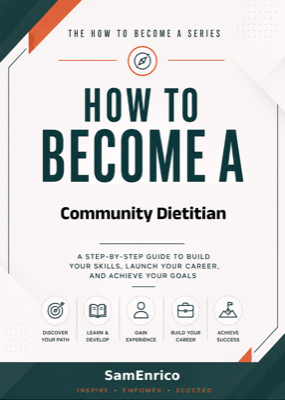 How to Become a Community DietitianCrespo Cristal$11.99
 One Page Plan for Real EstateCrespo Cristal$12.99
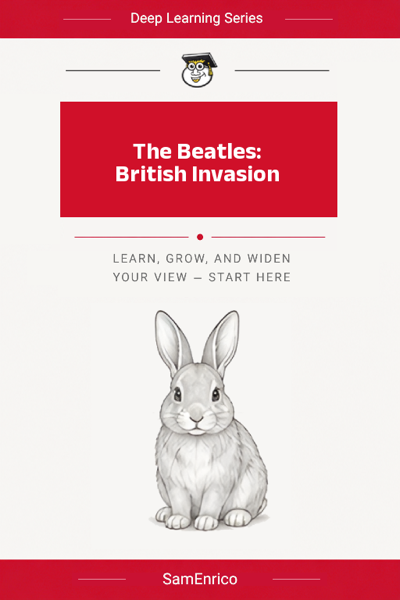 The Beatles: British InvasionCrespo Cristal$11.99The Beatles: British InvasionCrespo Cristal$11.99The Beatles: British InvasionCrespo Cristal$11.99