
Non-FictionTrue CrimeMemory Science
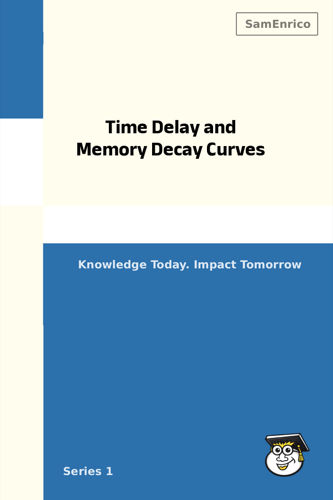
Time Delay and Memory Decay Curves
Quantifies how identification accuracy plummets wi
Quantifies how identification accuracy plummets within hours and days after a crime.
Formats
About this book
Free sample
Chapter 1: The Gradual Dimming...--–- On a Tuesday morning in April 1995, a nineteen-year-old college student named Jennifer Thompson walked into a courtroom in Burlington, North Carolina, raised her right hand, and pointed a finger at a man she had never seen before that day. His name was Ronald Cotton. She told the jury, with absolute certainty, that he had broken into her apartment, held a knife to her throat, and raped her. She had studied his face during the assault, she explained. She had burned it into her memory.
She had promised herself that she would not let him get away. The jury believed her. Ronald Cotton was convicted and sentenced to life in prison plus fifty years. Eleven years later, DNA evidence proved that Jennifer Thompson was wrong. The real rapist was a man named Bobby Poole, who had been sitting in the same courtroom during Cotton's trial, unseen and unconsidered.
Cotton was released in 2003. Thompson met him face to face, apologized, and the two became unlikely advocates for criminal justice reform. But here is the question that haunts the case, and that haunts this book: How could a woman who was so certain, so sincere, so determined to be a good witness, be so catastrophically wrong? The answer lies not in her character, her intelligence, or her honesty. It lies in a curve.
A forgetting curve. A curve that plummets so fast, so unforgivingly, that within forty-eight hours of a crime, a witness's ability to identify a stranger's face drops from reliable to no better than a coin flip. This chapter is about that curve. It is about the speed of forgetting, the illusion that memory fades slowly and evenly, and the first critical distinction that every investigator, every lawyer, and every juror must understand: the difference between encoding and storage.The 66% Illusion That Isn't Most people, when asked how memory works, will offer some version of the photograph metaphor. You take a picture of an event, they say, and then over time, the photograph fades.
The edges get soft. The colors desaturate. But the essential content remains. This is wrong. Almost entirely wrong.…
This is the end of the free sample. Get the eBook to keep going. Buy now
Contents
- Chapter 1
- Chapter 2
- Chapter 3
- Chapter 4
- Chapter 5
- Chapter 6
- Chapter 7
- Chapter 8
- Chapter 9
- Chapter 10
- Chapter 11
- Chapter 12
Details
- Author
- Bateman Christal
- Publisher
- SamEnrico
- Language
- English
- Genre
- Non-Fiction, True Crime, Memory Science
- Released
- 2026-06-05
- Pages (approx.)
- 143
- Available as
- eBook, Audiobook

Read better in the ZLOADR app
Your eBooks on your phone or tablet. Sign in with your SamEnrico account and start reading.
More by Bateman Christal
 Creativity for Supply Chain ManagersBateman Christal$11.99
 Veterinary Clinic Transaction GuideBateman Christal$11.99
 Anki Setup Complete GuideBateman Christal$11.99
 Francis Ouimet Amateur ShockBateman Christal$11.99
 Statin Intolerance GuideBateman Christal$11.99
 Sobriety and Divorce GuideBateman Christal$11.99
 OCD Medication GuideBateman Christal$11.99
 Eros and Psyche: The Forbidden Love That Defied the GodsBateman Christal$11.99
 The Ruse of the Running Maidens: How Women Outsmarted Ancient Greece’s Sports BanBateman Christal$11.99
 How to Become a Grade CheckerBateman Christal$11.99
 How to Produce Thread and Yarn GuidesBateman Christal$11.99
 A Collector's Handbook to the Frazer Nash ColmoreBateman Christal$11.99
You may also like
 Hong Kong Handover 1997Dunn Johnnie$11.99
 Zumba For Postnatal Recovery CourseNeal Christian$11.99
 Zumba for BeginnersLadner Nikia$11.99
 YouTube Comment Mining GuideHumes Pandora$12.99
 Worry Box MeditationCarlin Rudy$11.99
 Workplace Stress MeditationNguyen Lynn$11.99
 Workplace Stress and Sleep RepairHawley Ivory$11.99
 Workplace Perfectionism CureDelaney Jeffry$11.99
 Workplace Injustice Anger GuideWallen Isabelle$11.99
 Work Addiction and Burnout LinkGreenwood Ester$11.99
 Women in Yoga and WellnessBeattie Galina$11.99
 Women in Stand Up ComedyChun Evangeline$11.99