
Non-FictionHealth & Wellness / Oncology
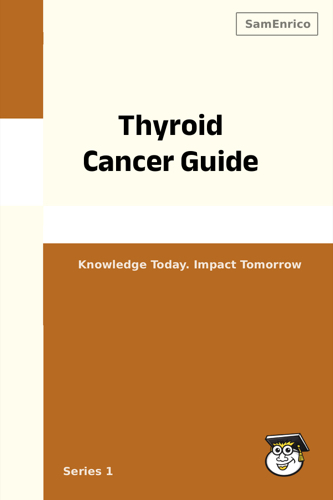
Thyroid Cancer Guide eBook
undefined
by Jeffery Inge
undefined
Formats
Free sample
Chapter 1: The Butterfly’s Secret...--It begins, almost always, as an accident.You go to the doctor for a sore throat that won't quit. You undergo a CT scan after a minor car fender-bender. A dentist notices a slight asymmetry in your neck during a routine X-ray. Or perhaps you feel it yourself one morning in the shower—a small, firm knot just below your Adam's apple, sliding up and down when you swallow. In that instant, without warning, the word "nodule" enters your vocabulary, and your life quietly splits into two halves: the time before you felt it, and everything that comes after.Before we talk about cancer—before we even whisper the word—we need to understand what you're actually feeling.
That tiny, butterfly-shaped organ in your lower neck is the thyroid, and it is one of the most hardworking, underappreciated structures in your entire body. Weighing less than an ounce in most adults, this modest gland produces hormones that regulate the metabolism of every single cell you possess. Your heart rate, your body temperature, how quickly you burn calories, how well you sleep, the sharpness of your thoughts in the morning—all of it, governed by the delicate dance of thyroid hormones T3 (triiodothyronine) and T4 (thyroxine). The thyroid is your body's gas pedal, its thermostat, and its dimmer switch all in one.And like any hardworking organ, it sometimes develops lumps. These lumps are called nodules, and here is the first piece of information you need to cling to in the anxious days ahead: the vast majority of thyroid nodules are benign.
More than 50% of people over the age of 60 have at least one thyroid nodule, and the vast majority will never know it, never need treatment, and never experience a single symptom. By age 80, nearly 80% of women and 60% of men have thyroid nodules detectable on high-resolution ultrasound. These are not failures of the body; they are simply the accumulated small scars, cysts, and cellular clusters of a lifetime of living.Yet here you are, reading this book, because your nodule—or a loved one's—has been flagged as suspicious. And you need answers.The Geography of Your Neck: A Quick Tour Before we go any further, let us map the territory. Place your fingers gently on the front of your neck, just below your Adam's apple (larynx).
Swallow. You will feel a firm, cartilaginous structure rise up under your fingers. That is your thyroid gland. It wraps around your trachea (windpipe) like a butterfly's wings—two lobes connected by a narrow bridge called the isthmus. The entire gland normally measures about 4–5 centimeters across, roughly the size of a plum or a small apricot.Behind the thyroid, snuggled against the trachea, lie the parathyroid glands—four tiny, rice-sized organs that regulate your body's calcium levels.
They are so small and so embedded in thyroid tissue that they are often difficult to see even on high-resolution imaging. As we will discuss in Chapter 5 and Chapter 8, preserving these glands during surgery is one of the great challenges of thyroidectomy.Running alongside and behind the thyroid are the recurrent laryngeal nerves—slender white threads of nervous tissue that control your vocal cords. Damage to even one of these nerves can permanently change your voice, causing hoarseness, breathiness, or loss of high-pitched range. A skilled surgeon protects these nerves like a bomb squad technician handles wires.And woven throughout the thyroid's surrounding tissue lies a network of lymph nodes—small, bean-shaped filters that trap cancer cells, infections, and debris. When thyroid cancer spreads, it almost always travels first to the lymph nodes in the central compartment of the neck (directly around the trachea) and then to the lateral compartments (along the jugular vein and carotid artery).
Understanding this geography is not just anatomy trivia; it is the key to understanding why your doctor orders certain scans, why surgery takes the shape it does, and why follow-up surveillance focuses on specific locations.The Incidentaloma Epidemic: Why You're Not Alone There is a term in medical literature for nodules found by accident: incidentaloma. It is an inelegant word, but it captures something true about the modern diagnosis of thyroid cancer. Unlike breast cancer (detected by routine mammograms) or colon cancer (detected by scheduled colonoscopies), most thyroid cancers are discovered incidentally—during imaging for an unrelated problem. A CT scan for chest pain, an MRI for a herniated disc, a carotid ultrasound for dizziness—these are the unlikely doorways through which thyroid nodules announce themselves.Consider these numbers: between 1975 and 2015, the incidence of thyroid cancer in the United States nearly tripled, from approximately 5 cases per 100,000 people to over 15 cases per 100,000. At first glance, this seems like an epidemic.
But something strange happened during that same period: the death rate from thyroid cancer remained flat, at approximately 0.5 deaths per 100,000 people. If it were a true epidemic of aggressive cancer, deaths would have risen alongside diagnoses. They did not.What changed was technology. High-resolution ultrasound machines became ubiquitous in primary care offices and radiology centers. Radiologists began seeing nodules that previous generations of doctors would have missed entirely—nodules as small as two or three millimeters, the size of a poppy seed.
And with more nodules seen, more nodules were biopsied. And with more biopsies, more tiny, slow-growing, clinically insignificant cancers were discovered. Epidemiologists call this overdiagnosis—the detection of cancers that would never, in a patient's lifetime, cause symptoms or death.We will talk more about what this means for treatment decisions in Chapter 4. For now, understand this: not every nodule is a threat. Not every cancer needs to be treated immediately.
And not every diagnosis is a death sentence—far from it. But every diagnosis deserves your full attention and the best possible information.The Risk Factors: What We Know, What We Don't Let us speak plainly about what increases your risk of thyroid cancer. Some of these factors are within your control; most are not. Do not blame yourself for any of them.Radiation exposure is the most firmly established environmental risk factor for thyroid cancer. This is not the radiation from a dental X-ray or a cross-country flight.
The doses that matter are much higher: childhood radiation treatment for conditions like acne, tonsillitis, or Hodgkin's lymphoma (common in the 1950s and 60s); radiation fallout from nuclear accidents like Chernobyl (1986) or Fukushima (2011); or environmental exposure to radioactive iodine from above-ground nuclear weapons testing (mostly before 1963). The thyroid is uniquely sensitive to radiation, especially in children, because it actively concentrates iodine—including radioactive iodine—from the bloodstream.If you were treated with neck or chest radiation as a child, your risk of developing thyroid cancer is significantly elevated, and you should be screened regularly with ultrasound. If you lived near Chernobyl or Fukushima as a child, the same advice applies. For everyone else, the radiation risk from medical imaging is extremely low, and you should not avoid necessary CT scans out of fear of thyroid cancer.Family history plays a role in approximately 5–10% of thyroid cancers. Most familial cases are papillary thyroid cancer, often occurring in families with multiple affected members but without a clear genetic mutation.
A smaller number are medullary thyroid cancer, which is caused by mutations in the RET proto-oncogene—and which requires genetic testing…
This is the end of the free sample. Get the eBook to keep going. Buy now
About this book
Details
- Author
- Jeffery Inge
- Publisher
- SamEnrico
- Language
- English
- Genre
- Non-Fiction, Health & Wellness / Oncology
- Released
- 2026-06-10
- Pages (approx.)
- 144
- Available as
- eBook, Audiobook

Read better in the ZLOADR app
Your eBooks on your phone or tablet. Sign in with your SamEnrico account and start reading.
More by Jeffery Inge
 Asana Productivity TrackingJeffery Inge$11.99
 The Governor's Wildfire SeasonJeffery Inge$11.99
 NICU Parent Self Care GuideJeffery Inge$11.99
 Assertive Communication ScriptsJeffery Inge$11.99
 Probiotic Strain SelectionJeffery Inge$11.99
 The Bankruptcy Emotional Recovery GuideJeffery Inge$11.99
 Sleep Tracking For RecallJeffery Inge$11.99
 Cybersecurity Incident LeadershipJeffery Inge$11.99
 The Last Supper’s Secret Menu: A Feast of Forgotten RecipesJeffery Inge$11.99
 The Codebreakers of Timbuktu: The Linguistic Warriors of the SaharaJeffery Inge$11.99
 Ghost Fleet: The Untold Story of the USS Pueblo’s Secret WarJeffery Inge$11.99
 The Mineral Guide to GreenockiteJeffery Inge$11.99
You may also like
 Hong Kong Handover 1997Dunn Johnnie$11.99
 Zumba For Postnatal Recovery CourseNeal Christian$11.99
 Zumba for BeginnersLadner Nikia$11.99
 YouTube Comment Mining GuideHumes Pandora$12.99
 Worry Box MeditationCarlin Rudy$11.99
 Workplace Stress MeditationNguyen Lynn$11.99
 Workplace Stress and Sleep RepairHawley Ivory$11.99
 Workplace Perfectionism CureDelaney Jeffry$11.99
 Workplace Injustice Anger GuideWallen Isabelle$11.99
 Work Addiction and Burnout LinkGreenwood Ester$11.99
 Women in Yoga and WellnessBeattie Galina$11.99
 Women in Stand Up ComedyChun Evangeline$11.99