
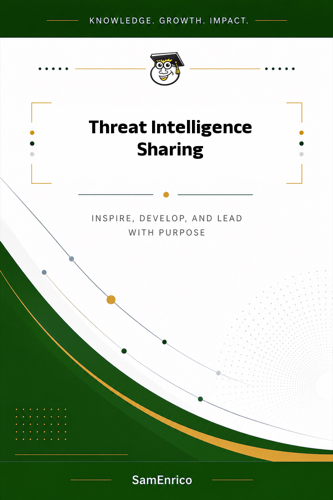
Threat Intelligence Sharing Audiobook
Reports on ISAC participation and automated indica
by Bills Lorna
Reports on ISAC participation and automated indicator exchange.
Formats
Free sample
Chapter 1: The Isolation Fallacy--–- At 3:47 AM on a Tuesday, the phone rang in the security operations center of a mid-sized healthcare system. The overnight analyst, a veteran named Carla, watched in disbelief as her screens lit up like a Christmas tree—thousands of alerts, a cascading failure of endpoints, and the unmistakable signature of ransomware spreading laterally from a single compromised user account. She did everything right: isolated the host, killed network connections, and initiated the incident response playbook. Forty-seven minutes later, the same ransomware encrypted patient records on three other healthcare systems in the same state. None of them had spoken to each other.
None of them knew that Carla had already seen the indicator. And none of them stood a chance.The Cost of Standing Alone This book is not about theory. It is about the single most underutilized weapon in cybersecurity: the collective knowledge of everyone else who is being attacked right now. The story above is not hypothetical—it is a composite of dozens of real incidents where organizations defended brilliantly in isolation while their neighbors burned, unaware that the intelligence to stop the fire already existed in someone else's logs.We have built our defenses around a fundamentally flawed assumption: that each organization can gather enough threat data on its own to protect itself. This is the isolation fallacy.
It assumes that your perimeter, your sensors, and your analysts will see enough of the adversary's behavior to detect and block attacks before damage occurs. But adversaries do not attack one organization at a time. They deploy the same infrastructure, the same phishing templates, the same malware families, and the same command-and-control domains across hundreds or thousands of targets. When you defend alone, you are seeing one brushstroke of a painting that the adversary has already completed elsewhere.The numbers are stark. The average dwell time—the period from initial compromise to detection—for organizations that do not participate in threat intelligence sharing is measured in months.
For organizations that actively share intelligence bi-directionally, that dwell time drops to days or even hours. The average cost of a data breach for a non-sharing organization exceeds four million dollars. For sharing organizations in the same industries, that cost is consistently thirty to forty percent lower—not because they are more sophisticated, but because they are less blind.This chapter will establish the foundation for everything that follows. It…
This is the end of the free sample. Get the Audiobook to keep going. Buy now
About this book
Details
- Author
- Bills Lorna
- Publisher
- SamEnrico
- Language
- English
- Genre
- Non-Fiction, Annual Checkup
- Released
- 2026-06-06
- Pages (approx.)
- 151
- Available as
- eBook, Audiobook

Listen in the VoxFlicks app
Audiobooks and audio dramas wherever you go. Sign in with your SamEnrico account and press play.
More by Bills Lorna
 Meal Prep for CampingBills Lorna$11.99
 Musk Twitter AcquisitionBills Lorna$11.99
 Sheppard Son Attempted MurderBills Lorna$11.99
 Emotional Regulation for TalksBills Lorna$11.99
 Existential Apathy Meaning CrisisBills Lorna$11.99
 Auschwitz Sonderkommando WitnessBills Lorna$11.99
 Zonulin TestingBills Lorna$11.99
 The Athenian Enlighteners: Socrates, Plato, and the Birth of Western ThoughtBills Lorna$11.99
 Miracle at Istanbul: Chelsea's Impossible ComebackBills Lorna$11.99
 How to Produce Rubber BandsBills Lorna$11.99
 How to Start a Proof Reading Business (Beginners Guide)Bills Lorna$11.99
 A Collector's Handbook to the Armstrong Siddeley Armstrong-siddeley Short 20Bills Lorna$11.99
You may also like
 Ransomware Evolution ReportWatkins Kara$11.99
 DFIR Response MetricsBolt Eufemia$11.99
 Breach Disclosure TimelinesRudolph Benito$11.99Breach Disclosure TimelinesRudolph Benito$11.99
 SEC Cyber Rules ImpactWorthy Jay$11.99
 Cyber Talent ShortageVanhoose Delta$11.99
 Mobile Malware SurgeCurry Annette$11.99
 Data Breach Cost AnalysisStepp Filiberto$11.99
 Financial Sector BreachesWyman Nicolasa$11.99
 Ransomware EconomicsJacques Keely$11.99
 Cybersecurity Budget BenchmarksBradbury Setsuko$11.99
 Vulnerability Disclosure TrendsMccune Kevin$11.99