
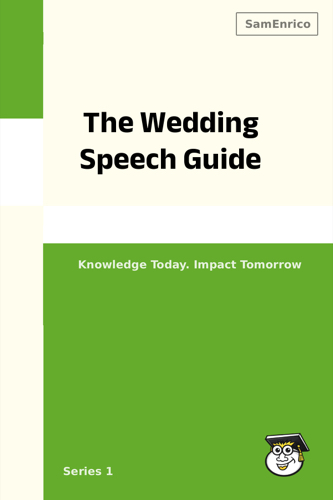
Non-FictionSelf-HelpSpecial Occasion
The Wedding Speech Guide eBook
Deliver heartfelt, memorable toasts without embarr
by Felton Tobie
Deliver heartfelt, memorable toasts without embarrassing yourself.
Formats
Free sample
Chapter 1: Beyond the Panic--The moment your name is called, the room tilts. Eighty-seven faces swivel toward you. The clinking of silverware stops. Someone’s phone drops its camera shutter sound into the silence like a stone into still water. Your heartbeat, which you could not feel thirty seconds ago, now pounds in your temples.
Your palms, perfectly dry while you were seated, have become slick. The speech—the one you have been worrying about for weeks—is no longer a future problem. It is happening now.This is not a sign that something is wrong with you. This is a sign that you care.Every person who has ever delivered a memorable, heartfelt wedding toast began exactly where you are now: heart pounding, mouth slightly dry, mind racing through a checklist of things that could go wrong. The difference between those who succeed and those who stumble is not the absence of fear.
It is what they do with it before they stand up, while they are standing, and the moment they open their mouths.This chapter exists to rescue you from three dangerous myths about wedding speeches. The first myth is that confident speakers are born, not made. The second myth is that anxiety means you are unprepared. The third myth is that a wedding speech requires performance-level polish. None of these are true.
Confidence is a skill that is built, not bestowed. Anxiety is the body’s way of mobilizing energy for something important. And what wedding guests crave most is not polish—it is presence.By the time you finish this chapter, you will understand why you have been asked to speak, what your specific personality type needs to succeed, and how to reframe the entire experience so that you walk toward the microphone instead of dragging your feet. You will also receive your first actionable toolkit: a one-week anxiety-reduction calendar designed specifically for wedding speakers. But before we get to the exercises, we have to talk about what is actually happening inside your body when you feel that familiar wave of panic.The Physiology of the Pre-Speech Panic Let us start with a radical reframing: your body is not betraying you.
It is trying to help you.When you stand up to speak in front of a group, your ancient brain—the limbic system, which has not evolved much since humans lived in caves—interprets eighty-seven staring faces as a threat. In cave-person terms, being watched by a large group meant you were about to be judged, excluded, or eaten. Your body therefore activates the sympathetic nervous system: the fight-or-flight response. Adrenaline surges. Cortisol rises.
Blood redirects from your digestive system to your large muscles. Your breathing becomes shallow and fast. Your palms sweat to improve grip (for running or fighting). Your mouth dries out because saliva production is not a survival priority.This is not a bug. It is a feature.
It is the same system that allows a parent to lift a car off their child or a soldier to function under fire. The problem is that your cave-person brain does not distinguish between a saber-toothed tiger and a wedding reception. It sees an audience and screams “Danger!”Here is what experienced speakers know that you do not yet know: that energy is fuel. The adrenaline making your hands shake is the same adrenaline that, when channeled correctly, makes your voice resonate, your eyes sparkle, and your words land with emphasis. The difference between terror and excitement is not physiological—it is cognitive.
Both states produce identical bodily sensations: rapid heartbeat, shallow breathing, heightened awareness. The only difference is the label you attach to it.Before his famous speeches, the late actor and orator Sir Anthony Hopkins used to tell himself, “The adrenaline is here to help me focus.” He did not try to eliminate it. He repurposed it. You will do the same.The Four Speaker Personality Types Not all wedding speech anxiety looks the same. Some people freeze.
Some people talk too fast. Some people cannot stop laughing nervously. Some people cry before they get to the second sentence. In my work analyzing thousands of wedding speeches, I have identified four distinct personality types that emerge when the microphone is near. Each type has a different root cause of anxiety and therefore requires a different solution.Take the self-assessment below.
Be honest. There is no wrong answer, and no type is better than another. Each type has produced unforgettable toasts. Each type has also produced disasters—but only when the speaker ignored their natural tendencies and tried to imitate someone else.The Shy One You do not like being the center of attention. You have probably been described as “quiet” or “thoughtful” your entire life.
When people look at you, you feel exposed. You might even feel that your true self is hiding somewhere behind your eyes while a stiff, awkward version of you speaks on your behalf. Your greatest fear is not that you will forget your words—it is that everyone will stare at you while you try to remember them.Shy speakers have a superpower that they rarely recognize: they are excellent observers. Because you are not usually the one talking, you have spent years noticing small details about other people—how the couple looks at each other, the inside jokes they share, the quiet kindnesses they perform when no one is watching. These observations are pure gold for a wedding speech.
The audience does not need a performer. They need someone to show them something they had not noticed before.Your specific challenge is not content—it is projection. You have the material. You just need to make sure the back of the room can hear it and that you do not rush through it to get it over with. We will address projection and pacing in Chapter 8.
For now, your one-week calendar includes specific tasks designed to increase your comfort with being seen.The Nervous Wreck Your body betrays you in obvious ways. Your voice shakes. Your hands tremble. You might even develop a visible blush that creeps up your neck and across your cheeks. You rehearse perfectly alone, but the moment you have an audience, your mouth becomes disconnected from your brain.
You have probably tried “just relaxing” and discovered that it does not work. You might have even avoided social situations because you cannot control these physical symptoms.Here is what the Nervous Wreck needs to understand: your body is responding normally to an abnormal situation. Public speaking consistently ranks above death in surveys of common fears. People would rather die than give a eulogy. That is how wired this fear is.
The solution is not willpower—it is physiology. You need concrete, physical interventions that interrupt the fight-or-flight response before it hijacks your performance.The good news is that these interventions exist, and they are simple. The five-second breath you will learn in Day Two of your calendar is one of them. The grounding exercise in Chapter 8 is another. Nervous Wrecks often become excellent speakers precisely because they have to work so hard at the fundamentals.
A natural speaker can coast on charm. You cannot. That means you will develop habits—eye contact, breath control, deliberate pacing—that…
This is the end of the free sample. Get the eBook to keep going. Buy now
About this book
Details
- Author
- Felton Tobie
- Publisher
- SamEnrico
- Language
- English
- Genre
- Non-Fiction, Self-Help, Special Occasion
- Released
- 2026-06-08
- Pages (approx.)
- 145
- Available as
- eBook, Audiobook

Read better in the ZLOADR app
Your eBooks on your phone or tablet. Sign in with your SamEnrico account and start reading.
More by Felton Tobie
 Sodium Myths And Facts GuideFelton Tobie$11.99
 OCD Books GuideFelton Tobie$11.99
 Convertible Note TermsFelton Tobie$11.99
 Failure Reframing GuideFelton Tobie$11.99
 The Undercover Officer StressFelton Tobie$11.99
 Time Blocking For SabbaticalFelton Tobie$11.99
 Huntington's LegacyFelton Tobie$11.99
 Echoes of the Last Speakers: The Vanishing Tongue of Rapa NuiFelton Tobie$11.99
 The Druid’s Last Lesson: How Cú Roí Defied the FomoriansFelton Tobie$11.99
 Phidias and the Parthenon: Marble Dreams of Ancient AthensFelton Tobie$11.99
 The 101 Handbook: MechanicalFelton Tobie$11.99
 Customer Notification During ScandalFelton Tobie$12.99
You may also like
 Hong Kong Handover 1997Dunn Johnnie$11.99
 Zumba For Postnatal Recovery CourseNeal Christian$11.99
 Zumba for BeginnersLadner Nikia$11.99
 YouTube Comment Mining GuideHumes Pandora$12.99
 Worry Box MeditationCarlin Rudy$11.99
 Workplace Stress MeditationNguyen Lynn$11.99
 Workplace Stress and Sleep RepairHawley Ivory$11.99
 Workplace Perfectionism CureDelaney Jeffry$11.99
 Workplace Injustice Anger GuideWallen Isabelle$11.99
 Work Addiction and Burnout LinkGreenwood Ester$11.99
 Women in Yoga and WellnessBeattie Galina$11.99
 Women in Stand Up ComedyChun Evangeline$11.99