

The Syllabus Overwhelm Guide Audiobook
Break down dense course outlines into manageable w
Break down dense course outlines into manageable weekly chunks.
Formats
Free sample
Here is an in-depth, expanded summary of each chapter for "The Syllabus Overwhelm Guide," written in the voice of the book itself—practical, empathetic, and action-oriented.PART I: THE DIAGNOSTIC (Decoding the Document)Chapter 1: The First 30 Minutes – Scanning for Stress Points The Opening Premise: Most students read a syllabus like a terms of service agreement—eyes glazing over, signing away their semester. This chapter reframes the syllabus as a diagnostic tool. Within 30 minutes of receiving any syllabus, you can predict exactly where your overwhelm will spike and preemptively defuse it.Key Distinction – Two Types of Syllabi:The Learning-Centered Syllabus: Includes rationales, study tips, professor office hours, and a clear narrative arc. Designed to help you succeed. These are rare but gold.The Compliance Syllabus: Dense legalese, threats of plagiarism penalties, no explanation of why you're reading certain texts.
Designed to protect the professor from grade disputes.The 30-Minute Scan Protocol:Minute 0–5: Find the grading breakdown. Circle anything worth >20%.Minute 5–15: Map all deadlines onto a blank calendar. Look for clusters (e.g., three midterms in four days).Minute 15–25: Create a "Red Flag Checklist" – three-week midterm gauntlets, 40% final papers, participation grades without clear criteria.Minute 25–30: Identify the "next actionable step" for every vague phrase. Borrowing from David Allen's Getting Things Done, the chapter teaches that "Review Unit 3" is not a task—it's a project. The task is: "Open Unit 3 summary, write three questions I don't understand."The Takeaway: You cannot fix what you haven't diagnosed.
The first 30 minutes turn a panic attack into a to-do list.Chapter 2: Reverse-Engineering the Grade The Core Insight: Students work hardest on assignments with the largest point values. This is often wrong. A 5% weekly quiz that takes 30 minutes may be more valuable per minute than a 15% term paper that takes 20 hours.The Math of Time Value:The chapter introduces a simple formula: Grade Efficiency = (Assignment Percentage) / (Estimated Hours to Complete).A 5% weekly quiz taking 0.5 hours = 10% per hour.A 15% term paper taking 20 hours = 0.75% per hour.The quiz is 13x more efficient. Yet students skip quizzes to work on papers—a mathematical tragedy."Required Consistency" vs. "One-Time Heroics":Some assignments require showing up every week (attendance, small quizzes, discussion posts).
These are consistency traps—missing one feels small but compounds. Others allow cramming (exams, final papers). The chapter teaches readers to identify which of their courses are "consistency courses" and which are "heroics courses," then allocate energy accordingly.Visualizing the Narrative…
This is the end of the free sample. Get the Audiobook to keep going. Buy now
About this book
Details
- Author
- Ramirez Santos
- Publisher
- SamEnrico
- Language
- English
- Genre
- Non-Fiction, Self-Help, Syllabus
- Released
- 2026-06-11
- Pages (approx.)
- 155
- Available as
- eBook, Audiobook

Listen in the VoxFlicks app
Audiobooks and audio dramas wherever you go. Sign in with your SamEnrico account and press play.
More by Ramirez Santos
 DoorDash vs Grubhub vs UberEatsRamirez Santos$11.99
 Curie First Pantheon WomanRamirez Santos$11.99
 Gambling Addiction and Boredom WorkbookRamirez Santos$11.99
 Death of a Mother GuideRamirez Santos$11.99
 Remote Nonprofit Communication GuideRamirez Santos$11.99
 Marijuana Addiction HandbookRamirez Santos$11.99
 Posture Correction Stretching RoutineRamirez Santos$11.99
 Hearst Anti TrustRamirez Santos$11.99
 The Bone Whisperers: Decoding the Past with Prehistoric ProbabilityRamirez Santos$11.99
 The Song of the Selkie: A Melodic Myth of the SeaRamirez Santos$11.99
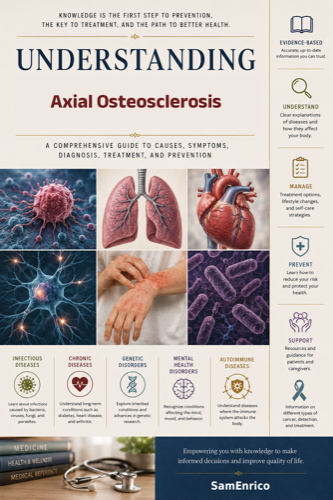 Understanding Axial OsteosclerosisRamirez Santos$17.99
 The Complete Guide to the Vegetarian Diet For TeensRamirez Santos$11.99
You may also like
 Hong Kong Handover 1997Dunn Johnnie$11.99
 Zumba For Postnatal Recovery CourseNeal Christian$11.99
 Zumba for BeginnersLadner Nikia$11.99
 YouTube Comment Mining GuideHumes Pandora$12.99
 Worry Box MeditationCarlin Rudy$11.99
 Workplace Stress MeditationNguyen Lynn$11.99
 Workplace Stress and Sleep RepairHawley Ivory$11.99
 Workplace Perfectionism CureDelaney Jeffry$11.99
 Workplace Injustice Anger GuideWallen Isabelle$11.99
 Work Addiction and Burnout LinkGreenwood Ester$11.99
 Women in Yoga and WellnessBeattie Galina$11.99
 Women in Stand Up ComedyChun Evangeline$11.99