
Non-FictionAnnual CheckupCopywriting
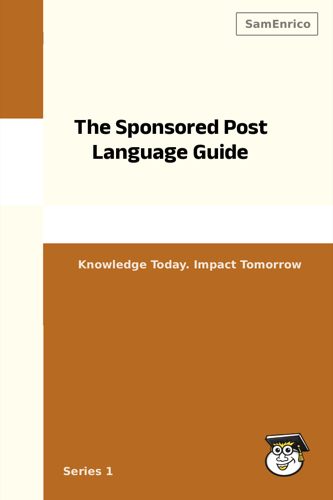
The Sponsored Post Language Guide eBook
Teaches effective disclosure phrasing like #ad and
Teaches effective disclosure phrasing like #ad and #sponsored.
Formats
Free sample
Chapter 1: The Transparency Paradox--–- The email arrived at 11:47 on a Tuesday morning. Sarah, a lifestyle creator with forty-two thousand followers, had just finished editing a Reel for a skincare brand paying her two thousand dollars. The email subject line read: "FTC Inquiry – Action Required." Her stomach dropped. She had seen the stories about influencers getting fined, but those were celebrities with millions of followers, not people like her who posted from a ring light in their bedroom. She opened the email.
The FTC had flagged three of her posts from the past six months. In each one, she had used the word "collab" instead of "ad." In each one, she had placed the disclosure at the end of the caption, buried beneath a cascade of emojis and hashtags. The letter did not demand money. Not yet. But it warned that continued violations could result in civil penalties of up to fifty thousand dollars per post.
Sarah cried at her kitchen table. She had been trying to do everything right. She had disclosed every sponsored post. She had never intended to deceive anyone. And still, she was in trouble.This is the paradox that haunts the creator economy.
Never before have so many people been legally required to disclose their financial relationships, and never before have so many people failed at it despite genuinely trying to comply. The Federal Trade Commission estimates that over seventy percent of sponsored social media posts contain inadequate disclosures. Not fraudulent disclosures. Not missing disclosures. Inadequate ones.
The creator used the wrong word. They put the disclosure in the wrong place. They assumed that good intentions were enough.They were wrong.This chapter introduces the central tension that drives every decision in this book: the Transparency Paradox. The more you try to be honest about your sponsorships, the more the platforms punish your reach, and the more your audience scrolls past. Yet the less you disclose, the more you risk fines, brand distrust, and the permanent erosion of your reputation.
The solution is not to disclose less or disclose more. The solution is to disclose differently. This chapter will teach you why most creators fail, how the psychology of skepticism works against you, and the single operational rule that separates compliant creators from audited ones.The Anatomy of a Failed Disclosure Before we can fix the problem, we must understand exactly how creators break the rules. The FTC's Endorsement Guides are surprisingly simple. A disclosure must be clear, conspicuous, and unavoidable.
That means a reasonable person scrolling through their feed should see the disclosure without having to tap, click, expand, or squint. Yet creators violate this standard in predictable patterns.The first pattern is hashtag graveyards. A creator posts a caption that reads: "Obsessed with this new serum!!! #skincare #glowup #ad #sponsored #beauty #skincare routine #fyp." The disclosure is present, but it is buried among fifteen other hashtags. On a mobile screen, the viewer sees only the first three hashtags before the caption is truncated.
The word "#ad" appears somewhere in the middle of the hashtag string, invisible without tapping "...more." The FTC considers this insufficient because the disclosure is not conspicuous. It is hidden in plain sight.The second pattern is the euphemistic disclosure. A creator writes: "Thanks to Brand X for sending me this product to try." Or "Collaborating with a brand I love." Or "Partnering with Y for this post." These phrases sound transparent, but they are legally inadequate. The word "thanks" implies gratitude for a gift, not a paid transaction. The word "collaborating" suggests a creative partnership, not a financial exchange.
The word "partnering" is so vague that it could describe anything from a marriage to a joint venture. The FTC has explicitly stated that none of these terms qualify as adequate disclosures because they do not clearly communicate a material connection.The third pattern is the bottom-of-the-caption burial. A creator writes a three-hundred-word caption about their personal journey with acne, their struggle to find the right moisturizer, and their eventual discovery of a miracle product. Only at the very end, after the emotional narrative is complete, do they add: "By the way, this post is sponsored." By this point, the viewer has already absorbed the endorsement without the context of the sponsorship. The Liar's Dividend triggers retroactively, and the viewer feels manipulated.The fourth pattern is the microscopic disclosure.
On Instagram Stories, a creator adds white text reading "#ad" over a bright white background. The text is barely visible. On Tik Tok, a creator puts the disclosure in the video description rather than the video itself. On You Tube, a creator mentions the sponsorship in the description box but never says it aloud in the video. In each case, the disclosure exists somewhere, but not somewhere a reasonable person would see it.Sarah, the creator from our opening story, committed all four patterns.
She used "collab" instead of "ad." She buried her hashtags. She wrote long emotional captions before disclosing. She assumed that because she was trying to be honest, the technicalities did not matter. The FTC disagreed.The Psychology of Skepticism Why do audiences react so strongly to inadequate disclosures? The answer lies in a cognitive phenomenon called the Psychology of Skepticism.
Over the past twenty years, consumers have been exposed to an unprecedented volume of advertising disguised as organic content. Native ads. Sponsored posts. Influencer partnerships. Affiliate links.
The lines between editorial and commercial content have blurred to the point of invisibility. In response, the human brain has developed a hair-trigger for detecting bias.Consider how you read a product recommendation from a friend versus from a stranger. When a friend tells you a restaurant is amazing, you trust them because you know their preferences and you know they have no financial incentive to lie. When an influencer tells you a restaurant is amazing, your brain automatically asks: "Did they get paid for this? Did they eat for free?
Is this actually good, or are they just saying that?" This is not cynicism. This is rational information processing. Your brain is trying to calibrate the credibility of the source.The problem is that the brain makes this calibration instantly, based on the first few seconds of exposure to a post. If your disclosure is not visible within those first few seconds, the brain categorizes the post as organic opinion. It accepts the endorsement at face value.
Then, when the disclosure finally appears—buried in hashtags, hidden at the bottom, whispered in the description box—the brain experiences a sudden recalibration. The post that seemed like honest advice is revealed as paid advertising. The viewer does not think, "Oh, how transparent of them to disclose." They think, "They tried to hide this from me."This retroactive suspicion is the Liar's Dividend. The term comes from game theory, where it describes how liars benefit from the fact that people expect honesty. In the context of sponsored content, the Liar's Dividend works like this: when you hide a disclosure, you are not just failing to inform your audience.
You are actively training them to distrust everything you say. Each buried disclosure is a small betrayal. Over time, those betrayals accumulate. The…
This is the end of the free sample. Get the eBook to keep going. Buy now
About this book
Details
- Author
- Moreland Fabiola
- Publisher
- SamEnrico
- Language
- English
- Genre
- Non-Fiction, Annual Checkup, Copywriting
- Released
- 2026-06-06
- Pages (approx.)
- 157
- Available as
- eBook, Audiobook

Read better in the ZLOADR app
Your eBooks on your phone or tablet. Sign in with your SamEnrico account and start reading.
More by Moreland Fabiola
 Morning Body Scan Wake UpMoreland Fabiola$11.99
 Terminal Illness Legacy Project WorkbookMoreland Fabiola$11.99
 Depression Self Talk GuideMoreland Fabiola$11.99
 Scandinavian Business GuideMoreland Fabiola$11.99
 Project Manhattan: The Birth of the Atomic AgeMoreland Fabiola$11.99
 How to Start a Domestic Machinery (wholesale) Business (Beginners Guide)Moreland Fabiola$11.99
 Certification Marketing ClaimsMoreland Fabiola$12.99
 BOP Customer Lifetime ValueMoreland Fabiola$12.99
You may also like
 Hong Kong Handover 1997Dunn Johnnie$11.99
 Zumba For Postnatal Recovery CourseNeal Christian$11.99
 Zumba for BeginnersLadner Nikia$11.99
 YouTube Comment Mining GuideHumes Pandora$12.99
 Worry Box MeditationCarlin Rudy$11.99
 Workplace Stress MeditationNguyen Lynn$11.99
 Workplace Stress and Sleep RepairHawley Ivory$11.99
 Workplace Perfectionism CureDelaney Jeffry$11.99
 Workplace Injustice Anger GuideWallen Isabelle$11.99
 Work Addiction and Burnout LinkGreenwood Ester$11.99
 Women in Yoga and WellnessBeattie Galina$11.99
 Women in Stand Up ComedyChun Evangeline$11.99