
Non-FictionBiographySecurity Industry Addiction
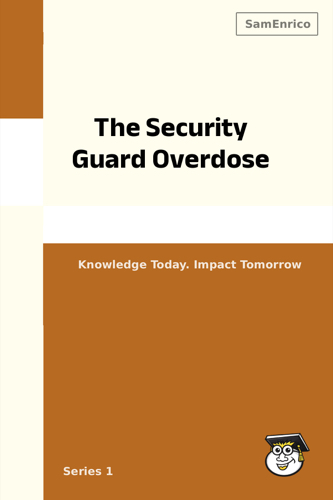
The Security Guard Overdose eBook
Night shift guard overdoses on opioids, loses job,
Night shift guard overdoses on opioids, loses job, recovers.
Formats
Free sample
Chapter 1: The Hour Between...--The night shift doesn’t start at midnight. That’s what civilians get wrong. It starts at dusk, when the sun bleeds out and the world contracts to the size of your headlights. Marcus Thorne knew this the way a fisherman knows the tide. At 5:47 PM, he pulled his Ford Explorer into the cracked asphalt lot behind the Meridian Corporate Plaza, the broken heater rattling a complaint in the dashboard, and he sat there for a full minute before cutting the engine.The building rose above him, thirty-two floors of glass and steel, mostly dark except for scattered windows on the upper levels where the software engineers burned the midnight oil—or rather, the 6:00 PM oil, because midnight was when they ordered dinner.
Marc had been guarding this tower for eleven months. He knew which windows belonged to the insomniac coder who named her plants after Star Wars characters. He knew which floor had the HR director who cried at her desk every Tuesday at 2:00 PM. He knew things about these people they would never know about him. That was the job: to be invisible while seeing everything.He killed the engine and sat in the sudden silence.
The Explorer was a 2012 model with 187,000 miles on it, purchased used from a dealership that specialized in “pre-owned law enforcement vehicles”—which meant the suspension was shot, the back seat smelled faintly of vomit, and the heater only worked on the highest setting, which sounded like a jet engine preparing for takeoff. Marc kept a sleeping bag in the back for the nights when he couldn’t afford to drive home between shifts. Those nights were becoming more frequent.He reached into the pocket of his uniform shirt, past the cheap ballpoint pen and the crumpled receipt from the gas station, and his fingers found the small orange bottle. He pulled it out. The label was worn almost blank, the prescription information long since rubbed away by constant handling.
Inside: two pills. White, round, unmarked—the generic Oxycodone from the pharmacy on Broad Street, the one that never asked questions because the pharmacist had his own habits to fund.One for the road. One for the witching hour.He dry-swallowed the first pill, feeling it scrape down his throat. It would take twenty minutes to kick in. By then, he’d be walking the perimeter, nodding at the security cameras he’d memorized the blind spots of, and the world would soften at the edges.
The pain in his right shoulder—a dull, grinding ache that had become his constant companion—would fade to a distant murmur. The knot in his stomach would loosen. He would become, for four hours, the person he pretended to be: competent, calm, in control.He tucked the bottle back into his pocket, careful to zip the flap. The second pill was for 2:00 AM, the hour when the silence became a living thing, when the only sounds were the hiss of the air brakes on the delivery trucks and the distant wail of the freight train that passed through the industrial district like a ghost. That was the hour when the men he worked with—the ones who didn’t use—would sit in their patrol cars and stare at their phones, scrolling through lives they weren’t living.
And the ones who did use would find their hiding spots and disappear for ten minutes, twenty minutes, coming back with slower blinks and looser jaws.Marc had learned to identify the users by the way they walked. Too fast meant meth. Too slow meant opioids. Too careful meant alcohol, because they were afraid of the smell. He had become an expert in the taxonomy of addiction, which was ironic, because he had never once looked in a mirror and identified himself.The Uniform Paradox He climbed out of the Explorer and the evening air hit him—cool for September, carrying the faint smell of the river two blocks over.
He adjusted his duty belt, feeling the weight of the equipment: pepper spray, handcuffs, radio, flashlight, the empty holster where his firearm would go if he worked armed security. He didn’t. Armed guards made $22 an hour. Unarmed guards made $15. Marc had done the math a hundred times: the extra $7 wasn’t worth the liability, the training, the way the gun sat against his hip like an accusation.
He had carried for six months at a different site—a federal building downtown—and he had hated every second of it. The weight of the gun was supposed to make him feel powerful. Instead, it made him feel like a target.The uniform itself was a paradox. It gave him authority: the badge on his chest, the word “SECURITY” in block letters across his back, the radio that crackled with dispatches from other guards on other posts. When he walked into the 7-Eleven after his shift, the cashier called him “boss.” When he knocked on a door to deliver a noise complaint, people apologized before he said a word.
The uniform was a suit of armor, but it was invisible armor. It protected him from the world while simultaneously erasing him from it.He walked toward the security shack—a small, windowed booth at the entrance to the parking garage—and nodded at the camera mounted above the door. He knew the camera was there. He knew the camera’s blind spot was a three-foot radius directly beneath it, because he had spent an entire night shift two months ago mapping every single camera on the property, just to know where he could take a pill without being seen. He wasn’t paranoid.
He was prepared. There was a difference.Inside the shack, the previous shift guard—a kid named Tyler, maybe twenty-two, with acne and a nervous energy that suggested he was either on Adderall or afraid of the dark—was already packing his bag. Tyler looked up, relief washing over his face. “Thorne. You’re early.”“Five minutes,” Marc said, sitting down in the swivel chair that had been broken for three years.
“Anything I should know?”Tyler shook his head. “Quiet night. The techies are all still upstairs. The janitorial crew came through at five. One homeless guy tried to set up in the loading dock, but I chased him off.”“Which way did he go?”“East, toward the river.”Marc made a mental note.
The homeless population in this district was transient, moving between the abandoned warehouses and the church shelter on Fifth Street. Most of them were harmless. A few were violent. The ones who set up in the loading dock were usually the harmless ones, the ones who just wanted a warm place to sleep for a few hours. Marc had learned that evicting them was a waste of time—they’d be back tomorrow, or the day after, and the cycle would repeat.
But the company had a policy, and the policy was zero tolerance. No loitering. No trespassing. No exceptions.He signed the logbook, his handwriting deliberately messy to hide the slight tremor in his hand. The tremor was new.
It had started about two months ago, around the time he had increased his daily dose from two pills to…
This is the end of the free sample. Get the eBook to keep going. Buy now
About this book
Details
- Author
- Marcum Talisha
- Publisher
- SamEnrico
- Language
- English
- Genre
- Non-Fiction, Biography, Security Industry Addiction
- Released
- 2026-06-09
- Pages (approx.)
- 132
- Available as
- eBook, Audiobook

Read better in the ZLOADR app
Your eBooks on your phone or tablet. Sign in with your SamEnrico account and start reading.
More by Marcum Talisha
 Uber Rental Car EconomicsMarcum Talisha$11.99
 The Car Driving CuesMarcum Talisha$11.99
 Murdoch Fox MergerMarcum Talisha$11.99
 Gambling Addiction and Shame HandbookMarcum Talisha$11.99
 Family Suicide Loss ChildhoodMarcum Talisha$11.99
 Remote Autism Communication GuideMarcum Talisha$11.99
 Alcohol Impact on Growth HormoneMarcum Talisha$11.99
 Anticipatory Grief MistakesMarcum Talisha$11.99
 The Inferno Code: How a 19th-Century Fire Forensic Breakthrough Changed the WorldMarcum Talisha$11.99
 The Grid That Grew: How a 1928 Plan Shaped Chicago’s FutureMarcum Talisha$11.99
 Understanding Autoimmune Polyendocrinopathy Syndrome, Type IMarcum Talisha$17.99
 The Complete Guide to the Ultrasimple DietMarcum Talisha$11.99
You may also like
 Hong Kong Handover 1997Dunn Johnnie$11.99
 Zumba For Postnatal Recovery CourseNeal Christian$11.99
 Zumba for BeginnersLadner Nikia$11.99
 YouTube Comment Mining GuideHumes Pandora$12.99
 Worry Box MeditationCarlin Rudy$11.99
 Workplace Stress MeditationNguyen Lynn$11.99
 Workplace Stress and Sleep RepairHawley Ivory$11.99
 Workplace Perfectionism CureDelaney Jeffry$11.99
 Workplace Injustice Anger GuideWallen Isabelle$11.99
 Work Addiction and Burnout LinkGreenwood Ester$11.99
 Women in Yoga and WellnessBeattie Galina$11.99
 Women in Stand Up ComedyChun Evangeline$11.99