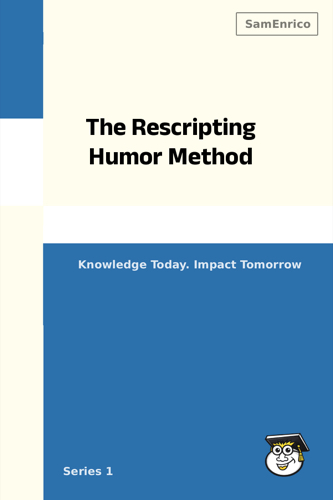
The Rescripting Humor Method Audiobook
Adds ridiculous or funny elements to defuse nightm
Adds ridiculous or funny elements to defuse nightmare terror.
Formats
Free sample
Chapter 1: The Script Trap...–- Every night, millions of people experience the same terrifying sequence: they are being chased, they cannot scream, they fall endlessly, or they find themselves paralyzed as something shapeless and malevolent approaches. They wake up gasping, heart pounding, sheets twisted around their legs, and the first thought is not relief but dread of falling back asleep. For decades, the standard psychological advice for nightmares has followed a seemingly logical path: face your fear. Confront the monster. Stay with the uncomfortable image until it loses its power.
This approach, drawn from exposure therapy for waking phobias, has been applied to nightmares with the best of intentions. But there is a problem. It often makes things worse.This chapter will dismantle the hidden assumptions behind traditional nightmare treatments, explain why your brain treats dream threats differently from real memories, and introduce the core insight that makes the Rescripting Humor Method possible: nightmares are not facts. They are scripts. And scripts can be rewritten—but not by white-knuckling through terror.
They are rewritten by changing the genre.The Paradox of Facing Your Fear Imagine someone who has a recurring nightmare about being buried alive. A traditional therapist might say: “Let’s have you imagine that scenario in detail while awake. Describe the dirt pressing against your chest. Feel the darkness. Stay with that sensation until your anxiety decreases.” This is exposure therapy, and for waking fears—spiders, elevators, public speaking—it has solid evidence behind it.
The brain habituates. The threat becomes boring.But nightmares are not waking fears. They occur during REM sleep, when the amygdala (your brain’s smoke detector) is hyperactive while the prefrontal cortex (your brain’s logic center) is partially offline. When you deliberately rehearse a nightmare during the day, two things can happen. First, you may successfully reduce waking anxiety about the dream.
Second, and more insidiously, you may actually strengthen the nightmare’s neural pathway, making it more likely to recur. Why? Because your brain does not distinguish between “rehearsing to overcome fear” and “rehearsing a dangerous scenario.” To your threat-detection system, vivid rehearsal is practice for survival.Dr. Ross Levin, a leading nightmare researcher, has noted that for a subset of nightmare sufferers, exposure-based techniques lead to what he calls “rehearsal-induced sensitization”—the nightmare becomes more vivid, more frequent, and more distressing. The very act of facing the fear, without transforming it, deepens the…
This is the end of the free sample. Get the Audiobook to keep going. Buy now
About this book
Details
- Author
- Langston Cherryl
- Publisher
- SamEnrico
- Language
- English
- Genre
- Non-Fiction, Self-Help, Humor Therapy
- Released
- 2026-06-09
- Pages (approx.)
- 126
- Available as
- eBook, Audiobook

Listen in the VoxFlicks app
Audiobooks and audio dramas wherever you go. Sign in with your SamEnrico account and press play.
More by Langston Cherryl
 Spouse Death Adult ChildrenLangston Cherryl$11.99
 Immigrant Microbrewery FounderLangston Cherryl$11.99
 Testosterone TestingLangston Cherryl$11.99
 Key Staff Walkout Emergency ManualLangston Cherryl$11.99
 The Self Hypnosis for SmokingLangston Cherryl$11.99
 Teen Confidence Building WorkbookLangston Cherryl$11.99
 Mick Jagger MovesLangston Cherryl$11.99
 The Olmec Merchants: Builders of the First Mesoamerican Trade EmpireLangston Cherryl$11.99
 Fenrir's Howl: The Wolf That Shattered the SkiesLangston Cherryl$11.99
 How to Produce OcarinasLangston Cherryl$11.99
 Philippines Remote Worker Tax GuideLangston Cherryl$12.99
 Facebook Highlight Reel Reality CheckLangston Cherryl$12.99