
Non-FictionSelf-HelpProcurement
The Procurement Creative Solutions eBook
Negotiate and source creatively using value mappin
Negotiate and source creatively using value mapping, supplier co-creation, and cost reframing.
Formats
Free sample
Chapter 1: The Hidden Pathology--–- Most procurement professionals believe they are doing their jobs well when they issue a competitive Request for Proposal, receive three bids, and award to the lowest responsible supplier. They celebrate the 8% price reduction. They update their savings tracker. They move on to the next category. And without realizing it, they have just destroyed more value than they created.This is not hyperbole.
It is the central finding of two decades of procurement research, yet it remains the best-kept secret in the industry. The traditional RFP—the workhorse of corporate sourcing—is not a neutral tool. It is a value-destroying machine disguised as prudent management. It forces suppliers to hide their best ideas, rewards the least informative bids, and creates a cycle of distrust that bleeds millions from organizations every single day.This chapter exists to do one thing: convince you that the RFP is broken, explain precisely why, and give you a concrete alternative to use tomorrow morning. By the end of these pages, you will never look at a competitive bidding process the same way again.The Confession of Failure Let us begin with an uncomfortable truth.
The RFP is a confession. It admits that you do not know what you want, so you are asking everyone to guess. It admits that you do not trust your suppliers, so you are forcing them to compete on the only dimension you think you can measure. It admits that you have not done the hard work of understanding your own consumption patterns, so you are outsourcing that responsibility to strangers who have every incentive to misunderstand you.Consider what happens in a typical RFP process. A buyer spends weeks—sometimes months—drafting a specification document.
The specification is inevitably a list of technical requirements inherited from the last purchase, the last engineer, or the last decade. It describes how someone solved a problem five years ago, not what the problem is today. This document is then sent to five or ten suppliers, each of whom is told to bid on the exact same thing.What do the suppliers do? They do not innovate. Innovation would require deviating from the specification, and deviation gets you disqualified.
So every supplier bids on the same narrow, outdated, over-specified solution. The only differentiator left is price. The lowest number wins. And then the real costs begin.This is what we call the Pathology of Competitive Bidding – a set of four hidden diseases that infect every RFP process. They are invisible to procurement metrics but devastating to enterprise value.
Understanding them is the first step toward creative procurement.Pathology One: The Commoditization of Uniqueness The first pathology is the most subtle and the most destructive. Every supplier has unique capabilities. Some have proprietary manufacturing processes. Some have deeper engineering benches. Some have logistics networks that others cannot match.
These are sources of competitive advantage—for the supplier and, potentially, for you.But the RFP cannot see uniqueness. The RFP is designed to compare apples to apples. If one supplier offers a better material that lasts twice as long, the RFP cannot evaluate that unless you specifically asked for that material. If another supplier has a quality control system that reduces defects by 90%, the RFP does not capture that value unless you wrote it into the spec. So suppliers learn to hide their uniqueness.
They bid to the specification, not to their capability. They become commodities because you forced them to.A real example comes from industrial packaging. A large manufacturer ran an RFP for wooden pallets. The specification was detailed: specific wood species, specific dimensions, specific nail pattern. A supplier responded with a proposal for a composite pallet that weighed half as much, lasted three times longer, and reduced worker injuries from lifting.
The supplier was disqualified for "non-compliance with specifications." The manufacturer bought the wooden pallets and saved 3% on unit price. They spent the next year paying 40% more in freight (because wooden pallets are heavier), 200% more in replacement costs (because wooden pallets break), and an uncounted amount in workers' compensation claims. The unique solution was invisible to the RFP.Pathology Two: The Information Asymmetry Trap The second pathology is structural. In any negotiation, the party with more information wins. The RFP system is designed to maximize information asymmetry—in the wrong direction.Here is what you, the buyer, know: your internal consumption patterns (sort of), your budget (maybe), and your historical prices (usually).
Here is what you do not know: the supplier's cost structure, capacity utilization, innovation pipeline, or risk exposure. Meanwhile, the supplier knows almost nothing about your real needs—because you hid them behind technical specifications—and everything about their own position.The RFP exacerbates this imbalance. You withhold your real requirements because you are afraid suppliers will "game" the process. Suppliers withhold their real capabilities because they are afraid you will steal their intellectual property or use it against them in negotiations. Both parties enter a dance of strategic opacity, and both lose.The solution seems counterintuitive: share more information, not less.
The most creative procurement outcomes come from what negotiation theorists call expanding the pie – sharing information about interests (why you need something) rather than positions (what you demand). When a buyer says, "We need to reduce downtime on Line 3, and we think a faster changeover might help," instead of "We need a new quick-change tool that meets these 47 specifications," the supplier can bring their full engineering capability to bear. But the RFP structure actively prevents this kind of conversation.Pathology Three: The Winner's Curse The third pathology is well-documented in behavioral economics but routinely ignored in procurement. The Winner's Curse refers to the phenomenon where the winner of a competitive bidding process is systematically the bidder who most underestimated the true cost of the work.Think about what happens in an RFP. Suppliers estimate their costs.
Some estimate accurately. Some overestimate (they will lose to lower bidders). Some underestimate—perhaps because they missed a requirement, perhaps because they are desperate for work, perhaps because their sales team promised what operations cannot deliver. The lowest bid almost always comes from an underestimator. So you award to the supplier who is most likely to lose money on the deal.What happens next is predictable.
The supplier realizes they cannot perform at the bid price. They cut corners on quality. They delay deliveries. They submit change orders for every requirement they "missed." They provide the minimum viable service. Their best people are moved to profitable accounts.
You, the buyer, are left with a supplier who is financially distressed, operationally unreliable, and strategically hostile. The 8% "savings" becomes a 20% cost increase within eighteen months.A study of 1,200 RFPs across six industries found that the lowest bidder was 37% more likely to be the source of a major service failure within the first year of the contract. The second-lowest bidder was 22% more likely. The third-lowest was 11% more likely. The correlation is clear: the more you push on price, the more you invite failure.Pathology Four: Post-Award Gaming The fourth pathology is where the real damage occurs.
Once the contract is signed, the game begins. Suppliers who won on price have every incentive to recover margins through…
This is the end of the free sample. Get the eBook to keep going. Buy now
About this book
Details
- Author
- Bostic Maritza
- Publisher
- SamEnrico
- Language
- English
- Genre
- Non-Fiction, Self-Help, Procurement
- Released
- 2026-06-06
- Pages (approx.)
- 130
- Available as
- eBook, Audiobook

Read better in the ZLOADR app
Your eBooks on your phone or tablet. Sign in with your SamEnrico account and start reading.
More by Bostic Maritza
 Walking Meditation ScienceBostic Maritza$11.99
 Yakuza Corporate FrontsBostic Maritza$11.99
 The 1857 in Hindi CinemaBostic Maritza$11.99
 Six Tastes of AyurvedaBostic Maritza$11.99
 The Stress Libido GuideBostic Maritza$11.99
 Spouse Loss Meditation GuideBostic Maritza$11.99
 SRS For Music TheoryBostic Maritza$11.99
 Vulvodynia Burning EaseBostic Maritza$11.99
 Ymir's Bones: How the World Was Carved from the Giant's CorpseBostic Maritza$11.99
 The Secret Sauce: How a College Dropout Built a Fast Food EmpireBostic Maritza$11.99
 Blood and Poppies: The Basque Drug Wars of the Spanish Civil WarBostic Maritza$11.99
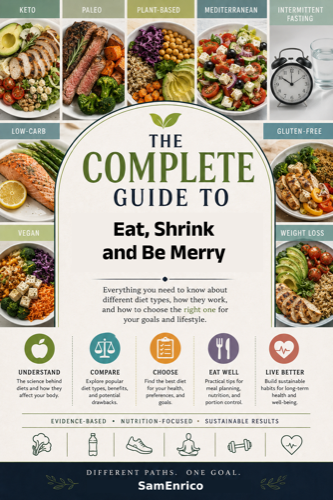 The Complete Guide to Eat, Shrink and Be MerryBostic Maritza$11.99
You may also like
 Hong Kong Handover 1997Dunn Johnnie$11.99
 Zumba For Postnatal Recovery CourseNeal Christian$11.99
 Zumba for BeginnersLadner Nikia$11.99
 YouTube Comment Mining GuideHumes Pandora$12.99
 Worry Box MeditationCarlin Rudy$11.99
 Workplace Stress MeditationNguyen Lynn$11.99
 Workplace Stress and Sleep RepairHawley Ivory$11.99
 Workplace Perfectionism CureDelaney Jeffry$11.99
 Workplace Injustice Anger GuideWallen Isabelle$11.99
 Work Addiction and Burnout LinkGreenwood Ester$11.99
 Women in Yoga and WellnessBeattie Galina$11.99
 Women in Stand Up ComedyChun Evangeline$11.99