
Non-FictionHealth & WellnessThyroid
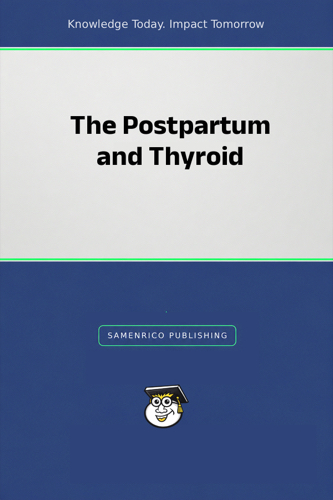
The Postpartum and Thyroid eBook
Rule out thyroid disorders that mimic depression.
by Shumate Adam
Rule out thyroid disorders that mimic depression.
Formats
Free sample
Chapter 1: The Misdiagnosed Mother...--Let me tell you about a woman I will never forget. Her name was Rachel.Rachel was thirty-four years old when she gave birth to her second daughter. The delivery was uncomplicated. The baby was healthy. By all external measures, Rachel was fine.
But six weeks after coming home from the hospital, something shifted. She could not get out of bed. The fatigue was not the normal exhaustion of new motherhood. It was something else. Something heavier.
She described it as lead in her bones. Every movement required ten times the normal effort.She was irritable with her older daughter. She cried for no reason. She could not remember things—where she put the keys, whether she had fed the baby, what day it was. Her husband begged her to see a doctor.
She went. She filled out a depression screening form. She answered the questions honestly. The score was high. The doctor nodded, wrote a prescription for an antidepressant, and told her she would feel better in a few weeks.Rachel took the medication for three months.
She did not feel better. She felt worse. The fatigue deepened. The brain fog worsened. She started losing hair in clumps.
Her skin became dry and cracked. She was cold all the time, even in summer, even under blankets. She went back to the doctor. The doctor increased her antidepressant dose. Another three months.
Still no improvement.It was Rachel's mother who finally asked the right question. "Has anyone checked your thyroid?" Rachel had never heard of postpartum thyroiditis. Neither had her doctor, apparently. She requested a blood test. Her TSH was 78.
The normal range is 0.4 to 4.0. Her thyroid was barely functioning.Rachel started thyroid hormone replacement medication. Within two weeks, she felt like herself again. The fog lifted. The energy returned.
The hair stopped falling out. The antidepressant had not worked because depression was never the problem. Her thyroid was broken.This chapter is about Rachel. It is about the thousands of women like her who are diagnosed with postpartum depression when they actually have a treatable thyroid disorder. It is about the hidden epidemic of postpartum thyroiditis—a condition that affects up to one in ten new mothers but remains virtually unknown.
And it is about why you cannot assume that postpartum mood symptoms are caused by depression until you have ruled out the thyroid.The Hidden Epidemic Postpartum thyroiditis is an inflammatory condition of the thyroid gland that occurs in the first year after giving birth. It affects approximately 5 to 10 percent of women. Let me put that number in perspective. Up to 15 percent of women experience postpartum depression. That means postpartum thyroiditis is nearly as common as postpartum depression.
If you are a new mother struggling with your mood, your energy, your thinking, the chance that you have a thyroid problem is not remote. It is not rare. It is one of the most likely explanations for how you feel.Despite how common it is, most women have never heard of postpartum thyroiditis. Most doctors do not routinely screen for it. The symptoms—fatigue, low energy, depressed mood, anxiety, difficulty concentrating, sleep disturbances, and weight changes—are nearly identical to those of postpartum depression.
When a new mother walks into a doctor's office and describes these symptoms, the assumption is almost always depression. The doctor hands her a depression screening form. She scores high. She leaves with an antidepressant prescription.But what if the depression screening is asking the wrong questions? The standard screening tools ask about mood, sleep, appetite, and energy.
These are all symptoms of thyroid dysfunction. The screening tools do not ask about neck discomfort, heat or cold intolerance, or changes in bowel habits—symptoms that point toward the thyroid. So a woman with postpartum thyroiditis answers the questions honestly and is diagnosed with depression. She is given a medication that treats a condition she does not have. She continues to suffer.
She is told to give the medication more time. She is told to try therapy. She is told that motherhood is just hard.Rachel's story has a happy ending because her mother asked the right question. But for every Rachel, there are countless women who never get that question. They spend months or years on antidepressants that do not work.
They are told they are not trying hard enough. They are told that this is just what motherhood feels like. They are dismissed, medicated, and forgotten.This book exists because that is not acceptable.The Cost of Misdiagnosis Why does it matter if postpartum thyroiditis is mistaken for postpartum depression? The short answer is that the treatments are completely different. Antidepressants do not fix a broken thyroid.
Thyroid medication does not treat depression. If you have the wrong diagnosis, you will receive the wrong treatment. And the wrong treatment does not work.But the cost of misdiagnosis goes beyond wasted medication. When a woman with postpartum thyroiditis is treated for depression, she is told that her symptoms should improve within four to six weeks. When they do not, she is told to increase the dose.
When that does not work, she is told to try a different antidepressant. When that does not work, she is told to add a second medication. By the time someone thinks to check her thyroid, months have passed. Months of suffering. Months of being unable to care for herself or her baby.
Months of believing that something was wrong with her mind when the problem was in her neck.Meanwhile, the thyroid condition may worsen. Untreated hypothyroidism can lead to more severe fatigue, more profound cognitive impairment, and a higher risk of permanent thyroid damage. Some women with postpartum thyroiditis develop permanent hypothyroidism that requires lifelong medication. Early treatment may prevent or delay this outcome.There is also the cost to the baby. A mother who is exhausted, depressed, and mentally foggy cannot be fully present for her child.
She may struggle with breastfeeding. She may have difficulty bonding. She may be irritable or withdrawn. These are not character flaws. They are symptoms of an untreated medical condition.
But the baby does not know that. The baby only knows that Mommy is not okay.The tragedy is that thyroid disorders are treatable. Unlike depression, which can take weeks or months to respond to medication, thyroid dysfunction often resolves within weeks once properly identified and managed. You can go from feeling like you are drowning to feeling like yourself again in a matter of days. But you cannot treat what you do not diagnose.What This Book Will Do For You This book is not here to dismiss postpartum depression.
Postpartum depression is real. It is serious. It requires treatment. If you have postpartum depression, you deserve help. But you also deserve to know that your symptoms might have another cause.
You deserve to have your thyroid tested before you are labeled with a psychiatric diagnosis and sent away with a prescription.This book will teach you how to tell the difference between postpartum depression and postpartum thyroiditis. You will learn the specific symptoms of thyroid dysfunction, including the subtle ones that depression screening tools miss. You…
This is the end of the free sample. Get the eBook to keep going. Buy now
About this book
Details
- Author
- Shumate Adam
- Publisher
- SamEnrico
- Language
- English
- Genre
- Non-Fiction, Health & Wellness, Thyroid
- Released
- 2026-06-06
- Pages (approx.)
- 119
- Available as
- eBook, Audiobook

Read better in the ZLOADR app
Your eBooks on your phone or tablet. Sign in with your SamEnrico account and start reading.
More by Shumate Adam
 Palliative Care Anticipatory GuideShumate Adam$11.99
 Dental Anatomy ForensicsShumate Adam$11.99
 Buffer Time Between BlocksShumate Adam$11.99
 Shopping Addiction Flea MarketsShumate Adam$11.99
 Self Hypnosis for Morning SnoozeShumate Adam$11.99
 Cold Case ReconstructionShumate Adam$11.99
 Body Language for Retail StaffShumate Adam$11.99
 The Healers of Color: Latin America's Impressionist Revolution (1950-1980)Shumate Adam$11.99
 The Kepler Conspiracy: Unlocking the Secrets of the CosmosShumate Adam$11.99
 How to Produce Curling IronsShumate Adam$11.99
 How to Produce Pest Control TrapsShumate Adam$11.99
 A Collector's Handbook to the Vauxhall Viva Ha 90Shumate Adam$11.99
You may also like
 Hong Kong Handover 1997Dunn Johnnie$11.99
 Zumba For Postnatal Recovery CourseNeal Christian$11.99
 Zumba for BeginnersLadner Nikia$11.99
 YouTube Comment Mining GuideHumes Pandora$12.99
 Worry Box MeditationCarlin Rudy$11.99
 Workplace Stress MeditationNguyen Lynn$11.99
 Workplace Stress and Sleep RepairHawley Ivory$11.99
 Workplace Perfectionism CureDelaney Jeffry$11.99
 Workplace Injustice Anger GuideWallen Isabelle$11.99
 Work Addiction and Burnout LinkGreenwood Ester$11.99
 Women in Yoga and WellnessBeattie Galina$11.99
 Women in Stand Up ComedyChun Evangeline$11.99