
Non-FictionSelf-HelpPost-Divorce
The Post Separation Parenting Guide eBook
Manages stress of dating, single parenting, and co
by Bacon Karma
Manages stress of dating, single parenting, and co-parenting after divorce or breakup.
Formats
Free sample
Chapter 1: The First 90 Days--–- The cardboard box had been sitting in the corner of the bedroom for eleven days. Inside were your wedding album, the ceramic gnome your mother-in-law gave you as a housewarming gift, and a framed photo of the two of you on a beach in Mexico, smiling in a way you no longer recognize. You have walked past this box seventy-three times. You have not opened it. You have not thrown it away.
You have simply circled it, like a dog deciding where to lie down in a room that no longer feels like home.This is what the first ninety days feel like. Not like a dramatic breakup montage from a movie. Not like a cathartic bonfire of old photographs. Like a cardboard box you cannot bring yourself to open or discard. Like a freezer full of food you bought for two people when there is now only one.
Like the reflexive reach for your phone to text your ex about something funny the child just did, followed by the sickening realization that you cannot send that text anymore—or worse, that you should not.If you are reading this chapter, you are likely somewhere in those first ninety days, or you are looking back at them with the particular nausea of someone who has just emerged from a fog. Either way, you need to hear something that no one is telling you: The first ninety days are not about moving on. They are about not making things worse.Every instinct you have right now is wrong. The urge to download a dating app to prove you are still desirable. The urge to move to a new apartment so the walls stop reminding you of the arguments.
The urge to throw yourself into work, or into fitness, or into a new hobby that will become your entire personality for six weeks before you abandon it. These are not signs of healing. They are signs of panic. And panic, when you are a parent, is not just dangerous for you. It is dangerous for the small human who is watching you circle that cardboard box, wondering if you are going to be okay.This chapter is not about healing.
It is not about closure. It is not about becoming a better version of yourself or manifesting abundance or any of the other things Instagram influencers will try to sell you during this vulnerable time. This chapter is about one thing and one thing only: surviving the first ninety days without causing permanent damage to yourself or your child.Let us be clear about what we mean by "permanent damage." You are not going to ruin your child's life by crying in front of them. You are not going to traumatize them by being sad. Children are resilient in ways that will astonish you, and the research is unequivocal that divorce itself, when managed well, does not produce negative outcomes for the majority of children.
What produces negative outcomes is what happens during and immediately after the separation: the exposure to ongoing conflict, the sudden instability, the parent who disappears into a new relationship before the ink is dry on the separation agreement, the parent who uses the child as a therapist or a messenger or a weapon.⁵The first ninety days are when these patterns are set. The decisions you make right now—about dating, about moving, about how you talk to your child, about how you talk about your ex—will echo for years. That is not meant to scare you. It is meant to give you permission to slow down.Because here is the truth that no one tells you in the divorce books: You do not need to figure everything out right now. You just need to hold the line.The Chemistry of Grief: Why Your Brain Is Lying to You Let us start with the biology, because understanding what is happening inside your skull is the first step toward not trusting it.Neuroscience research has shown that romantic rejection—the experience of being separated from a partner you were attached to—activates the same brain regions as cocaine withdrawal.⁶ Specifically, the ventral tegmental area, the nucleus accumbens, and the amygdala light up in ways that are nearly identical to the patterns seen in substance withdrawal.
This is not a metaphor. This is a brain scan. Your body is processing the end of your marriage the same way it would process the removal of an addictive substance.This explains almost everything about how you feel right now.You cannot sleep, or you sleep too much. You have no appetite, or you are eating things you would never normally eat. You vacillate between numbness and overwhelming emotion.
You have intrusive thoughts about your ex—sometimes angry, sometimes nostalgic, sometimes sexual in ways that confuse and disgust you. You check your phone obsessively, even though you know there will be no good news there. You feel like you are going crazy.You are not going crazy. You are going through withdrawal.The first ninety days are the acute phase of this withdrawal. Just as a person in detox is not expected to make major life decisions, you should not be making major life decisions right now.
The brain in grief is not capable of accurate risk assessment, long-term planning, or emotional regulation.⁷ This is not a character flaw. This is neurology.The Moratorium Rule: For the first ninety days post-separation, you will impose a self-directed moratorium on the following major decisions:Dating anyone (casual or serious)Moving to a new city or a new home (unless your physical safety is at risk)Quitting or changing jobs (unless you have already accepted an offer)Making significant financial commitments (cars, loans, major purchases)Introducing your child to any new adult as a romantic partner Getting a tattoo, changing your hair dramatically, or making any other appearance-based decision that cannot be easily reversed You are allowed to be bored. You are allowed to be lonely. You are allowed to be angry. You are not allowed to burn your life down because you are in pain.A reader will say: "But I feel fine.
I feel better than I have in years. I feel like I am finally free."That reader is experiencing what addiction specialists call "the pink cloud"—a temporary state of euphoria that occurs when a person first removes a chronic stressor. It is real. It is also deceptive. The pink cloud typically lasts between two and eight weeks, after which it is followed by a crash.⁸ Do not make permanent decisions based on temporary emotional states.Another reader will say: "But I have been emotionally divorced for years.
The paperwork is just a formality."That reader may be correct about their own timeline. However, the child has not been emotionally divorced for years. The child's clock started the day the separation became real. Your moratorium is not just for your benefit. It is for theirs.The Identity Trap: Who Are You Now?Before the separation, you had an answer to the question "Who am I?" It might have been a complicated answer, or an unsatisfying one, but it…
This is the end of the free sample. Get the eBook to keep going. Buy now
About this book
Details
- Author
- Bacon Karma
- Publisher
- SamEnrico
- Language
- English
- Genre
- Non-Fiction, Self-Help, Post-Divorce
- Released
- 2026-06-10
- Pages (approx.)
- 155
- Available as
- eBook, Audiobook

Read better in the ZLOADR app
Your eBooks on your phone or tablet. Sign in with your SamEnrico account and start reading.
More by Bacon Karma
 Dream Recall Improvement GuideBacon Karma$11.99
 Initiating Sex Self Esteem GuideBacon Karma$11.99
 Air Quality Energy GuideBacon Karma$11.99
 The Hollow Men: The Forgotten Slayings of the Black ForestBacon Karma$11.99
 Einstein’s Shadow in the Himalayas: The Quest for Relativity in the Roof of the WorldBacon Karma$11.99
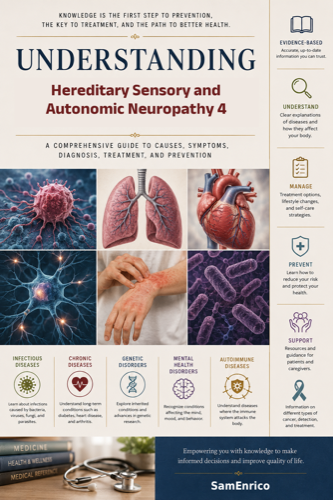 Understanding Hereditary Sensory and Autonomic Neuropathy 4Bacon Karma$17.99
 Upwork Proposal That Wins WorkbookBacon Karma$12.99
 Cloud Retail Outlook 2026Bacon Karma$12.99
 Claims AnalystBacon Karma$11.99
 How to Start a Presses for The Manufacture of Particle Board Business (Beginners Guide)Bacon Karma$11.99
You may also like
 Hong Kong Handover 1997Dunn Johnnie$11.99
 Zumba For Postnatal Recovery CourseNeal Christian$11.99
 Zumba for BeginnersLadner Nikia$11.99
 YouTube Comment Mining GuideHumes Pandora$12.99
 Worry Box MeditationCarlin Rudy$11.99
 Workplace Stress MeditationNguyen Lynn$11.99
 Workplace Stress and Sleep RepairHawley Ivory$11.99
 Workplace Perfectionism CureDelaney Jeffry$11.99
 Workplace Injustice Anger GuideWallen Isabelle$11.99
 Work Addiction and Burnout LinkGreenwood Ester$11.99
 Women in Yoga and WellnessBeattie Galina$11.99
 Women in Stand Up ComedyChun Evangeline$11.99