
Non-FictionHealth & WellnessPartner
The Partner Stretch Guide eBook
Safely assist others in deepening stretches for in
by Berg Justin
Safely assist others in deepening stretches for increased range of motion.
Formats
Free sample
Chapter 1: Beyond Your Own Reach--–- Every serious stretcher eventually hits the same frustrating wall. You plant your feet, hinge at the hips, reach for your toes, and… stop. Not because your muscles have given up, but because your own arms are too short, your own leverage is too weak, and your own nervous system is actively sabotaging you. You have just encountered the fundamental limitation of solo stretching: you cannot fully relax while you are also the one applying the force.This book exists because that wall is not permanent. It is not a sign of tight muscles destined to stay tight forever.
It is an invitation to bring in a second person—a partner who can provide the one thing you cannot give yourself: external, unbiased, compassionate leverage. When someone else controls the angle, the pressure, and the timing, your body finally has permission to let go. That is the art of assisted stretching, and it is the single most underutilized tool in the entire world of flexibility training.But let us be clear from the very first page: this is not about pushing, forcing, or conquering someone else’s body. The best-selling books in this field—from Facilitated Stretching to Stretching Anatomy to Prescriptive Stretching—all converge on one uncomfortable truth. Most people do partner stretching wrong.
They treat it like a competition. They mistake pain for progress. They accidentally trigger the very stretch reflex they are trying to overcome. This chapter will dismantle those mistakes and replace them with a framework that turns two people into a single, intelligent stretching system.Why Solo Stretching Hits a Biological Ceiling Your body is protected by an ancient, non-negotiable security system called the stretch reflex. Deep within your muscle tissue, tiny sensory organs called muscle spindles constantly monitor how fast and how far a muscle is being lengthened.
When you stretch too aggressively—especially when you are the one pulling on your own leg or arm—these spindles fire an emergency signal. Your muscle contracts involuntarily, fighting against the stretch you are trying to achieve.This is not a design flaw. It is a survival mechanism. In the wild, if a joint is forced past its safe range, the body instinctively tightens everything around it to prevent dislocation or tearing. The problem is that your solo stretching routine accidentally triggers this reflex all the time.
When you grab your foot to perform a quad stretch while standing, your brain is simultaneously sending two conflicting commands: “Relax the quad” and “Use the arm muscles to pull the foot.” That conflict creates low-grade neurological chaos. The muscle spindle cannot tell the difference between a helpful stretch and a threat, so it defaults to protection mode.A partner changes everything. When someone else applies the external force, your brain does not have to split its attention. You are free to focus entirely on relaxation and breathing while the partner manages the mechanics of the stretch. Research consistently shows that assisted stretching produces greater gains in range of motion compared to solo stretching, precisely because it bypasses the co-contraction problem.
You are not fighting yourself anymore.The Three Pillars of Effective Partner Stretching Before we get anywhere near specific techniques, you need to understand the three methodological approaches that appear repeatedly in every bestselling book on flexibility. These are the tools you will use throughout this guide, and knowing when to deploy each one separates an average partner from an exceptional one.Static Stretching is the simplest and safest method, especially for beginners. You move into a position of mild tension—what we will define in Chapter 3 as a “Green” or “Yellow” sensation—and you hold that position for a prolonged period, typically twenty to thirty seconds. The partner maintains steady, unchanging pressure. No bouncing, no pulsing, no sudden increases.
Static stretching works by habituating the nervous system to the new length. Over time, the muscle spindles recalibrate, allowing you to hold a deeper stretch without triggering the reflex. This is your go-to method for the first several sessions with a new partner or for anyone with a history of injury.Dynamic Stretching involves movement. Rather than holding a single position, the partner guides the stretcher through controlled, repetitive oscillations within a comfortable range of motion. For example, gently rocking a straight leg back and forth, increasing the arc by a few degrees with each repetition.
Dynamic stretching is excellent for warming up before activity because it increases blood flow and neuromuscular coordination without the prolonged tissue loading of static holds. However, it requires more skill from the partner. The movement must be smooth, rhythmic, and predictable. Any jerkiness or sudden acceleration triggers the stretch reflex immediately.Proprioceptive Neuromuscular Facilitation, or PNF, is the most powerful method in this book and the most research-backed technique for rapid range of motion gains. PNF works by deliberately activating the stretch reflex and then using its own biology against it.
Here is the simplified version: the stretcher contracts a muscle against the partner’s resistance for five to ten seconds. That contraction fatigues the muscle spindles. Then, immediately after the contraction, the stretcher relaxes completely, and the partner moves the limb two to three inches deeper into the stretch. Because the spindles are temporarily exhausted, they do not fire their usual alarm. The muscle lengthens further than it ever could with static stretching alone.We will devote significant space to PNF in Chapter 6, but you need to know its name and its promise now.
In clinical studies, PNF has been shown to produce immediate gains in range of motion of up to twenty percent in a single session, with those gains persisting longer than static stretching alone. The catch is that PNF requires precise timing and clear communication. A partner who applies PNF incorrectly—holding the contraction too long, releasing too slowly, or pushing too aggressively during the relaxation phase—can cause strain or injury. You will learn to do it right.The Realistic Expectations You Must Accept The fitness industry is built on lies about speed. Thirty-day flexibility challenges.
Two-minute miracle stretches. Before-and-after photos that show someone touching their toes on day one and folding into a pretzel on day thirty. These narratives are dangerous because they set you up for failure and, worse, for injury. When you expect dramatic results in a week and they do not arrive, the logical next step seems to be pushing harder. That is exactly when people get hurt.Here is the truth.
A healthy adult who stretches two to three times per week with a competent partner can expect to increase range of motion by ten to twenty percent over four to six weeks of consistent work. That is a meaningful, life-changing improvement. Ten percent more hamstring flexibility means you bend over to tie your shoes without holding your breath. Twenty percent more shoulder mobility means you reach the top shelf without wincing. These are victories.
They are just not overnight victories.The rate of progress depends on several variables you cannot control. Age matters. Older connective tissue is less malleable than younger tissue. Genetics matter. Some people are born with longer muscle bellies and looser fascia.
Injury history matters. A previously torn hamstring will always have scar tissue that limits its ultimate length. And stress matters.…
This is the end of the free sample. Get the eBook to keep going. Buy now
About this book
Details
- Author
- Berg Justin
- Publisher
- SamEnrico
- Language
- English
- Genre
- Non-Fiction, Health & Wellness, Partner
- Released
- 2026-06-07
- Pages (approx.)
- 124
- Available as
- eBook, Audiobook

Read better in the ZLOADR app
Your eBooks on your phone or tablet. Sign in with your SamEnrico account and start reading.
More by Berg Justin
 The Remote Work Lunch HourBerg Justin$11.99
 Plant Based Athletic Body Composition CourseBerg Justin$11.99
 Australia Green IncentivesBerg Justin$12.99
 Email Reply ShortcutsBerg Justin$11.99
 Benjamin Harrison Billion Dollar CongressBerg Justin$11.99
 Burke and Wills: The Fatal Fever of the Australian OutbackBerg Justin$11.99
 Love Letters in the Blitz: The Secret Romance of Vera Brittain and Victor RichardsonBerg Justin$11.99
 Understanding Cutis Gyratum Acanthosis Nigricans CraniosynostosisBerg Justin$17.99
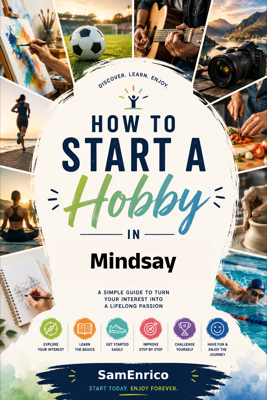 How to Start a Hobby in MindsayBerg Justin$11.99
 Sales Script Confidence GuideBerg Justin$12.99Australia Green IncentivesBerg Justin$12.99
 Applications AnalystBerg Justin$11.99
You may also like
 Hong Kong Handover 1997Dunn Johnnie$11.99
 Zumba For Postnatal Recovery CourseNeal Christian$11.99
 Zumba for BeginnersLadner Nikia$11.99
 YouTube Comment Mining GuideHumes Pandora$12.99
 Worry Box MeditationCarlin Rudy$11.99
 Workplace Stress MeditationNguyen Lynn$11.99
 Workplace Stress and Sleep RepairHawley Ivory$11.99
 Workplace Perfectionism CureDelaney Jeffry$11.99
 Workplace Injustice Anger GuideWallen Isabelle$11.99
 Work Addiction and Burnout LinkGreenwood Ester$11.99
 Women in Yoga and WellnessBeattie Galina$11.99
 Women in Stand Up ComedyChun Evangeline$11.99