
Non-FictionTrue CrimeParental Role
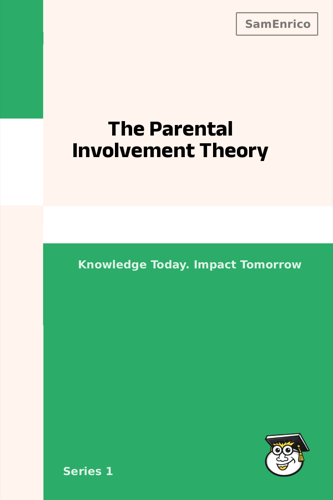
The Parental Involvement Theory
Examine why investigators have consistently cleare
Examine why investigators have consistently cleared Asha's parents of any wrongdoing.
Formats
About this book
Free sample
Chapter 1: The Blameland Assumption...--–- The first 72 hours of a missing child investigation are a pressure cooker of statistics, fear, and institutional habit. When a parent walks into a police station or makes that first frantic 911 call, they enter what investigators call the "Blameland Assumption"—an operational default that treats the parents as the most probable perpetrators until proven otherwise. This is not cruelty. It is arithmetic. The data is brutal and unambiguous: in a significant percentage of missing child cases that end in homicide, a parent or close family member is responsible.
The numbers vary by jurisdiction and year, but the consensus across decades of FBI Uniform Crime Reports and academic meta-analyses is that between 40% and 60% of child homicides involving a missing child report are eventually attributed to a family member. These are not fringe statistics. They are the bedrock of modern investigative protocol.But arithmetic is not destiny. And the Blameland Assumption, for all its statistical justification, carries a hidden cost: it blinds investigators to the possibility that some parents are exactly what they appear to be—grieving, terrified, innocent people whose child has vanished into the hands of a stranger. This chapter unpacks the origins of the Blameland Assumption, its psychological mechanics, its most infamous confirmations (and tragic misapplications), and finally, its limits.
We will examine why law enforcement reflexively separates parents, why a "calm" demeanor is often misread as guilt, and how behavioral science has begun to distinguish between traumatic paralysis and performative grief. And we will begin our central case study: Harold and Iquilla Degree, whose initial "coldness" in the hours after their daughter Asha disappeared from her bedroom in Shelby, North Carolina, raised eyebrows—but whose subsequent behavior, when examined through a disciplined lens, aligns not with guilt but with a documented phenomenon known as peritraumatic dissociation.The goal of this chapter is not to argue that parents should never be suspected. That would be foolish and dangerous. The goal is to argue that suspicion is protocol, not proof—and that a mature true crime analysis must hold two truths simultaneously: parents are statistically the most…
This is the end of the free sample. Get the eBook to keep going. Buy now
Contents
- Chapter 1
- Chapter 2
- Chapter 3
- Chapter 4
- Chapter 5
- Chapter 6
- Chapter 7
- Chapter 8
- Chapter 9
- Chapter 10
- Chapter 11
- Chapter 12
Details
- Author
- Sweeney Brynn
- Publisher
- SamEnrico
- Language
- English
- Genre
- Non-Fiction, True Crime, Parental Role
- Released
- 2026-06-10
- Pages (approx.)
- 142
- Available as
- eBook, Audiobook

Read better in the ZLOADR app
Your eBooks on your phone or tablet. Sign in with your SamEnrico account and start reading.
More by Sweeney Brynn
 Credit Card Addiction RescueSweeney Brynn$11.99
 Self Talk for Creative BlocksSweeney Brynn$11.99
 Body Scan for Hangover ReliefSweeney Brynn$11.99
 The Industry Conference GuideSweeney Brynn$11.99
 The Siege of Chittorgarh: The Rajput Last StandSweeney Brynn$11.99
 Understanding Verrucous Nevus AcanthokeratolyticSweeney Brynn$17.99
 Oak HarvestingSweeney Brynn$11.99
 FlutterFlow Cost GuideSweeney Brynn$12.99
 Factoring for Startups GuideSweeney Brynn$12.99
You may also like
 Hong Kong Handover 1997Dunn Johnnie$11.99
 Zumba For Postnatal Recovery CourseNeal Christian$11.99
 Zumba for BeginnersLadner Nikia$11.99
 YouTube Comment Mining GuideHumes Pandora$12.99
 Worry Box MeditationCarlin Rudy$11.99
 Workplace Stress MeditationNguyen Lynn$11.99
 Workplace Stress and Sleep RepairHawley Ivory$11.99
 Workplace Perfectionism CureDelaney Jeffry$11.99
 Workplace Injustice Anger GuideWallen Isabelle$11.99
 Work Addiction and Burnout LinkGreenwood Ester$11.99
 Women in Yoga and WellnessBeattie Galina$11.99
 Women in Stand Up ComedyChun Evangeline$11.99