
Non-FictionHealth & WellnessJournaling
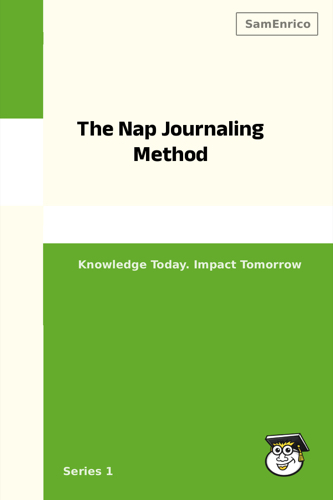
The Nap Journaling Method eBook
Combines brief journaling before naps to process e
by Lai Velva
Combines brief journaling before naps to process emotions.
Formats
Free sample
Chapter 1: The Gaslighting Organ...--Imagine, for a moment, that you have a very loud, very confident employee who works for you. This employee’s name is Prefrontal Cortex. He is brilliant at spreadsheets, logistics, and telling you exactly why something went wrong. He can analyze a problem from seventeen angles and produce a Power Point about it in under ten minutes. He is, by any corporate measure, indispensable.But he has one flaw.
He is absolutely terrible at feelings.Not because he doesn’t try. He tries very hard. That is precisely the problem. When you come home from a conversation that left you feeling small, or when you wake up at 3:00 AM with a vague sense of dread you cannot name, your Prefrontal Cortex (let’s call him PFC for short) immediately goes to work. He says, “Don’t worry.
I will figure this out. Let me just replay that conversation eleven times. Let me find the exact moment where she looked away. Let me rehearse what I should have said. Let me assign blame, categorize the offense, and file it under ‘Things That Are Unfair.’ There.
Done. Feel better?”But you don’t feel better. You feel worse. You feel more exhausted than when you started. And now, on top of the original feeling, you also feel frustrated with yourself for not being able to “think your way out of it.”This is not your fault.
This is not a character flaw. This is a misunderstanding of how the brain processes emotion.You have been taught, by a thousand self-help books, well-meaning therapists, and your own logical mind, that the way to deal with a difficult emotion is to think about it. To understand it. To analyze it until it surrenders its meaning. But here is the counterintuitive truth that changes everything: The brain does not process emotion through analysis.
The brain processes emotion by sleeping on it.Not metaphorically. Literally.And the most powerful window for that processing is not the eight hours you spend in bed at night. It is the three to five minutes between wakefulness and sleep—the hypnagogic state—combined with a specific, brief writing practice that primes your subconscious to do the work while you rest.This chapter will explain why your waking brain has been gaslighting you, why rumination is not a solution but a trap, and why the Nap Journaling Method exists at the exact intersection of three overlooked facts about human neurology.The Great Misunderstanding: Why “Thinking It Through” Fails Let us begin with a simple experiment. Think of an emotion that has been bothering you recently. Not a tragedy, not a catastrophe.
Just a low-grade, persistent emotional noise. Maybe it is irritation at a colleague. Maybe it is disappointment in yourself for not exercising again. Maybe it is the strange, heavy feeling you get every Sunday evening.Got one?Now, try to “think it through.” Ask yourself: Why do I feel this? What is the cause?
What would fix it? Spend ninety seconds doing this. Notice what happens.Most people notice one of two outcomes. Either they arrive at an answer they already knew (“I’m irritated because he interrupts me”), which changes nothing, or they descend into a spiral of increasingly abstract self-criticism (“I’m irritated because I’m actually jealous of his confidence, which means I’m insecure, which means I’m not good enough”). The original feeling—the simple irritation—has now been amplified, decorated, and buried under a pile of analysis.This is not insight.
This is rumination.The clinical definition of rumination is repetitive, passive, and self-referential thinking about the causes and consequences of one’s negative emotions. Notice the word passive. Rumination feels like work because it is exhausting, but it is not productive work. It is the mental equivalent of spinning your tires in mud. You are generating heat, not movement.Dr.
Susan Nolen-Hoeksema, who spent decades studying rumination at Yale, found that people who ruminate are not closer to solving their problems. They are more likely to develop depression, anxiety, and binge eating disorders. Rumination predicts the onset of major depressive episodes, not because sad people ruminate, but because rumination actively deepens sadness.Why?Because rumination keeps you trapped in the prefrontal cortex—the very part of your brain that is worst at feeling.A Brief Anatomy of Your Emotional Brain To understand why the Nap Journaling Method works, you need a simple map of your brain. Not a neuroscientist’s map. A user’s manual.You have three relevant parts for our purposes.The Prefrontal Cortex (PFC).
This is the front part of your brain, behind your forehead. It is responsible for executive functions: planning, logic, language, self-control, and decision-making. It is the most evolved part of your brain, and it is what makes you capable of doing taxes, negotiating contracts, and not screaming at people who cut you off in traffic. The PFC operates in linear time. It likes stories, causes, and effects.
It wants to know why.The Amygdala. This is a small, almond-shaped cluster of nuclei deep inside your brain. It is your alarm system. It scans for threats constantly, and when it finds one—or thinks it finds one—it activates your sympathetic nervous system (fight-or-flight). The amygdala does not speak English.
It does not understand why. It only understands danger or safety. It reacts in milliseconds, long before your PFC has even registered what is happening. That is why you flinch before you know you are flinching.The Hippocampus. This is your memory librarian.
It contextualizes emotional memories, linking them to time, place, and associated facts. The hippocampus works closely with the amygdala. When you have a traumatic memory, it is often because the hippocampus has failed to file the memory properly, leaving the amygdala stuck on high alert.Here is the crucial insight: The PFC and the amygdala do not speak the same language.The PFC speaks words, logic, and linear narratives. The amygdala speaks sensations, activation, and survival. When you try to “think through” a feeling, you are asking your PFC to translate something the amygdala does not know how to say.
The amygdala cannot answer “Why are you afraid?” It can only answer “I AM AFRAID. RIGHT NOW. STILL AFRAID.”This is why talk therapy, for all its benefits, has limits. Talking about a feeling is not the same as processing it. Talking activates the PFC, which can help you understand the story around the feeling, but it does not necessarily down-regulate the amygdala.
In fact, for some people, talking about a traumatic memory without also engaging the body and the sleep cycle can reactivate the amygdala, making the feeling worse.The Nap Journaling Method solves this problem by doing something no talking cure can do: it addresses the amygdala directly, during the one window of time when the PFC voluntarily steps aside.The Hypnagogic State: The Brain’s Back Door Between wakefulness and sleep lies a brief, magical window. It lasts anywhere from thirty seconds to five minutes, though most people experience it for two or three minutes without ever noticing it. This is the hypnagogic state. The word comes from the Greek…
This is the end of the free sample. Get the eBook to keep going. Buy now
About this book
Details
- Author
- Lai Velva
- Publisher
- SamEnrico
- Language
- English
- Genre
- Non-Fiction, Health & Wellness, Journaling
- Released
- 2026-06-11
- Pages (approx.)
- 155
- Available as
- eBook, Audiobook

Read better in the ZLOADR app
Your eBooks on your phone or tablet. Sign in with your SamEnrico account and start reading.
More by Lai Velva
 Study Schedule PlannerLai Velva$11.99
 Zumba for Stress ReliefLai Velva$11.99
 Parent Death and AdoptionLai Velva$11.99
 The Cruise Ship EnslavementLai Velva$11.99
 Google Calendar MemoryLai Velva$11.99
 Cessation For Mental Health PatientsLai Velva$11.99
 Child Loss And AdoptionLai Velva$11.99Child Loss And AdoptionLai Velva$11.99
 Assertiveness For The BedriddenLai Velva$11.99
 Seams of Time: The Unseen Threads of Dior’s New LookLai Velva$11.99
 The Silent Rebellion: The Forgotten Uprising of the Women of HollowayLai Velva$11.99
 Hannibal's Gambit: The March on Rome That Shook the WorldLai Velva$11.99
You may also like
 Hong Kong Handover 1997Dunn Johnnie$11.99
 Zumba For Postnatal Recovery CourseNeal Christian$11.99
 Zumba for BeginnersLadner Nikia$11.99
 YouTube Comment Mining GuideHumes Pandora$12.99
 Worry Box MeditationCarlin Rudy$11.99
 Workplace Stress MeditationNguyen Lynn$11.99
 Workplace Stress and Sleep RepairHawley Ivory$11.99
 Workplace Perfectionism CureDelaney Jeffry$11.99
 Workplace Injustice Anger GuideWallen Isabelle$11.99
 Work Addiction and Burnout LinkGreenwood Ester$11.99
 Women in Yoga and WellnessBeattie Galina$11.99
 Women in Stand Up ComedyChun Evangeline$11.99