
Non-FictionTrue CrimeMemory Narrative
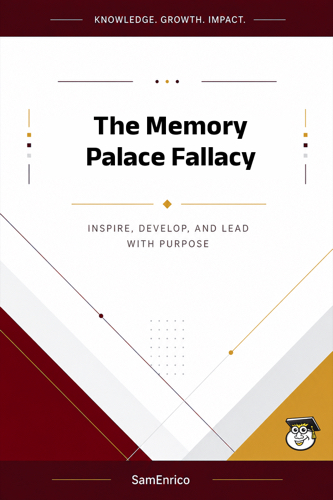
The Memory Palace Fallacy
Explains why confident narrative detail does not p
Explains why confident narrative detail does not predict accuracy of the key identification.
Formats
About this book
Free sample
Chapter 1: The Broken Camera--Every person who has ever testified in court, argued with a spouse, or recounted a story at a dinner party shares the same secret belief. They do not say it out loud, but it governs every memory they trust. The belief is this: my memory is essentially a recording device. Not a perfect one, perhaps, but close enough. What I saw went in.
What I remember now is what happened then. The details may fade at the edges, but the core remains intact—a film clip stored in the vault of the skull, ready for playback.This belief is wrong. Not slightly mistaken, not oversimplified, but fundamentally, catastrophically, scientifically wrong. And yet it is the single most common intuition about how human memory works. Every juror who hears an eyewitness describe a crime carries this assumption.
Every executive who believes a confident post-mortem analysis carries it. Every person who has ever said “I’d bet my life on it” about a vivid memory carries it. The intuition feels unshakeable because it is so deeply woven into conscious experience. When you remember your childhood bedroom, you do not feel like you are constructing anything. You feel like you are visiting a place that exists somewhere inside you, intact and waiting.But the neuroscience and cognitive psychology of the past forty years have converged on an uncomfortable truth.
The feeling of visiting a memory is an illusion crafted by a brain that is actually building, not retrieving. The camera model is a lie we tell ourselves because the truth is harder to accept. The truth is that every memory you have is a reconstruction, stitched together from fragments, leavened with inference, and edited every time you access it. The truth is that the most detailed, confident, emotionally vivid memory you possess may be accurate in its broad strokes and catastrophically wrong in its central identification—often without any detectable difference in how it feels.This chapter dismantles the camera metaphor and replaces it with a more accurate, if less intuitive, model of how memory actually works. Understanding this model is the…
This is the end of the free sample. Get the eBook to keep going. Buy now
Contents
- Chapter 1
- Chapter 2
- Chapter 3
- Chapter 4
- Chapter 5
- Chapter 6
- Chapter 7
- Chapter 8
- Chapter 9
- Chapter 10
- Chapter 11
- Chapter 12
Details
- Author
- Halstead Herschel
- Publisher
- SamEnrico
- Language
- English
- Genre
- Non-Fiction, True Crime, Memory Narrative
- Released
- 2026-06-09
- Pages (approx.)
- 121
- Available as
- eBook, Audiobook

Read better in the ZLOADR app
Your eBooks on your phone or tablet. Sign in with your SamEnrico account and start reading.
More by Halstead Herschel
 Chunking Legal Cases GuideHalstead Herschel$11.99
 Secoya Ayahuasca CuracaHalstead Herschel$11.99
 Lifestyle Counseling NaturopathyHalstead Herschel$11.99
 The Prostate Hormone Therapy GuideHalstead Herschel$11.99
 The Jade Phoenix and the Celestial WeaverHalstead Herschel$11.99
 How to Become a Static BalancerHalstead Herschel$11.99
 Understanding ScleromyxedemaHalstead Herschel$17.99
 Cross Border Franchising Your Brand GuideHalstead Herschel$12.99
 Media Generations GuideHalstead Herschel$12.99
 Python DeveloperHalstead Herschel$11.99
You may also like
 Hong Kong Handover 1997Dunn Johnnie$11.99
 Zumba For Postnatal Recovery CourseNeal Christian$11.99
 Zumba for BeginnersLadner Nikia$11.99
 YouTube Comment Mining GuideHumes Pandora$12.99
 Worry Box MeditationCarlin Rudy$11.99
 Workplace Stress MeditationNguyen Lynn$11.99
 Workplace Stress and Sleep RepairHawley Ivory$11.99
 Workplace Perfectionism CureDelaney Jeffry$11.99
 Workplace Injustice Anger GuideWallen Isabelle$11.99
 Work Addiction and Burnout LinkGreenwood Ester$11.99
 Women in Yoga and WellnessBeattie Galina$11.99
 Women in Stand Up ComedyChun Evangeline$11.99