
The Gorilla Stance eBook
Reads arms hanging with clenched fists as restrain
Reads arms hanging with clenched fists as restrained anger.
Formats
Free sample
Chapter 1: The Half-Seconds That Own You--–- The email arrives at 2:17 on a Tuesday afternoon. You are not expecting it. You are scrolling, half-distracted, maybe drinking coffee that has gone cold. Then you read the line—the one that hooks into your ribs and yanks. Your jaw tightens.
Your shoulders rise toward your ears. And somewhere below the edge of the desk, where no one can see, your hands curl into fists.You do not throw the computer. You do not scream. You reply with something professional, something measured, something that costs you nothing on the outside. But your body is already screaming.
Your trapezius muscles have hardened into cables. Your breath has shortened. Your blood pressure has spiked and will take forty-five minutes to return to baseline. And those fists—those useless, hidden fists—will stay partially clenched for the rest of the afternoon. You will carry them into your next meeting, into your commute, into your kitchen, into the first hour of conversation with your partner.
You will tell yourself you are fine. You will believe it. And tomorrow, or next week, or three months from now, you will explode over something small—a misplaced key, a thoughtless comment, a dish left in the sink—and you will have no idea where the rage came from.This book exists because that sequence of events is the single most expensive habit in modern human life. It costs us relationships, promotions, sleep, health, and years of our lives. And almost no one has been taught a third option.The Binary Trap That Keeps You Stuck Every anger management book you have ever seen—every article, every podcast, every well-meaning therapist who told you to "count to ten"—has been selling you a version of the same binary: hold it in or let it out.
Suppress or express. Bury or blast. The Mouse or the Monkey.These are not clinical terms yet. They will become clinical by the end of this chapter. But for now, consider them as two doors.
Door Number One: You swallow the anger. You smile. You say "it's fine" when it is not fine. You store the tension in your jaw, your shoulders, your gut, your clenched fists. You become, in the language of somatic psychology, a container.
The anger does not disappear. It waits. It accumulates. It becomes depression, anxiety, insomnia, migraines, irritable bowel syndrome, autoimmune disease, or—most commonly—a sudden, explosive eruption that shocks everyone including you.Door Number Two: You let the anger out. You raise your voice.
You point. You slam. You send the email you should not send. You say the thing you cannot take back. You become, in the language of relationship psychology, aflame.
The anger discharges chaotically, causing collateral damage to everyone in range. You feel better for approximately seven minutes. Then the shame arrives. Then the apology. Then the repair work—if repair is even possible.These two doors are not equally bad for everyone.
Some people are professionally rewarded for Door Two (more on that in Chapter Four). Some people have been socialized so thoroughly into Door One that they no longer know they are angry at all. But here is the problem that no other book has solved: both doors lead to the same basement. The Mouse stores anger until it rots into resentment and disease. The Monkey burns anger until it scorches relationships and reputations.
Neither one uses anger. Neither one houses anger with dignity and intention.This book is about Door Number Three.Introducing the Gorilla Stance The Gorilla Stance is not a metaphor. It is a physical posture—feet planted, spine long, shoulders heavy, arms hanging, fists lightly to moderately clenched. It is the body's way of saying: I am fully present. I feel the boundary violation.
I am ready to act. And I am choosing not to act until I decide.A gorilla in the wild does not flail. A gorilla does not collapse. A gorilla feels the threat, curls its massive hands into fists, hangs its arms heavy, and waits. It watches.
It breathes. It decides. Most threats resolve without a single punch because the posture itself communicates something that words cannot: I am not afraid of you, and I am not afraid of my own anger. Try me if you want. But know what you are choosing.You are not a gorilla.
You are a human being with a prefrontal cortex, a mortgage, and a complex social life. But you share enough primate ancestry that the posture works on your nervous system exactly as it works on theirs. When you stand in the Gorilla Stance—when you stop collapsing and stop flailing and simply hold—something shifts in your brain. The amygdala, which was preparing for fight or flight, receives a signal from the proprioceptive system: We are grounded. We are stable.
We are not running. We are not attacking. We are watching. And the cortisol surge begins to plateau.This is not mysticism. This is neurobiology.
The body and the brain are not separate. The posture you hold changes the chemistry you feel. And the Gorilla Stance is the most efficient posture ever discovered for housing anger without being destroyed by it.The Anatomy of a Clench Before we go any further, I need you to do something. Stop reading for exactly ten seconds. Put this book down if you are holding it.
Place your hands flat on your thighs. Breathe normally. Then, without changing anything else, notice: Are your fists clenched right now?Most people who answer that question honestly will discover that they are, in fact, holding some degree of hand tension at this very moment. Not a full white-knuckle clench. But a partial one.
A background clench. The kind that has been running for so long that you have stopped feeling it.This is the silent epidemic. The half-clenched fist that follows you through your day. It is there when you answer a difficult email. It is there when you listen to a coworker take credit for your work.
It is there when your partner says something that lands wrong. It is there in the car, in the grocery store, in the waiting room, in the bed. Your hands are telling you something that your conscious mind has learned to ignore: I am angry. I have been angry. I am still angry.
And no one is listening.The physiology of the clench is straightforward. When the amygdala detects a threat—and a threat, to your ancient nervous system, includes social rejection, unfairness, disrespect, or any boundary violation—it activates the sympathetic nervous system. Adrenaline and cortisol flood your bloodstream. Your heart rate increases. Your digestion slows.
And your hands curl into fists because, for 99.9 percent of human evolutionary history, threats were physical. The fists were preparing to fight.Here is what no one tells you: the clench is not the problem. The clench is a signal. It is your body's extraordinarily sophisticated alarm system telling you that something matters. The problem is what happens next.
The problem is that you were taught to ignore the alarm, or to smash the alarm, instead of reading the alarm…
This is the end of the free sample. Get the eBook to keep going. Buy now
About this book
Details
- Author
- Bartholomew Trudy
- Publisher
- SamEnrico
- Language
- English
- Genre
- Non-Fiction, Self-Help, Anger
- Released
- 2026-06-09
- Pages (approx.)
- 140
- Available as
- eBook, Audiobook

Read better in the ZLOADR app
Your eBooks on your phone or tablet. Sign in with your SamEnrico account and start reading.
More by Bartholomew Trudy
 Step Eleven Evening Review RoutineBartholomew Trudy$11.99
 Anticipatory Grief and Medical DecisionsBartholomew Trudy$11.99
 Only Sane One Survivor GuideBartholomew Trudy$11.99
 Food Addiction And Shame Recovery GuideBartholomew Trudy$11.99
 The Soldier's Second OverdoseBartholomew Trudy$11.99
 Remote Coaching CommunicationBartholomew Trudy$11.99
 Growth Hormone Youthful MetabolismBartholomew Trudy$11.99
 News Corp ScandalBartholomew Trudy$11.99
 The Great Barrier Bleach: How a Heatwave Turned Paradise into PerilBartholomew Trudy$11.99
 The Stoic Marketplace: How Marcus Aurelius and Seneca Built an Empire of WisdomBartholomew Trudy$11.99
 The Lost Letters of Sylvia Plath: A Poet’s Secret LifeBartholomew Trudy$11.99
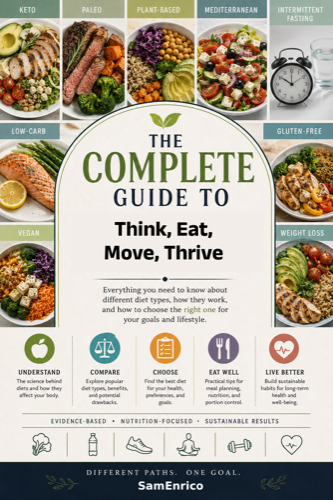 The Complete Guide to Think, Eat, Move, ThriveBartholomew Trudy$11.99
You may also like
 Hong Kong Handover 1997Dunn Johnnie$11.99
 Zumba For Postnatal Recovery CourseNeal Christian$11.99
 Zumba for BeginnersLadner Nikia$11.99
 YouTube Comment Mining GuideHumes Pandora$12.99
 Worry Box MeditationCarlin Rudy$11.99
 Workplace Stress MeditationNguyen Lynn$11.99
 Workplace Stress and Sleep RepairHawley Ivory$11.99
 Workplace Perfectionism CureDelaney Jeffry$11.99
 Workplace Injustice Anger GuideWallen Isabelle$11.99
 Work Addiction and Burnout LinkGreenwood Ester$11.99
 Women in Yoga and WellnessBeattie Galina$11.99
 Women in Stand Up ComedyChun Evangeline$11.99