
Non-FictionHealth & WellnessProtocol Diet
The GAPS Diet Explained eBook
Details the Gut and Psychology Syndrome protocol f
by Pina Keven
Details the Gut and Psychology Syndrome protocol for healing the gut lining and reducing brain symptoms.
Formats
Free sample
Chapter 1: The Gut's Secret Kingdom--–- Imagine, for a moment, that your digestive tract is not merely a tube that processes food, but a bustling, living ecosystem—a dense rainforest of microscopic life, teeming with billions of bacteria, fungi, and even viruses. This is not a metaphor. This is biological fact. The human gut contains more microbial cells than there are human cells in your entire body. And the genetic material of these microbes—known as the microbiome—outnumbers your own human genes by a factor of one hundred to one.
You are, quite literally, more bacteria than you are human.Now imagine that this ecosystem, this hidden kingdom within you, has been shaped by every choice you have ever made. Every meal you ate. Every antibiotic you swallowed. Every birth intervention you experienced. Every night of poor sleep.
Every dose of chronic stress. All of it has sculpted your microbiome into a unique fingerprint of health or disease. And here is the most astonishing part: that microbiome is in constant, two-way communication with your brain. The gut does not simply digest food. It manufactures neurotransmitters, modulates your immune system, and sends chemical signals that influence your mood, your cognition, and even your personality.This is the radical truth at the heart of the GAPS protocol.
Dr. Natasha Campbell-Mc Bride, a neurologist and neurosurgeon turned nutritional researcher, discovered this connection not through a laboratory experiment or a randomized controlled trial, but through the most urgent form of research imaginable: she was trying to save her own child.Her son, Sasha, had developed normally for the first two and a half years of his life. He met his milestones. He spoke in short sentences. He made eye contact.
He smiled. Then, after the MMR vaccine and a series of antibiotic courses for recurrent ear infections, everything changed. He lost his language. He stopped making eye contact. He developed chronic diarrhea that would not resolve.
He became irritable, withdrawn, and prone to sudden, unexplained screaming fits. The diagnosis was autism, and the medical establishment told his mother—a trained neurologist—that there was nothing she could do.But she refused to accept that answer. She began researching the connection between gut health and brain function, eventually discovering the Specific Carbohydrate Diet (SCD) developed by Dr. Sidney Haas in the 1920s and popularized by Elaine Gottschall in the 1990s. SCD alone was not enough for Sasha; he was too severely affected.
So she adapted, expanded, and created a six-stage Introduction Diet that started with nothing but homemade meat stock and boiled meats. She added fermented foods for their probiotic power. She emphasized animal fats, organ meats, and bone broth based on the principles of the Weston A. Price Foundation. Over three years, Sasha recovered completely.
He went on to attend mainstream school, then university, then graduate. And Dr. Campbell-Mc Bride left her neurology practice to teach other families what she had learned.This chapter introduces the two branches of GAPS, explains why conventional medicine has failed to connect gut health to chronic illness, and prepares you for the detailed protocol that follows in the rest of this book. By the time you finish reading, you will understand why healing the gut is not an alternative therapy but a foundational medical intervention—and why you are about to embark on one of the most transformative journeys of your life.The Two Faces of One Syndrome When most people hear the acronym GAPS, they assume it refers only to conditions of the brain and mind. Autism, attention deficit hyperactivity disorder (ADHD), depression, schizophrenia, bipolar disorder, obsessive-compulsive disorder (OCD), dyslexia, dyspraxia, and tic disorders are the conditions that first brought Dr.
Campbell-Mc Bride’s work to public attention. And indeed, these are the conditions that fall under the first branch: Gut and Psychology Syndrome (GAPS) .The child who cannot make eye contact. The teenager whose OCD rituals consume three hours of each day. The adult whose depression has not responded to six different antidepressants. The mother whose postpartum anxiety has left her unable to leave the house.
These are the faces of Psychology GAPS. In each case, the underlying pathology is the same: a leaky gut, an imbalanced microbiome, and a Toxic Stream of inflammatory compounds traveling from the digestive tract to the brain.But there is a second branch that is equally important and often overlooked: Gut and Physiology Syndrome (GAPS) . This refers to the same underlying pathology manifesting as physical and autoimmune conditions. Asthma, eczema, psoriasis, rheumatoid arthritis, Hashimoto’s thyroiditis, Crohn’s disease, ulcerative colitis, celiac disease, type 1 diabetes, multiple sclerosis, lupus, chronic fatigue syndrome, fibromyalgia, and even non-alcoholic fatty liver disease all share a common root. The gut lining is compromised.
The immune system is chronically activated. And the body, quite literally, begins attacking itself.Why does one person with leaky gut develop panic attacks while another develops rheumatoid arthritis? The answer lies in genetics, environmental triggers, and the specific composition of the gut microbiome. A person with a genetic predisposition to autoimmunity who develops dysbiosis may experience joint pain and fatigue. A person with a genetic predisposition to anxiety who develops the same dysbiosis may experience panic attacks and obsessive thoughts.
But the underlying mechanism is identical. This is why the same dietary protocol can treat both conditions. Heal the gut, and both the brain and the body have the opportunity to follow.The Toxic Stream: How Gut Damage Becomes Brain Damage To understand why healing the gut is the most powerful intervention you can make for your brain, you need to understand a three-step process: leaky gut, dysbiosis, and the Toxic Stream.Leaky gut (intestinal permeability) is exactly what it sounds like. The lining of your small intestine is a single layer of epithelial cells held together by structures called tight junctions. When these tight junctions are healthy, they act like a carefully guarded border crossing, allowing fully digested nutrients to pass into the bloodstream while blocking undigested food particles, bacterial toxins, and pathogenic microbes.
When these tight junctions are damaged—by antibiotics, non-steroidal anti-inflammatory drugs (NSAIDs), birth control pills, chronic stress, processed foods, alcohol, or gut infections—they loosen, creating microscopic gaps. Through these gaps, substances that should never enter the bloodstream begin to leak through.Dysbiosis is the second piece of the puzzle. A healthy gut microbiome is a diverse ecosystem with thousands of species of beneficial bacteria that aid digestion, produce vitamins, and crowd out pathogens. Dysbiosis is the opposite: an imbalance in which pathogenic bacteria, yeast, and fungi outnumber the beneficial species. Dysbiosis and leaky gut reinforce each other in a vicious cycle.
Pathogenic microbes produce toxins that damage the gut lining, widening the gaps. And a damaged gut lining allows more pathogens to enter the bloodstream, spreading inflammation throughout the body.The Toxic Stream is Dr. Campbell-Mc Bride’s name for what happens next. Once gut-derived toxins enter the bloodstream, they travel via the portal vein to the liver. The liver is the body’s primary detoxification organ, but it has a limited capacity.
When the Toxic Stream is chronic and overwhelming, the liver becomes overloaded, and toxins spill into systemic circulation. From there, they…
This is the end of the free sample. Get the eBook to keep going. Buy now
About this book
Details
- Author
- Pina Keven
- Publisher
- SamEnrico
- Language
- English
- Genre
- Non-Fiction, Health & Wellness, Protocol Diet
- Released
- 2026-06-07
- Pages (approx.)
- 149
- Available as
- eBook, Audiobook

Read better in the ZLOADR app
Your eBooks on your phone or tablet. Sign in with your SamEnrico account and start reading.
More by Pina Keven
 Pharmaceutical Sales Rep Quota Stress CoursePina Keven$11.99
 Autonomous Trucking OutlookPina Keven$12.99
 Resentment Recovery Daily GuidePina Keven$11.99
 The Mobile Sports Betting Addiction GuidePina Keven$11.99
 Manson Family Escapee AccountPina Keven$11.99
 The Silent Exodus: How a Forgotten Empire Fell to the SandsPina Keven$11.99
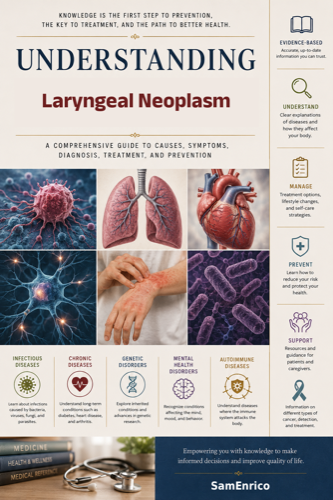 Understanding Laryngeal NeoplasmPina Keven$17.99
 How to Become a Coater OperatorPina Keven$11.99
 Speaker Note Generator HandbookPina Keven$12.99Autonomous Trucking OutlookPina Keven$12.99
 Call Center Sales Customer Service RepresentativePina Keven$11.99
You may also like
 Hong Kong Handover 1997Dunn Johnnie$11.99
 Zumba For Postnatal Recovery CourseNeal Christian$11.99
 Zumba for BeginnersLadner Nikia$11.99
 YouTube Comment Mining GuideHumes Pandora$12.99
 Worry Box MeditationCarlin Rudy$11.99
 Workplace Stress MeditationNguyen Lynn$11.99
 Workplace Stress and Sleep RepairHawley Ivory$11.99
 Workplace Perfectionism CureDelaney Jeffry$11.99
 Workplace Injustice Anger GuideWallen Isabelle$11.99
 Work Addiction and Burnout LinkGreenwood Ester$11.99
 Women in Yoga and WellnessBeattie Galina$11.99
 Women in Stand Up ComedyChun Evangeline$11.99