
Non-FictionHealth & WellnessHarm Reduction
The Gaming Harm Reduction Guide eBook
Set session timers and mandatory breaks for contro
Set session timers and mandatory breaks for controlled play.
Formats
Free sample
Chapter 1: The Forty-Minute Wall...--–- The controller vibrates in your hands. The screen glows. The outside world – chores, deadlines, sleep – dissolves into a gray blur. You tell yourself one more objective, one more match, just until the next save point. Three hours later, you emerge blinking into a dark room, neck sore, eyes burning, and you cannot remember the last time you actually had fun.
You were playing on autopilot, a passenger in your own body, while the game ran the show. This is the hidden architecture of every extended gaming session, and it begins not at hour three, but at minute forty.Most gamers believe they lose control because they lack willpower. They think if they just tried harder, cared more, or set a stronger intention, they would naturally stop after an hour. This belief is not only wrong – it is dangerous. It turns a neurological inevitability into a moral failure, leaving millions of players feeling weak, ashamed, and convinced that something is fundamentally broken inside them.
Nothing could be further from the truth.The reality is that your brain is wired to lose track of time during engaging activities. This is not a design flaw; it is a survival mechanism that allows humans to focus deeply on hunting, gathering, problem-solving, or any task that requires sustained attention. Video games are exquisitely designed to exploit this mechanism, pushing it far beyond its evolutionary intended limits. The result is a predictable, measurable, and entirely physiological process that hijacks your executive functions and leaves you powerless to stop – not because you are weak, but because you have crossed a threshold that your conscious mind cannot override.This chapter reveals the hard science behind what we call the Forty-Minute Wall. You will learn exactly when and why your brain stops protecting you from overuse, how environmental cues lock you into sessions before you even begin, and why the phrase "just five more minutes" is a cognitive illusion.
More importantly, you will understand that the solution is not more willpower – it is better engineering. By the end of this chapter, you will stop blaming yourself for losing time and start respecting the biological limits that apply to every human brain on the planet, including the most disciplined esports professionals.The ANU Data: When Executive Function Begins to Crumble In 2019, the Australian National University Centre for Gambling Research published a longitudinal study that would fundamentally change how researchers understand sustained attention tasks. While the study focused on electronic gaming machine gambling, its findings apply directly to video gaming because both activities involve continuous partial reinforcement, rapid feedback loops, and immersive screen-based engagement. The researchers discovered something remarkable and unsettling: after approximately forty minutes of continuous play, measurable declines in executive function became statistically significant across all participants, regardless of age, gender, or prior gaming experience.Let us define what executive function actually means. Your brain does not operate as a single unified organ making conscious decisions.
Instead, it runs multiple parallel systems, and executive function is the air traffic controller that coordinates them. It includes impulse control (the ability to resist starting another match), working memory (keeping track of how long you have been playing and what you intended to do next), cognitive flexibility (shifting attention from the game to the clock or to external responsibilities), and error monitoring (noticing that your performance is deteriorating and that you are making stupid mistakes). These are the very capacities you need to stop a gaming session at a reasonable time. And they begin to fail at forty minutes.The ANU data showed that at the forty-minute mark, participants experienced a 22 percent reduction in the ability to accurately estimate elapsed time. By sixty minutes, that reduction had grown to 38 percent.
This means that after one hour of play, your brain is objectively, measurably incapable of telling you how long you have been sitting in front of the screen. The clock on the wall and the timer on your phone become meaningless because your perception of time has stretched and warped beyond recognition. You are not lying to yourself when you say "it has only been thirty minutes" after two hours of play – your brain is genuinely incapable of producing an accurate estimate.Even more concerning, the ANU researchers found that the forty-minute threshold was consistent regardless of how engaging or boring the participant found the activity. High engagement actually accelerated the decline because the brain allocated more resources to the task and fewer resources to self-monitoring. This is the cruel irony of good game design: the more fun you are having, the faster you lose the ability to stop having fun.
The games that capture your attention most completely are the very games that disable your off switch most efficiently.But executive function decline is only half the story. The other half involves what happens before you even press start – a phenomenon that researchers call anticipatory conditioning, and it explains why "just five minutes" is one of the most dangerous lies your brain can tell you.The Vietnam Study and the Myth of "Just Five Minutes"In 1971, two American psychiatrists – Dr. Jerome Jaffe and Dr. Robert Dupont – made a shocking discovery while studying American soldiers returning from the Vietnam War. Approximately twenty percent of soldiers had regularly used heroin while deployed, a number that terrified military officials who expected a wave of addiction crises upon the soldiers return home.
The researchers followed these soldiers for three years after their return to the United States. The results defied every expectation. Only five percent of the soldiers who had been addicted in Vietnam relapsed within their first year home. Ninety-five percent stopped using heroin essentially overnight, without treatment, without withdrawal management, and without any structured intervention.Why? The answer revolutionized addiction science.
The soldiers were not addicted to heroin as a chemical substance alone. They were addicted to the environmental context in which they used heroin – the stress of combat, the isolation from family, the constant threat of death, and the specific sensory cues of Vietnam (the smell of humidity, the sound of helicopters, the sight of bamboo huts). When they returned to the United States – to their childhood bedrooms, their families dinner tables, the sounds of English television and suburban traffic – the environmental triggers disappeared. Without those triggers, the craving lost its power. The addiction was not purely chemical; it was environmental.This finding, now called context-dependent learning or the "Vietnam Study effect," has profound implications for gaming.
Every time you sit down to play, you are not entering a neutral space. You are entering a carefully constructed environment of conditioned cues that trigger dopamine release before you have even loaded the game. The sound of your console fan spinning up. The vibration pattern of your controller as it connects. The specific glow of your monitor in a darkened room.
The tactile feel of your gaming chair. The startup chime of Steam or the Play Station home screen. Each of these cues has been paired with hundreds or thousands of previous gaming sessions, and your brain has learned the association perfectly. Cue appears. Dopamine releases.
Craving begins.Here is the terrifying implication: by the time you decide to play "just five minutes," your brain has already…
This is the end of the free sample. Get the eBook to keep going. Buy now
About this book
Details
- Author
- Carrasco Dorla
- Publisher
- SamEnrico
- Language
- English
- Genre
- Non-Fiction, Health & Wellness, Harm Reduction
- Released
- 2026-06-10
- Pages (approx.)
- 156
- Available as
- eBook, Audiobook

Read better in the ZLOADR app
Your eBooks on your phone or tablet. Sign in with your SamEnrico account and start reading.
More by Carrasco Dorla
 Courageous Life GuideCarrasco Dorla$11.99
 The Senior Social Skills GuideCarrasco Dorla$11.99
 Submarine Mine Warfare GuideCarrasco Dorla$11.99
 The Telegram Channel Overload GuideCarrasco Dorla$11.99
 Orpheus Unchained: The Song That Shattered HadesCarrasco Dorla$11.99
 Voiceover Artist (coaching)Carrasco Dorla$11.99
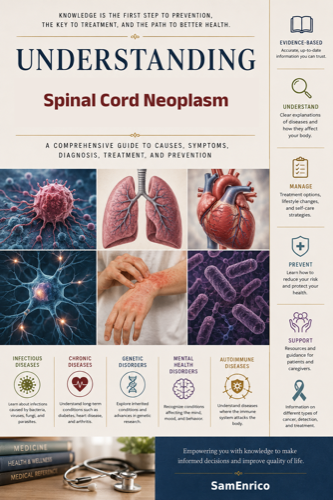 Understanding Spinal Cord NeoplasmCarrasco Dorla$17.99
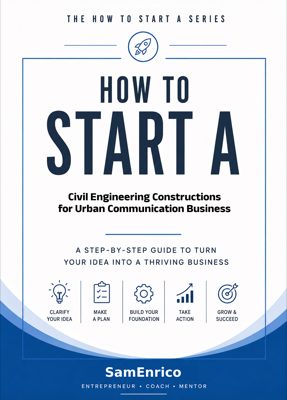 How to Start a Civil Engineering Constructions for Urban Communication Business (Beginners Guide)Carrasco Dorla$11.99
 Event Cancellation ClimateCarrasco Dorla$12.99
 Key Person Insurance Tax RulesCarrasco Dorla$12.99
You may also like
 Hong Kong Handover 1997Dunn Johnnie$11.99
 Zumba For Postnatal Recovery CourseNeal Christian$11.99
 Zumba for BeginnersLadner Nikia$11.99
 YouTube Comment Mining GuideHumes Pandora$12.99
 Worry Box MeditationCarlin Rudy$11.99
 Workplace Stress MeditationNguyen Lynn$11.99
 Workplace Stress and Sleep RepairHawley Ivory$11.99
 Workplace Perfectionism CureDelaney Jeffry$11.99
 Workplace Injustice Anger GuideWallen Isabelle$11.99
 Work Addiction and Burnout LinkGreenwood Ester$11.99
 Women in Yoga and WellnessBeattie Galina$11.99
 Women in Stand Up ComedyChun Evangeline$11.99