
The Floating on Clouds Guide eBook
Drift weightlessly on soft clouds as stress melts
Drift weightlessly on soft clouds as stress melts away below you.
Formats
Free sample
Chapter 1: The Weight We Carry...--The moment you wake up, before you open your eyes, something lands on your chest. It is not a physical object. You cannot see it or touch it. But you feel it—a familiar pressure, a subtle heaviness that settles into your bones like humidity before a storm. For some, it is the weight of unfinished tasks: the emails unanswered, the call you should have made, the deadline that looms like a dark cloud on the horizon.
For others, it is the weight of roles: parent, partner, employee, caretaker, friend—each one adding another layer to an already burdened spine. And for many, it is the weight of simply existing in a world that demands constant output, endless optimization, and relentless positivity, even when your tank is empty.We have names for this feeling. We call it stress. We call it burnout. We call it anxiety, overwhelm, or just "too much." But beneath all those labels lies a shared, almost universal experience: the sensation of being pulled downward.
Gravity, it seems, is not only a law of physics. It is a law of modern living.You have probably tried to fix it. You have downloaded meditation apps that promised calm in ten minutes a day. You have read articles about self-care that felt like yet another item on your to-do list. You have taken deep breaths that turned into shallow sighs.
You have told yourself to "think positive" or "just let it go," only to find that the weight remains, stubborn and heavy, pressing you further into the mattress, into the chair, into the exhaustion that has become your baseline.None of this is your fault. And none of it means you are broken.What you are experiencing is a fundamental mismatch between how your nervous system evolved and how your daily life operates. Your ancestors needed stress to outrun predators or fight off threats. That stress was intermittent, intense, and followed by long periods of rest. Today, your threats are invisible, constant, and never-ending: the notification that dings at midnight, the news alert that spikes your cortisol, the email from your boss that arrives at 6:00 a.m.
Your body cannot tell the difference between a saber-toothed tiger and a passive-aggressive Slack message. It responds to both with the same biological machinery: adrenaline, cortisol, shallow breath, tense muscles, a racing heart. And unlike your ancestors, who either escaped the tiger or died trying, you never get to leave the savanna. The tiger lives in your pocket. The tiger sleeps beside you.
The tiger follows you into your dreams.This is why traditional stress relief often fails. It asks you to relax while your biology is screaming at you to fight or flee. It tells you to "be present" when your brain is wired to scan for future threats. It offers you a bubble bath while your nervous system is preparing for a war that never comes and never ends.There is another way.It begins with a simple shift in image. Instead of fighting the weight, instead of trying to push it away or think your way out of it, you are going to learn something far more radical.
You are going to learn to float.Not escape. Not dissociate. Not pretend that the weight does not exist. But to rise above it, just enough to change your relationship to it. Imagine lying on your back in a pool of water.
If you thrash and panic, you sink. But if you surrender, if you trust the water to hold you, you float. Your body does not become weightless. The water does not remove gravity. It simply redistributes the pressure, supports you from below, and allows you to rest on the surface rather than being crushed by the depths.Clouds work the same way.They are not empty.
They are full of water vapor, particles, and energy. They have mass. They have weight. A single cumulus cloud can weigh over a million pounds. And yet it floats.
It floats because it is suspended in something larger than itself: the atmosphere, the sky, the vast open space that surrounds it. The cloud does not try to be weightless. It simply allows itself to be held.You are going to learn to become a cloud.This book is not about emptying your mind. It is not about achieving perfect calm. It is not about pretending your problems do not exist.
It is about learning a specific, trainable skill: the ability to shift your awareness from the ground to the sky, from the weight to the suspension, from the fight to the float. And you are going to do it using tools that are already inside you: your breath, your imagination, your body's own intelligence, and the extraordinary plasticity of your nervous system.Before we go any further, let us be clear about what this book is not. It is not a substitute for medical treatment. If you are experiencing severe depression, panic disorder, trauma symptoms, or suicidal thoughts, please reach out to a licensed mental health professional immediately. The practices in this book are complementary tools, not cures.
They are designed for the everyday stress, overwhelm, and burnout that affect most people in modern society. They work best alongside, not instead of, professional care.Now, let us talk about weight.The Hidden Ballast: What You Are Carrying That You Cannot See Close your eyes for a moment. Do not skip this. Actually close them.Now, take a single breath. Notice where you feel tension.
Not the obvious places—not the tight shoulders or the aching lower back—but the subtle ones. The slight clench in your jaw. The way your tongue presses against the roof of your mouth. The shallow breath that stops before it reaches your belly. The slight furrow between your eyebrows that has become so permanent you no longer notice it.Open your eyes.What you just experienced is what we call "hidden ballast." These are the micro-tensions, the low-grade muscular contractions, the habitual bracing patterns that your body has learned over years of chronic stress.
They are not dramatic. They are not painful. They are simply there, like a low hum in the background of your awareness. And they are heavy.Research in somatic psychology and neuroscience has shown that chronic stress leaves a physical residue. It is not just in your mind.
It lives in your fascia, the connective tissue that wraps around your muscles and organs. It lives in your breathing patterns, which become shallower and more restricted over time. It lives in your posture—the forward head tilt, the rounded shoulders, the collapsed chest—that signals to your brain that you are defending against something, even when nothing is there.This hidden ballast is the reason why relaxing feels so difficult. You are not fighting against your thoughts. You are fighting against your body's memory of every stress you have ever experienced.
And your body has an excellent memory. It remembers the time you were criticized in a meeting five years ago. It remembers the car that nearly hit you last winter. It remembers the argument you had with your partner…
This is the end of the free sample. Get the eBook to keep going. Buy now
About this book
Details
- Author
- Baca Nicholle
- Publisher
- SamEnrico
- Language
- English
- Genre
- Non-Fiction, Self-Help, Imagery
- Released
- 2026-06-09
- Pages (approx.)
- 132
- Available as
- eBook, Audiobook

Read better in the ZLOADR app
Your eBooks on your phone or tablet. Sign in with your SamEnrico account and start reading.
More by Baca Nicholle
 Naomi Osaka Silent PowerBaca Nicholle$11.99
 Online Proctoring Anxiety WorkbookBaca Nicholle$11.99
 Workplace Esteem VisualizationBaca Nicholle$11.99
 Equifax CISO Position VacancyBaca Nicholle$11.99
 The Forge of the Tuatha Dé Danann: Crafting the Weapons of GodsBaca Nicholle$11.99
 The Last Duel of the Iron Lady: Margaret Thatcher’s Final BattleBaca Nicholle$11.99
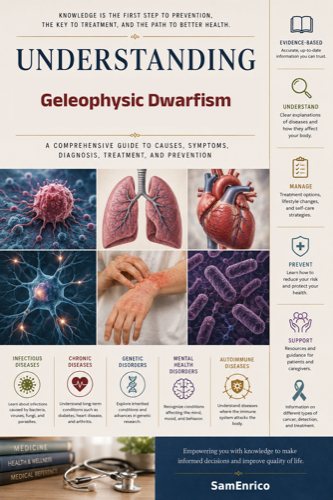 Understanding Geleophysic DwarfismBaca Nicholle$17.99
 DispatcherBaca Nicholle$11.99
 Last Minute Booking PatternsBaca Nicholle$12.99
 Apprentice to Permanent Resident GuideBaca Nicholle$12.99
 Ultimate Handbook Guide to Vijayawada : (India) Travel GuideBaca Nicholle$11.99
You may also like
 Hong Kong Handover 1997Dunn Johnnie$11.99
 Zumba For Postnatal Recovery CourseNeal Christian$11.99
 Zumba for BeginnersLadner Nikia$11.99
 YouTube Comment Mining GuideHumes Pandora$12.99
 Worry Box MeditationCarlin Rudy$11.99
 Workplace Stress MeditationNguyen Lynn$11.99
 Workplace Stress and Sleep RepairHawley Ivory$11.99
 Workplace Perfectionism CureDelaney Jeffry$11.99
 Workplace Injustice Anger GuideWallen Isabelle$11.99
 Work Addiction and Burnout LinkGreenwood Ester$11.99
 Women in Yoga and WellnessBeattie Galina$11.99
 Women in Stand Up ComedyChun Evangeline$11.99