
Non-FictionInformativeEducational
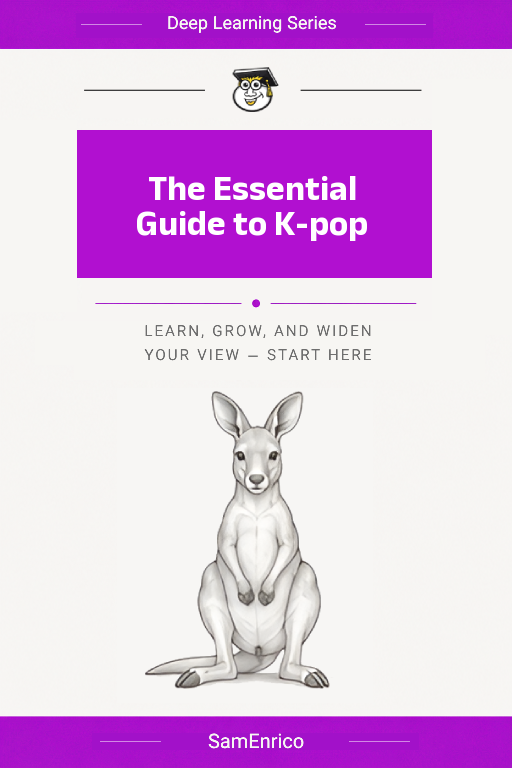
The Essential Guide to K-pop Audiobook
This publication, published by SamEnrico, covers T
This publication, published by SamEnrico, covers The Essential Guide to K-pop
Formats
Free sample
Chapter 1: The Pre-Dawn Tremors...--–- On a humid July evening in 1992, three young men stepped onto a talent show stage in Seoul, and without knowing it, drove the first stake into the foundation of Korean pop music as the world would come to know it. Their name was Seo Taiji and Boys. The song was "I Know." The performance was sloppy by today’s standards—synchronization was loose, the rapping was raw, and the backing track occasionally overpowered the vocals. But something strange happened that night. Teenagers watching from their living rooms didn't change the channel.
They rewound their VCRs. They called their friends. By morning, a phenomenon had begun that no record executive, no government minister, and certainly no cultural critic could have predicted.The story of K-pop is often told as a story of the late 1990s—of the Asian financial crisis, of government intervention, of the so-called "Big Three" agencies building factories of stars. That story is true, but it is incomplete. Before the factories, there were the revolutionaries.
Before the system, there was the spark. And that spark was struck not by a corporation but by a heavy-metal-loving, hip-hop-obsessed nineteen-year-old who had already been kicked out of one band and told he would never make it in music. Seo Taiji was not supposed to change Korean culture. But he did. And in doing so, he set the stage for everything that followed—the training systems, the fandom armies, the stadium tours, the billion-dollar industry.
This chapter is the story of that pre-dawn moment: the tremors before the earthquake.The State of Korean Music Before the Boom To understand how revolutionary Seo Taiji and Boys were, one must first understand what Korean popular music sounded like before 1992. For most of the 1980s and early 1990s, the dominant genres were ballad-heavy "trot" music (a Korean genre blending Japanese enka, Western foxtrot, and sentimental lyrics) and sanitized pop-rock aimed at middle-aged listeners. Television music programs featured singers in conservative suits and evening gowns, performing songs about lost love, national pride, or pastoral nostalgia. The idea of music for youth—music that was rebellious, loud, and unapologetically modern—barely existed in the mainstream.There were exceptions, of course. The late 1980s saw the rise of "underground" rock clubs in the Hongdae district of Seoul, where students and artists played distorted guitars and shouted lyrics at small audiences.
But these scenes were marginalized, treated by broadcasters as curiosities or threats. The government, still shaking off decades of authoritarian…
This is the end of the free sample. Get the Audiobook to keep going. Buy now
About this book
Details
- Author
- Cervantes Echo
- Publisher
- SamEnrico
- Language
- English
- Genre
- Non-Fiction, Informative, Educational
- Released
- 2026-05-08
- Pages (approx.)
- 146
- Available as
- eBook, Audiobook

Listen in the VoxFlicks app
Audiobooks and audio dramas wherever you go. Sign in with your SamEnrico account and press play.
More by Cervantes Echo
 Spin Race Day SimulationCervantes Echo$11.99
 Anki For Culinary ArtsCervantes Echo$11.99
 The Outpatient Treatment GuideCervantes Echo$11.99
 The Financial Stress and HousingCervantes Echo$11.99
 Cambodian Jungle Khmer RougeCervantes Echo$11.99
 Idea Evaluation for BusinessCervantes Echo$11.99
 Bone Master GuideCervantes Echo$11.99
 The Blood Diamond Heist: South Africa's Female Serial KillerCervantes Echo$11.99
 Interruption Management for MusiciansCervantes Echo$11.99
 Brick by Brick: The Rise and Fall of the Venetian Empire’s Land BaronsCervantes Echo$11.99
 Vanilla: Vanilla PlanifoliaCervantes Echo$11.99
 How to Produce Rare Earth and ProductsCervantes Echo$11.99
You may also like
 Hong Kong Handover 1997Dunn Johnnie$11.99
 Zumba For Postnatal Recovery CourseNeal Christian$11.99
 Zumba for BeginnersLadner Nikia$11.99
 YouTube Comment Mining GuideHumes Pandora$12.99
 Worry Box MeditationCarlin Rudy$11.99
 Workplace Stress MeditationNguyen Lynn$11.99
 Workplace Stress and Sleep RepairHawley Ivory$11.99
 Workplace Perfectionism CureDelaney Jeffry$11.99
 Workplace Injustice Anger GuideWallen Isabelle$11.99
 Work Addiction and Burnout LinkGreenwood Ester$11.99
 Women in Yoga and WellnessBeattie Galina$11.99
 Women in Stand Up ComedyChun Evangeline$11.99