

Non-FictionInformativeEducational
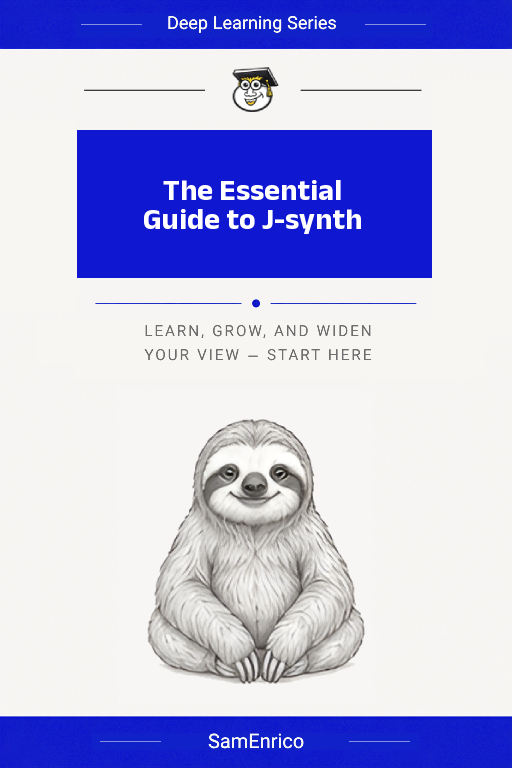
The Essential Guide to J-synth
This publication, published by SamEnrico, covers T
by Nealy Wendi
This publication, published by SamEnrico, covers The Essential Guide to J-synth
Formats
About this book
Free sample
Chapter 1: Before the Rising Sun...--The Japanese synthesizer industry did not emerge from a vacuum, nor did it spring fully formed from the laboratories of Roland, Korg, and Yamaha like Athena from the head of Zeus. Behind every silver-faced knob and every glowing LED on every vintage synth that now commands four-figure prices on Reverb.com lies a forgotten history of transistor organs, postwar reconstruction, and a unique cultural attitude toward technology that set Japan apart from the synth industries of the United States and Europe. To understand why a Roland Jupiter-8 sounds different from a Moog Prophet-5, why a Korg MS-20 feels more like a performance instrument than a laboratory tool, and why Japanese synths have dominated electronic music production for five decades, you must first understand where they came from.The story of J-synth is not a story of sudden genius or isolated invention. It is a story of two converging rivers: one academic, one commercial. The academic river carried the experimental electronic music of postwar Japanese composers who, working with primitive oscillators and tape machines at the NHK Studio in Tokyo, dreamed of sounds no acoustic instrument could produce.
The commercial river carried the mass-produced transistor organs of companies like Ace Tone, Hammond-Suzuki, and Nippon Columbia—instruments designed not for avant-garde composers but for family living rooms and hotel lounges. When these two rivers met in the late 1960s and early 1970s, they created something neither could have achieved alone: a synthesizer industry that would eventually surpass its American and European teachers.This chapter traces those two rivers back to their sources. It explores the academic pioneers who proved that electronic music could be art, the organ manufacturers who built the supply chains and retail networks that would later sell synthesizers, and the unique engineering culture that emerged when Japanese companies decided to build their own synths rather than simply import Western designs. By the end of this chapter, you will understand why Japanese synths are the way they are—portable, reliable, performance-oriented, and designed for musicians rather than technicians. You will also understand why the "thin" sound that some…
This is the end of the free sample. Get the eBook to keep going. Buy now
Contents
- Chapter 1
- Chapter 2
- Chapter 3
- Chapter 4
- Chapter 5
- Chapter 6
- Chapter 7
- Chapter 8
- Chapter 9
- Chapter 10
- Chapter 11
- Chapter 12
Details
- Author
- Nealy Wendi
- Publisher
- SamEnrico
- Language
- English
- Genre
- Non-Fiction, Informative, Educational
- Released
- 2026-06-02
- Pages (approx.)
- 142
- Available as
- eBook, Audiobook

Read better in the ZLOADR app
Your eBooks on your phone or tablet. Sign in with your SamEnrico account and start reading.
More by Nealy Wendi
 Naltrexone PreventionNealy Wendi$11.99
 Anki For Grad SchoolNealy Wendi$11.99
 Letting Go of Cultural ShameNealy Wendi$11.99
 The Alcohol and Nutrition GuideNealy Wendi$11.99
 Zumba Kids Instructor GuideNealy Wendi$11.99
 Wearable Tech WarehousesNealy Wendi$11.99
 Value Engineering for BusinessNealy Wendi$11.99
 Interruption Management for TherapistsNealy Wendi$11.99
 The Visionaries of Stone: The Architects of Great ZimbabweNealy Wendi$11.99
 Charlemagne's Golden Legacy: The Carolingian Renaissance in TimeNealy Wendi$11.99
 How to Produce Rain ChainsNealy Wendi$11.99
 Transportation and Parking GuideNealy Wendi$12.99
You may also like
 Hong Kong Handover 1997Dunn Johnnie$11.99
 Zumba For Postnatal Recovery CourseNeal Christian$11.99
 Zumba for BeginnersLadner Nikia$11.99
 YouTube Comment Mining GuideHumes Pandora$12.99
 Worry Box MeditationCarlin Rudy$11.99
 Workplace Stress MeditationNguyen Lynn$11.99
 Workplace Stress and Sleep RepairHawley Ivory$11.99
 Workplace Perfectionism CureDelaney Jeffry$11.99
 Workplace Injustice Anger GuideWallen Isabelle$11.99
 Work Addiction and Burnout LinkGreenwood Ester$11.99
 Women in Yoga and WellnessBeattie Galina$11.99
 Women in Stand Up ComedyChun Evangeline$11.99