
Non-FictionSelf-HelpDaily Grief
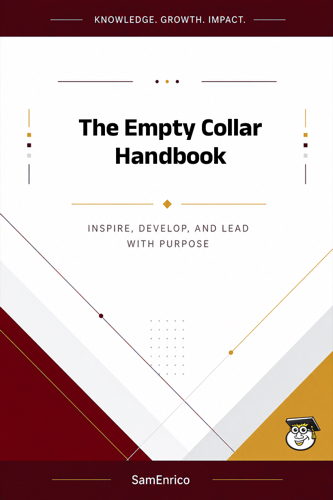
The Empty Collar Handbook eBook
Navigates the painful reminders of a pet's absence
Navigates the painful reminders of a pet's absence in daily routines and spaces.
Formats
Free sample
Chapter 1: The Morning Ghost...--–- The first betrayal of the day is not emotional. It is procedural. You wake up exactly as you always have—hovering in that gray space between dreaming and consciousness, where time is measured in heartbeats rather than minutes. Your hand reaches across the mattress, palm open, fingers splayed, searching for the familiar warmth that has been there for years. For a single, suspended second, your body does not know what your mind has already accepted.
Then your hand finds nothing but cold sheets, and the day begins.This is the morning ghost loop—the cruelest of all procedural memories because it resets every single night. Sleep, in its mercy, temporarily erases the knowledge of loss. For three to seven seconds after waking, your brain runs the old script: check for breathing, feel for warmth, listen for the soft snore or the gentle thud of paws hitting the floor. Then reality arrives like a door slamming shut. The absence is not theoretical.
It is physical. It is the empty side of the bed. It is the silence where there used to be a yawn, a stretch, a wet nose pressed against your cheek.If you are reading this chapter, you have already lived this moment. Perhaps it happened this morning. Perhaps it happened weeks ago, but the ghost loop still fires every dawn, faithful as a metronome.
You are not broken. You are not weak. You are experiencing how the brain encodes love—not as a memory you visit, but as a sequence you perform.The Neuroscience of the Morning Ghost Loop Before we talk about healing, we need to talk about why this hurts the way it does. The answer lives in a small, primitive region of your brain called the basal ganglia. This is not the seat of emotion (that is the limbic system) nor the seat of conscious memory (the hippocampus).
The basal ganglia is the brain’s habit engineer. Its job is to take actions you repeat often—tying your shoes, driving your commute, waking up and greeting your pet—and compress them into automatic sequences that require almost no conscious thought.This is a gift. Imagine if you had to consciously think through every step of brushing your teeth every morning. You would never leave the bathroom. The basal ganglia frees your brain for higher-level tasks by handling the routines.
But it has a critical flaw: it does not know the difference between a living pet and a dead one. It only knows patterns.When you woke up next to your dog or cat for years—perhaps a decade or more—your basal ganglia encoded that experience as a sequence. Step one: consciousness returns. Step two: feel for warmth on the left side of the bed (or the foot of the bed, or the pillow beside yours). Step three: register the soft weight.
Step four: begin the day. The sequence does not include a conditional branch that says “if pet is no longer alive, skip step two.” The basal ganglia does not process death. It processes repetition.So every morning, without your permission, without your conscious control, the sequence runs. Your hand reaches. Your ears listen.
Your peripheral vision scans the floor for the shape that should be there. And then—because the sequence cannot complete—your brain experiences what neuroscientists call a “prediction error.” The expected sensory input does not arrive. The anterior cingulate cortex (a region that detects conflicts between expectation and reality) lights up like a fire alarm. That alarm is what you feel as the jolt of panic, the sudden lurch in your chest, the words that form in your throat before you can stop them: “Where are you?”You are not losing your mind. You are not “in denial.” You are experiencing a biological process that has been repeated billions of times across human history, every time a beloved creature stopped waking up beside us.
The only difference is that most grief literature focuses on the emotional aftermath of the alarm—the sadness, the tears, the aching. This chapter focuses on the alarm itself. Because if you can learn to disarm the alarm, you can reclaim the first moments of your day.The Two Faces of Morning Grief: Panic and Paralysis The morning ghost loop manifests in two seemingly opposite but equally exhausting forms. Understanding which one you experience is the first step toward building a ritual that actually works for you.The Panic Response Some people wake up as if shot from a cannon. Their eyes snap open.
Their heart races. They sit bolt upright in bed, confused and disoriented, before the memory of loss crashes over them. This is the “fight or flight” branch of the prediction error. Your brain detects that something is wrong—the expected warmth is missing—and it interprets “wrong” as “threat.” The amygdala (your brain’s alarm system) floods your body with cortisol and adrenaline. You are, quite literally, in a state of physiological emergency over an absence.The panic response often happens to people whose pets slept very close to them—a small dog curled against their chest, a cat on the pillow, a large dog leaning against their legs.
The tactile expectation is so strong that its absence reads as danger. Many panic responders report that the first word out of their mouth upon waking is their pet’s name. Not a conscious choice. A reflex.The Paralysis Response Other people wake up and cannot move. They lie perfectly still, eyes open or closed, staring at the ceiling or the empty space beside them.
Their limbs feel weighted. The thought of getting up—of walking to the empty food bowl, of facing the morning without the ritual greeting—is so overwhelming that their brain simply declines to start the engine. This is not laziness. This is the “freeze” branch of the prediction error. When the expected sequence fails to complete, some brains default to a shutdown state.
It is the same mechanism that causes a rabbit to freeze in the headlights. The brain is waiting for new instructions that have not arrived.The paralysis response often happens to people whose pets were central to their morning routine in active ways—a dog that needed an immediate walk, a cat that meowed at the bedroom door, a parrot that called out “good morning” at dawn. The morning was not passive warmth but active collaboration. Without the collaborator, the brain does not know how to start.Here is what both responses have in common: they are not character flaws. They are not signs that you are “taking it too hard” or “not coping well.” They are predictable neurological responses to the sudden removal of a deeply encoded routine.
And they can be retrained.The First Light Ritual: Your Morning Breath Anchor Retraining a ghost loop requires replacing the old sequence with a new one—not a better sequence, not a happier sequence, just a different sequence. The new sequence does not need to be meaningful or profound. It needs to be simple, repeatable, and low-energy. You are not trying to heal the wound in the first three minutes of the…
This is the end of the free sample. Get the eBook to keep going. Buy now
About this book
Details
- Author
- Mccormack Karyl
- Publisher
- SamEnrico
- Language
- English
- Genre
- Non-Fiction, Self-Help, Daily Grief
- Released
- 2026-06-07
- Pages (approx.)
- 145
- Available as
- eBook, Audiobook

Read better in the ZLOADR app
Your eBooks on your phone or tablet. Sign in with your SamEnrico account and start reading.
More by Mccormack Karyl
 Mindfulness for New Parents GuideMccormack Karyl$11.99
 Complicated Grief After HomicideMccormack Karyl$11.99
 Civil Engineer Creativity GuideMccormack Karyl$11.99
 The Validating Trauma Responses GuideMccormack Karyl$11.99
 The Last Broadcast: How a 1996 Radio Signal Predicted the InternetMccormack Karyl$11.99
 Understanding Stimulant PsychosisMccormack Karyl$17.99
 How to Become a Sheepskin PicklerMccormack Karyl$11.99
 Client Relationship AssociateMccormack Karyl$11.99
 Voice Activated AccountingMccormack Karyl$12.99
 Procurement Compliance AuditMccormack Karyl$12.99
You may also like
 Hong Kong Handover 1997Dunn Johnnie$11.99
 Zumba For Postnatal Recovery CourseNeal Christian$11.99
 Zumba for BeginnersLadner Nikia$11.99
 YouTube Comment Mining GuideHumes Pandora$12.99
 Worry Box MeditationCarlin Rudy$11.99
 Workplace Stress MeditationNguyen Lynn$11.99
 Workplace Stress and Sleep RepairHawley Ivory$11.99
 Workplace Perfectionism CureDelaney Jeffry$11.99
 Workplace Injustice Anger GuideWallen Isabelle$11.99
 Work Addiction and Burnout LinkGreenwood Ester$11.99
 Women in Yoga and WellnessBeattie Galina$11.99
 Women in Stand Up ComedyChun Evangeline$11.99