
Non-FictionInformativeEducational
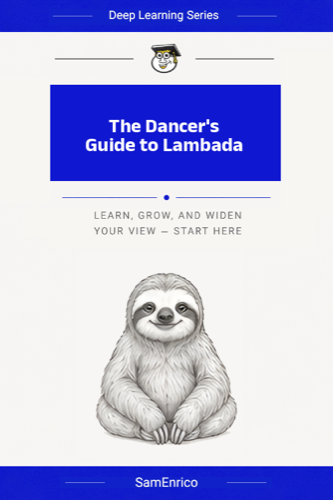
The Dancer's Guide to Lambada
This publication, published by SamEnrico, covers T
by Goad Jarod
This publication, published by SamEnrico, covers The Dancer's Guide to Lambada
Formats
About this book
Free sample
Chapter 1: The Forbidden Seed...--In the humid, fragrant air of Belém do Pará, where the Amazon River begins its slow, majestic surrender to the Atlantic, a different kind of rhythm once pulsed through the packed earth of village clearings. It was not the rhythm of colonizers marching in straight lines, nor the measured cadence of church bells calling the faithful to prayer. It was the rhythm of the Carimbó—a drum made from a hollowed tree trunk, heated by fire, and stretched with deer hide. Its sound was not loud. It was insistent.
It was the sound of a people moving their hips in a way that told the earth, "We are still here."Before Lambada became a global phenomenon, before the word sparked images of flowing skirts and forbidden embraces, before the legal battles and the Hollywood films and the million You Tube tutorials, there was a single, stubborn question asked by a dancer in the Amazon: Why must joy have rules?The answer to that question, as it unfolded over centuries, became the dance we now call Lambada. But to understand Lambada—truly understand it, not just mimic its steps—you must first unlearn almost everything you think you know about its origins. You have probably heard that Lambada was born in the 1980s, that it was a fad, that it died when the music stopped playing on the radio. You have likely been told that it is a "sensual" dance, a "forbidden" dance, a dance of barely concealed desire. These stories are not wrong, but they are incomplete.
They are the headlines, not the history. They are the smoke, not the fire.The fire started not in a recording studio in Paris or a dance club in Rio de Janeiro. It started in the villages of the Tupinambá and Arawak peoples, where the Carimbó was danced not as performance but as prayer, as courtship, as celebration of the cassava harvest, as a way of reminding the body that it belonged to the land. The Carimbó had a distinctive feature that would become Lambada's secret weapon: the pause.…
This is the end of the free sample. Get the eBook to keep going. Buy now
Contents
- Chapter 1
- Chapter 2
- Chapter 3
- Chapter 4
- Chapter 5
- Chapter 6
- Chapter 7
- Chapter 8
- Chapter 9
- Chapter 10
- Chapter 11
- Chapter 12
Details
- Author
- Goad Jarod
- Publisher
- SamEnrico
- Language
- English
- Genre
- Non-Fiction, Informative, Educational
- Released
- 2026-05-08
- Pages (approx.)
- 149
- Available as
- eBook, Audiobook

Read better in the ZLOADR app
Your eBooks on your phone or tablet. Sign in with your SamEnrico account and start reading.
More by Goad Jarod
 Deadline Pressure Performance GuideGoad Jarod$11.99
 Group Random Input MethodGoad Jarod$11.99
 HGH Cancer Risk DebateGoad Jarod$11.99
 Family Dream CircleGoad Jarod$11.99
 TM Checking Session GuideGoad Jarod$11.99
 MCAT Memory SystemGoad Jarod$11.99
 Nicotine Skin And Hair RepairGoad Jarod$11.99
 Massage For Menstrual PainGoad Jarod$11.99
 HGH And Immune FunctionGoad Jarod$11.99
 The Last Witness: The Untold Legal Battle of the Challenger DisasterGoad Jarod$11.99
 The Golden Barrels of Spain: How the Habsburgs Brewed an EmpireGoad Jarod$11.99
 The Lioness of the Nile: Tiye's Strategic Genius and the Rise of the New KingdomGoad Jarod$11.99
You may also like
 Hong Kong Handover 1997Dunn Johnnie$11.99
 Zumba For Postnatal Recovery CourseNeal Christian$11.99
 Zumba for BeginnersLadner Nikia$11.99
 YouTube Comment Mining GuideHumes Pandora$12.99
 Worry Box MeditationCarlin Rudy$11.99
 Workplace Stress MeditationNguyen Lynn$11.99
 Workplace Stress and Sleep RepairHawley Ivory$11.99
 Workplace Perfectionism CureDelaney Jeffry$11.99
 Workplace Injustice Anger GuideWallen Isabelle$11.99
 Work Addiction and Burnout LinkGreenwood Ester$11.99
 Women in Yoga and WellnessBeattie Galina$11.99
 Women in Stand Up ComedyChun Evangeline$11.99