
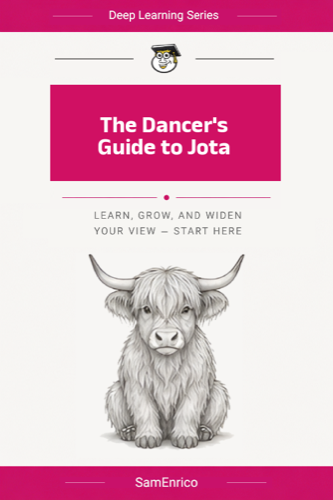
The Dancer's Guide to Jota
This publication, published by SamEnrico, covers T
by Hodge Freddy
This publication, published by SamEnrico, covers The Dancer's Guide to Jota
Formats
About this book
Free sample
Chapter 1: The Jump Heard Around the World--–- You have probably heard of flamenco. You have likely seen its iconic image—the swirling ruffled dress, the dramatic guitar, the fierce, anguished expression of the cantaor. It is, for most of the world, the face of Spanish dance. But what if I told you there is another dance, older, more widespread, and in many ways more authentically Spanish than flamenco ever was? What if I told you that this dance was once banned by dictators, carried across oceans by colonizers and then transformed by the colonized into an act of quiet rebellion, and that its name comes from an Arabic word for "jump"?This is the story of the Jota.Before you place a single foot in the zapateado position, before you pick up your first pair of castanets, before you even listen to your first copla, you must understand where this dance comes from.
Because the Jota is not merely a sequence of steps set to music. It is a living archive of Iberian history—a dance that contains within its rhythm the echoes of Muslim courts, Christian kingdoms, Jewish diaspora, colonial expansion, and postcolonial reinvention. To learn the Jota is to learn the story of the Spanish-speaking world, from the Pyrenees to the Philippines, from the plains of Castile to the Pacific coast of Colombia.And that story begins with a jump.The Name Itself: A Linguistic Clue Let us start with the word. Jota. Say it aloud: HO-ta.
The J is soft, almost breathy, like the ch in the Scottish loch or the Spanish jamón. It is a short word, sharp at the edges, and it carries centuries of migration in its three letters.The most widely accepted etymology traces Jota to the Mozarabic word šáwta, meaning "jump" or "leap." Mozarabic was the Romance language spoken by Christians living under Muslim rule in medieval Iberia—a language that borrowed heavily from Arabic while retaining its Latin roots. The fact that the name of what is now considered a quintessentially Christian and northern Spanish dance comes from the language of the…
This is the end of the free sample. Get the eBook to keep going. Buy now
Contents
- Chapter 1
- Chapter 2
- Chapter 3
- Chapter 4
- Chapter 5
- Chapter 6
- Chapter 7
- Chapter 8
- Chapter 9
- Chapter 10
- Chapter 11
- Chapter 12
Details
- Author
- Hodge Freddy
- Publisher
- SamEnrico
- Language
- English
- Genre
- Non-Fiction, Informative, Educational
- Released
- 2026-06-03
- Pages (approx.)
- 136
- Available as
- eBook, Audiobook

Read better in the ZLOADR app
Your eBooks on your phone or tablet. Sign in with your SamEnrico account and start reading.
More by Hodge Freddy
 Evening Primrose Oil GuideHodge Freddy$11.99
 Complete Therapy Access Low Income HandbookHodge Freddy$11.99
 Advanced Memory Palace TechniquesHodge Freddy$11.99
 The Group Pre Mortem MethodHodge Freddy$11.99
 Dream Journal PromptsHodge Freddy$11.99
 Roth Conversion Estate PlanningHodge Freddy$11.99
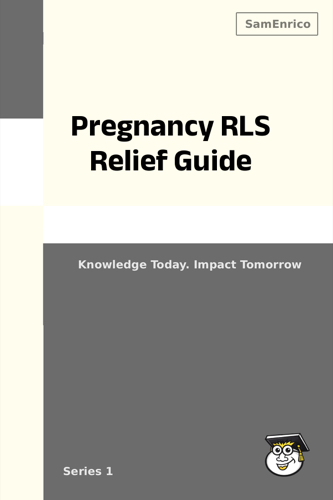 Pregnancy RLS Relief GuideHodge Freddy$11.99
 Bipolar Family Support PrimerHodge Freddy$11.99
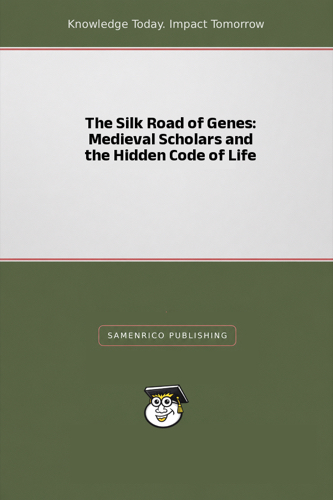 The Silk Road of Genes: Medieval Scholars and the Hidden Code of LifeHodge Freddy$11.99
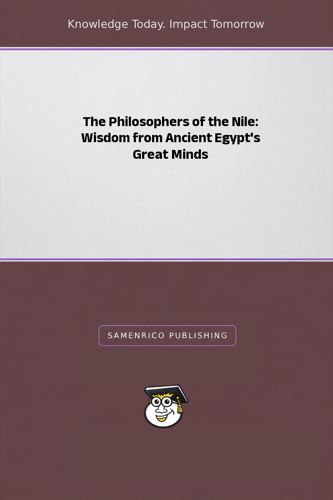 The Philosophers of the Nile: Wisdom from Ancient Egypt's Great MindsHodge Freddy$11.99
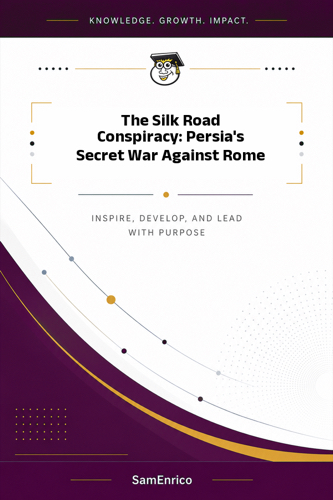 The Silk Road Conspiracy: Persia's Secret War Against RomeHodge Freddy$11.99
 How to Become a Induction-machine SetterHodge Freddy$11.99