
Non-FictionInformativeEducational
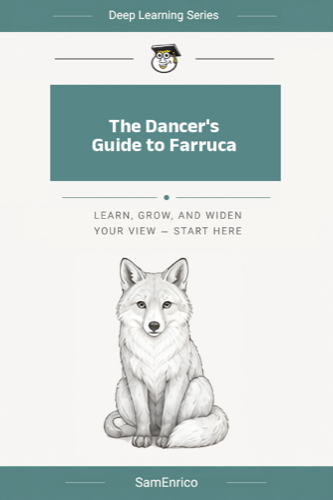
The Dancer's Guide to Farruca
This publication, published by SamEnrico, covers T
This publication, published by SamEnrico, covers The Dancer's Guide to Farruca
Formats
About this book
Free sample
Chapter 1: The Outsider’s Inheritance...--–- The first time I tried to dance Farruca, my feet lied. They struck the floor with what I believed was authority—loud, sharp, decisive. The guitarist, an old man from Jerez who had accompanied legends I had only read about, stopped playing after sixteen counts. He did not tell me I was wrong. He simply set down his guitar, walked to the edge of the studio, and lit a cigarette.
The silence that followed was the loudest critique I have ever received. In that moment, I understood something that no technique class had ever taught me: I had confused volume for power, speed for command, and confidence for the deeper, darker thing that Farruca actually demands. That thing has no name in English. In flamenco, we call it duende. But before I could even begin to chase duende, I had to learn the truth about where this dance came from—and why it had chosen me, an outsider, to carry it forward.Every flamenco student eventually encounters the Farruca.
For most, it arrives as a shock. After months of learning the undulating arms of Alegrías or the playful turns of Tangos, the Farruca stands apart: rigid-backed, slow-burning, almost confrontational in its stillness. Many dancers avoid it. They call it "too masculine" or "too serious" or "too slow." But the truth is simpler and more uncomfortable. They avoid it because the Farruca demands that a dancer answer a question most performers spend their careers dodging: Who are you when no one is watching?This chapter dismantles the myths that surround the Farruca.
It traces the dance from its unlikely birthplace in the rainy hills of Galicia to the flamenco cafés cantantes of Andalusia, from a slur used against immigrants to a badge of pride worn by the greatest dancers of the twentieth century. By the end of this chapter, you will understand not just the history of the Farruca, but why that history matters to your body, your breath, and your capacity to stand alone on a bare stage.The Geography of Rejection: Why…
This is the end of the free sample. Get the eBook to keep going. Buy now
Contents
- Chapter 1
- Chapter 2
- Chapter 3
- Chapter 4
- Chapter 5
- Chapter 6
- Chapter 7
- Chapter 8
- Chapter 9
- Chapter 10
- Chapter 11
- Chapter 12
Details
- Author
- Stjohn Deshawn
- Publisher
- SamEnrico
- Language
- English
- Genre
- Non-Fiction, Informative, Educational
- Released
- 2026-06-03
- Pages (approx.)
- 151
- Available as
- eBook, Audiobook

Read better in the ZLOADR app
Your eBooks on your phone or tablet. Sign in with your SamEnrico account and start reading.
More by Stjohn Deshawn
 Benzo Information for DoctorsStjohn Deshawn$11.99
 John Wayne Gacy's ChildhoodStjohn Deshawn$11.99
 LTC Insurance And Estate PlanningStjohn Deshawn$11.99
 Breath Awareness for Postpartum RecoveryStjohn Deshawn$11.99
 Affirmations For Betrayal RecoveryStjohn Deshawn$11.99
 Religious Extremist ChildhoodStjohn Deshawn$11.99
 FCPA Technology Sector CasesStjohn Deshawn$11.99
 Overcoming Love AddictionStjohn Deshawn$11.99
 Zero Day Exploit TrendsStjohn Deshawn$12.99
 TM For AthletesStjohn Deshawn$11.99
 The Phantom Pain: The Enigma of the 1951 Pont-Saint-Esprit Mass HysteriaStjohn Deshawn$11.99
 The Habsburg Codex: Vienna’s Secret RenaissanceStjohn Deshawn$11.99
You may also like
 Hong Kong Handover 1997Dunn Johnnie$11.99
 Zumba For Postnatal Recovery CourseNeal Christian$11.99
 Zumba for BeginnersLadner Nikia$11.99
 YouTube Comment Mining GuideHumes Pandora$12.99
 Worry Box MeditationCarlin Rudy$11.99
 Workplace Stress MeditationNguyen Lynn$11.99
 Workplace Stress and Sleep RepairHawley Ivory$11.99
 Workplace Perfectionism CureDelaney Jeffry$11.99
 Workplace Injustice Anger GuideWallen Isabelle$11.99
 Work Addiction and Burnout LinkGreenwood Ester$11.99
 Women in Yoga and WellnessBeattie Galina$11.99
 Women in Stand Up ComedyChun Evangeline$11.99