
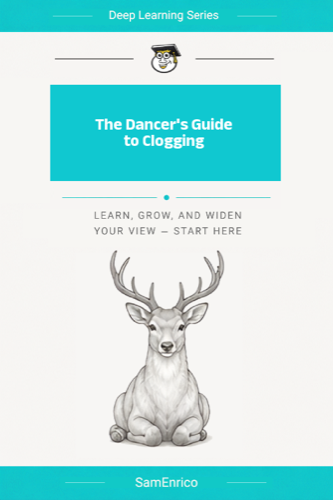
Non-FictionInformativeEducational
The Dancer's Guide to Clogging
This publication, published by SamEnrico, covers T
This publication, published by SamEnrico, covers The Dancer's Guide to Clogging
Formats
About this book
Free sample
Chapter 1: The Soul of the Stomp--Before you lift a single toe, before you lace up your first pair of taps, before you even decide whether you want to dance alone on a back porch or with forty teammates under stage lights, you need to understand one thing. Clogging is not just a dance. It is a conversation between your feet and the earth, and that conversation has been going on for centuries.Sam Enrico opens this chapter not with steps, but with stories. Because you cannot know where your feet are going until you know where they have been. The history of clogging is the history of America itself—a messy, beautiful, painful, joyful fusion of cultures that were never supposed to meet but somehow found common ground in the rhythm of a stomp.The Lancashire Mills: Where the Rhythm Began The story starts not in the Appalachian mountains, as many people assume, but in the industrial heart of 19th-century England.
The Lancashire cotton mills were loud, dangerous, and exhausting. Workers stood for twelve to fourteen hours a day, operating machinery that never stopped. To pass the time, to keep their spirits up, to communicate across the deafening noise of the looms, the workers—many of them Irish immigrants—began tapping their feet.But these were not tap shoes. These were wooden-soled work clogs, thick and heavy, designed to protect the feet from falling bobbins and stray needles. When a mill worker tapped his clog against the stone floor, the sound was not the light, crisp note of a modern tap shoe.
It was a deep, thudding, percussive boom—the sound of labor made musical.Workers developed patterns. A shuffle here, a stamp there, a brush of the toe to signal a break, a heel drop to mark the end of a shift. These were not performances; they were survival mechanisms. But the rhythms stuck. When workers left the mills at night, they carried those patterns with them to the pubs, where they danced for pints and for pride.The Irish Jig Crosses the Atlantic The Irish jig arrived in America with the…
This is the end of the free sample. Get the eBook to keep going. Buy now
Contents
- Chapter 1
- Chapter 2
- Chapter 3
- Chapter 4
- Chapter 5
- Chapter 6
- Chapter 7
- Chapter 8
- Chapter 9
- Chapter 10
- Chapter 11
- Chapter 12
Details
- Author
- Pollack Annalee
- Publisher
- SamEnrico
- Language
- English
- Genre
- Non-Fiction, Informative, Educational
- Released
- 2026-06-02
- Pages (approx.)
- 134
- Available as
- eBook, Audiobook

Read better in the ZLOADR app
Your eBooks on your phone or tablet. Sign in with your SamEnrico account and start reading.
More by Pollack Annalee
 Television Producer Stress GuidePollack Annalee$11.99
 Diarrhea MythsPollack Annalee$11.99
 Help Asking Imposter BlockPollack Annalee$11.99
 Decision Making ClarityPollack Annalee$11.99
 The Augsburg Confession DefensePollack Annalee$11.99
 Seasonal Ceremony Leadership CoursePollack Annalee$11.99
 Time Blocking for ParentsPollack Annalee$11.99
 Medical History ListeningPollack Annalee$11.99
 Zapata RevolutionPollack Annalee$11.99
 The Storm from the Steppe: Genghis Khan's Conquest of Khwarezmia (1219-1221)Pollack Annalee$11.99
 The Silk and Steel of Augsburg: How the Fuggers Wove a Fashion DynastyPollack Annalee$11.99
 The Unlikely Spy Who Saved the Internet: The Story of Adrian LamoPollack Annalee$11.99
You may also like
 Hong Kong Handover 1997Dunn Johnnie$11.99
 Zumba For Postnatal Recovery CourseNeal Christian$11.99
 Zumba for BeginnersLadner Nikia$11.99
 YouTube Comment Mining GuideHumes Pandora$12.99
 Worry Box MeditationCarlin Rudy$11.99
 Workplace Stress MeditationNguyen Lynn$11.99
 Workplace Stress and Sleep RepairHawley Ivory$11.99
 Workplace Perfectionism CureDelaney Jeffry$11.99
 Workplace Injustice Anger GuideWallen Isabelle$11.99
 Work Addiction and Burnout LinkGreenwood Ester$11.99
 Women in Yoga and WellnessBeattie Galina$11.99
 Women in Stand Up ComedyChun Evangeline$11.99