

The Chunking Memory Technique Audiobook
Break information into meaningful groups to exceed
Break information into meaningful groups to exceed working memory limits.
Formats
Free sample
Chapter 1: The Four-Slot Lie--–- You have been lied to about your own brain. Not by a malicious conspiracy, but by a half-century-old approximation that somehow became fact. In 1956, a Harvard psychologist named George Miller published a paper with a deceptively catchy title: "The Magical Number Seven, Plus or Minus Two." His argument was humble—he suggested that the human mind might be able to hold somewhere between five and nine unrelated items in conscious awareness at once. He called it a "rough estimate." He never intended it to become law.But it did.For the next fifty years, textbooks, teachers, and TED speakers repeated the number seven as if it were carved into the hippocampus. You have probably heard it yourself: "The average person can hold seven items in working memory." Maybe you felt secretly inadequate when you could only remember four.
Maybe you assumed your brain was somehow less capable than the mythical "average." Here is the truth: the average person cannot hold seven items either. No one can. The real limit is four.Four.That is not a failure of your memory. That is the design specification of the human brain. And once you accept that limit—once you stop fighting it and start working with it—everything changes.The Myth That Would Not Die Let us trace the origin of the lie, because understanding how we got here will free you from trying to accomplish the impossible.
Miller's 1956 paper was not an experimental study. It was a review of other people's experiments, and Miller himself noted that the number seven kept appearing in odd places: seven digits, seven tones, seven syllables. But he also noted something that most people forget: the capacity of working memory could be expanded dramatically if the information was organized. He used the word "chunking" for the first time in that paper. He argued that the limit was not on bits of information, but on chunks of information.A chunk, in Miller's definition, is any meaningful unit.
A single letter is a chunk. But so is the word "the" (three letters, one chunk). So is the phrase "the quick brown fox" (fifteen letters, still one chunk if you know the phrase). So is the number 1776 (four digits, one chunk if you know American history). Miller's real discovery was that the brain can hold about seven chunks, but each chunk can contain…
This is the end of the free sample. Get the Audiobook to keep going. Buy now
About this book
Details
- Author
- Clanton Hyacinth
- Publisher
- SamEnrico
- Language
- English
- Genre
- Non-Fiction, Self-Help
- Released
- 2026-06-12
- Pages (approx.)
- 130
- Available as
- eBook, Audiobook

Listen in the VoxFlicks app
Audiobooks and audio dramas wherever you go. Sign in with your SamEnrico account and press play.
More by Clanton Hyacinth
 Guilt Induced ProcrastinationClanton Hyacinth$11.99
 Gambling Addiction and Day TradingClanton Hyacinth$11.99
 Technology License NegotiationClanton Hyacinth$11.99
 Instagram Comparison Culture GuideClanton Hyacinth$11.99
 Interruption MeditationClanton Hyacinth$11.99
 Holidays After DivorceClanton Hyacinth$11.99
 Mentorship Legacy GuideClanton Hyacinth$11.99
 The Laughing Man: The Untold Story of the 1981 Clown MurdersClanton Hyacinth$11.99
 The Phantom of the Paris Opera: The Real Story Behind the LegendClanton Hyacinth$11.99
 How to Produce Home Textile Product Machinery PartsClanton Hyacinth$11.99
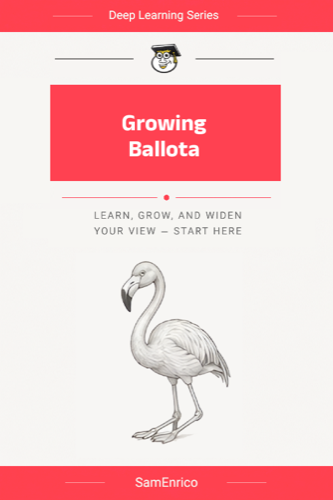 Growing BallotaClanton Hyacinth$11.99
 A Collector's Handbook to the Reo Flying Cloud (1932-34)Clanton Hyacinth$11.99
You may also like
 Workplace Stress MeditationNguyen Lynn$11.99
 Volcano Monitoring ScientistCox Alexis$11.99
 The Tech Professional NetAguiar Nevada$11.99
 The Morning Metta RitualCanales Anya$11.99
 The Beginner Mistake FixAmmons Cassondra$11.99
 Surrendering to What IsGrimm Reatha$11.99
 Self Hypnosis for Fear of FireBillups Eli$11.99
 Road Rage for Professional DriversBrackett Janise$11.99
 Psychiatric Ward Nurse StressDunning Wyatt$11.99
 Observation vs Evaluation NVCTimmons Alda$11.99
 Networking for Nonprofit ProfessionalsPoole Jesse$11.99
 Metta for Foster CareGallegos Elsy$11.99